
Your doctor just told you that you need a heart monitor. Maybe your chest fluttered last week or your heart skipped a beat while you were making dinner. Now you are sitting there wondering what device you are actually going to wear and for how long. If you’re comparing an event monitor vs holter, you’re not alone. Here is the thing. Not every heart monitor works the same way and picking the right one usually comes down to how often your symptoms show up.
At Advantage MRI in the Hermosa neighborhood of Chicago we get this question a lot. Patients want to know the real difference between a holter monitor and an event monitor before they show up for testing. So lets break it down plain and simple.
What Is a Holter Monitor
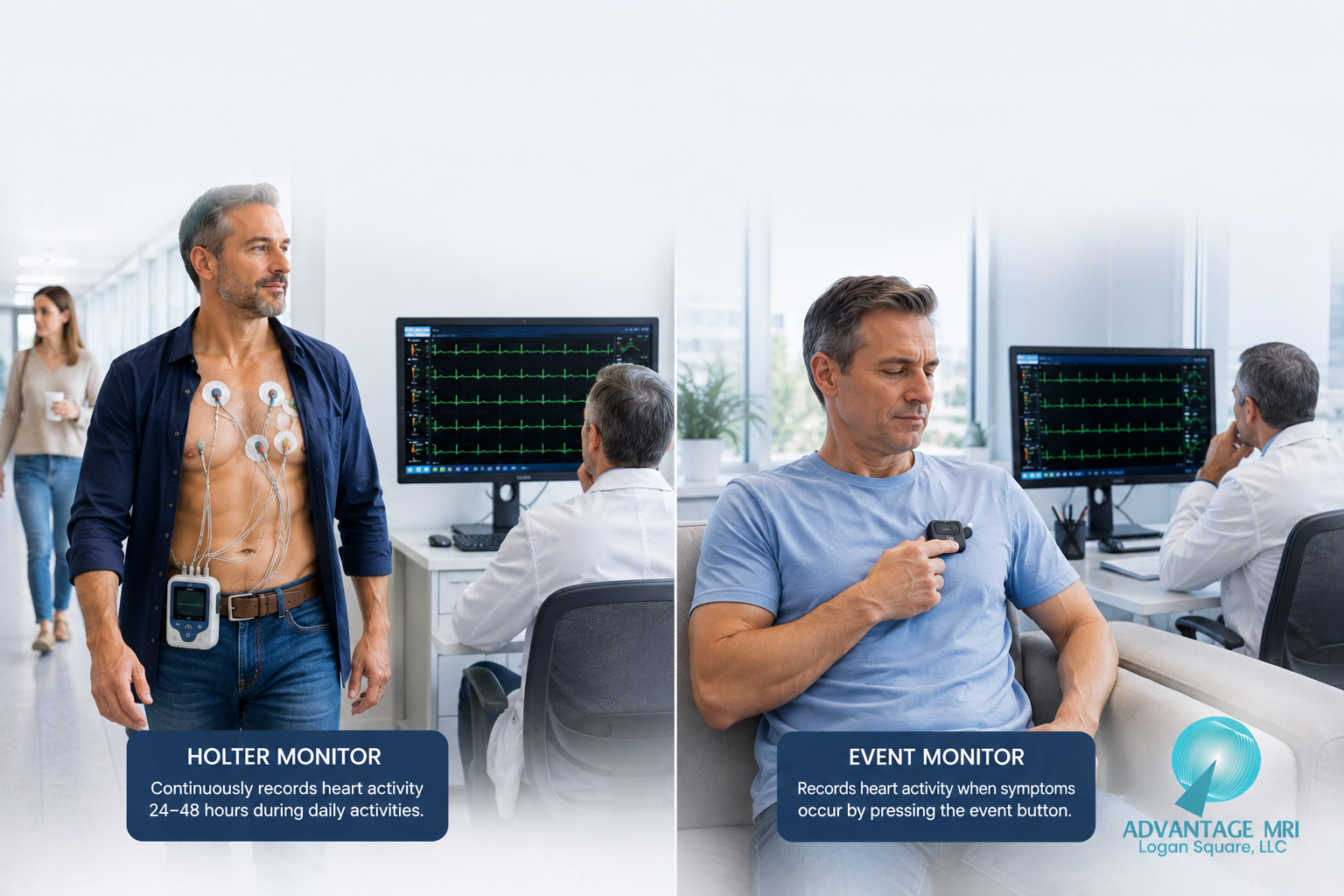
A holter monitor is a small wearable device that records your hearts electrical activity nonstop. It uses electrodes placed on your chest and connected by thin wires called leads. Once it is on it just keeps recording. No buttons to push. No decisions to make.
Direct answer: A holter monitor is a continuous cardiac monitoring device worn for 24 to 48 hours that records every single heartbeat during that window.
Most patients wear it for one or two days though some cases call for extended monitoring. The device tracks your heart rate and rhythm the entire time you have it on including while you sleep. That is the whole point. Doctors want a full picture of your hearts rhythm during normal daily activities and not just a quick snapshot.
You go about your day pretty much as usual. Shower carefully around it. Sleep with it strapped on. Some patients say the leads shift a bit at night and that is normal. A little skin irritation under the electrodes can happen too especially if you wear it more than a day or two.
What Is a Cardiac Event Monitor
Now here is where things split off. An event monitor also called a cardiac event recorder does not record all the time. It waits.
Direct answer: A cardiac event monitor is a symptom triggered device that records your heart rhythm only when you feel something and press a button or when the device detects an abnormal rhythm on its own.
There are two basic types. One is a memory looping monitor where you press a button after you feel symptoms and the device pulls data from a few seconds before and after that moment. The other is an auto trigger model that starts recording on its own the second it senses an irregular heartbeat pattern.
Event monitors get worn much longer than a holter. Some patients keep one on for 30 days depending on how often the arrhythmia symptoms show up. This matters a lot if your heart flutters happen once a week instead of daily. A two day holter test could easily miss that entirely.
There is also a more advanced category worth knowing about called mobile cardiac telemetry or MCT. Some clinics call it an MCOT monitor. This type sends data in real time to a monitoring center so a cardiac team can catch dangerous rhythms as they happen instead of waiting for you to notice something and push a button.
Differences Between Event Monitor vs Holter Monitor
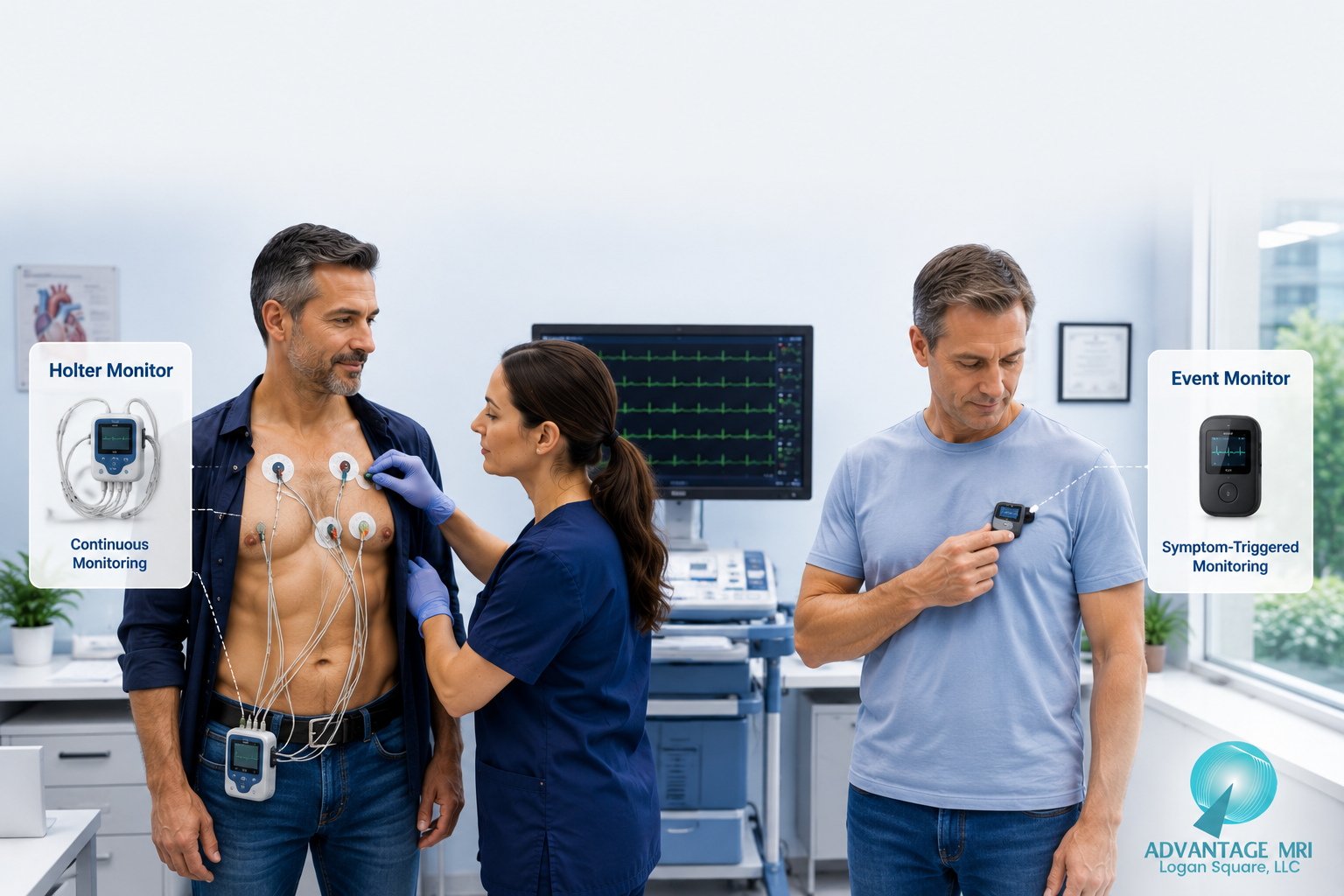
So what actually separates these two devices from each other. It comes down to three things. How long you wear it. How the recording gets triggered. And whether the data moves in real time or gets stored for later.
| Feature | Holter Monitor | Event Monitor |
|---|---|---|
| Recording period | 24 to 48 hours usually | Days or weeks up to 30 days |
| How it records | Continuously the whole time | Only when symptoms happen or auto detected |
| Best for | Daily or frequent symptoms | Occasional or unpredictable symptoms |
| Data delivery | Reviewed after monitoring ends | Can be real time with MCT models |
| Comfort | Worn short term | Worn longer term |
A holter monitor gives your doctor a dense complete record over a short window. An event monitor trades that density for a much longer stretch of coverage so it can catch something rare.
Neither one is better across the board. It genuinely depends on your situation. A cardiologist or your referring healthcare provider looks at how often you feel symptoms and picks the tool that fits.
Holter Monitor vs Zio Patch
You may have also heard the name Zio patch tossed around and wondered if that is just another word for holter monitor. It is not quite the same thing.
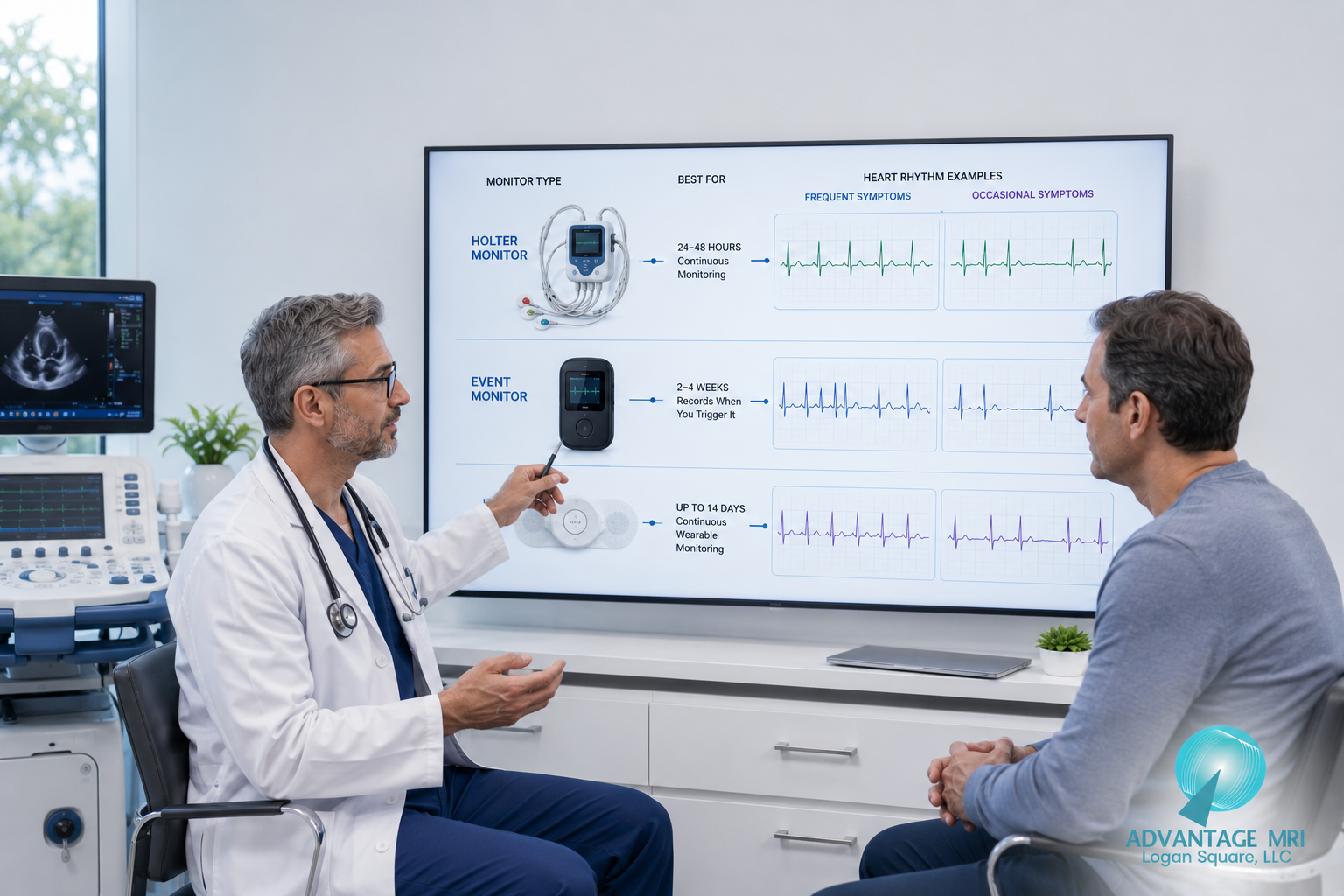
A Zio patch is a specific type of wearable ECG recorder made by iRhythm. Unlike a traditional holter monitor with wires and electrodes stuck all over your chest the Zio patch is one single adhesive patch placed on your chest with no dangling leads. It records continuously similar to a holter but can often be worn for up to 14 days which sits somewhere between a standard holter and a longer event monitor.
Patients often like the patch design because there is nothing to snag on clothing and no wire placement to worry about. Reporting turnaround also tends to be efficient since the device is built specifically for streamlined data review once the monitoring period ends. Still the right choice between a holter monitor and a patch style recorder comes down to what your doctor orders based on your symptom pattern and diagnostic needs.
Which Monitor Might Fit Your Symptoms
Lets talk through this in a real way instead of just listing specs.
If your palpitations or irregular heartbeat happen almost every day a holter monitor probably makes sense. A short window is enough to catch the activity since it is already showing up often. Two days on the device and your doctor likely has what they need for an accurate diagnosis.
But if your symptoms are the kind that show up once in a blue moon. Maybe once every couple weeks. A holter could easily come back looking completely normal simply because nothing happened to occur during those 48 hours. That is where an event monitor earns its keep. Wearing one for two to four weeks massively increases the odds of actually catching the irregular rhythm on tape when it happens.
And if your doctor is concerned about something more serious like atrial fibrillation that needs faster response an MCT monitor with real time monitoring might get recommended instead so a monitoring team can flag a dangerous rhythm the moment it shows up rather than after the fact.
None of this replaces a conversation with your own healthcare provider. This article is general information only and is not a substitute for medical advice or a diagnosis from your doctor.
What to Expect During Your Test at Advantage MRI
Testing at our Chicago facility follows a pretty straightforward path from start to finish.
First your healthcare provider sends over an order for either a holter monitor or event monitor based on your symptoms. Our team schedules your appointment and walks you through placement of electrodes and leads right there in the office. It only takes a few minutes.
From there you go home and live your normal life. Work. Errands. Sleep. Whatever your day looks like. Just keep the monitor on and follow the instructions our staff gives you about showering and any button presses if you are on an event monitor model. One small thing worth mentioning. Metal detectors at airports or courthouses generally do not interfere with these monitors but let staff know you are wearing one just so there is no confusion during screening.
Once your monitoring period wraps up you either return the device to our office or in some cases the data uploads automatically depending on the model. Our team works closely with your referring physician to get results back quickly so you are not left waiting around wondering what is going on with your heart.
Advantage MRI is ACR accredited and our imaging and cardiac testing services are overseen with board certified diagnostic radiologists on staff including Dr. Gregory T. Goldstein MD. Dr. Goldstein brings years of experience in diagnostic imaging and helped build Connected RadiologySM a collaborative approach that keeps your referring doctor looped in every step of the way.
Beyond holter and event monitoring we also offer a full range of diagnostic services at our Hermosa location including echocardiogram testing to check how well your heart is pumping and ekg testing for a quick snapshot of your hearts electrical activity. If your symptoms point toward nerve related issues rather than cardiac ones we also perform nerve conduction study and emg testing right here in house.
For patients who need broader imaging our center also provides mri imaging, digital x ray and ultrasound services so you are not bouncing between multiple locations for different tests. You can read more about our team and approach on our about us page.
FAQs About Event Monitor vs Holter
What is the difference between event monitor and holter monitor
A holter monitor records continuously for 24 to 48 hours while an event monitor only records when you feel symptoms and press a button or when it auto detects an irregular rhythm and can be worn much longer up to 30 days.
How long do you wear a holter monitor
Most patients wear a holter monitor for 24 to 48 hours though some situations call for a slightly longer recording period depending on what your doctor is looking for.
How long do you wear an event monitor
Event monitors are typically worn anywhere from a couple weeks up to 30 days since the goal is catching symptoms that do not happen every single day.
Is a Zio patch the same as a holter monitor
Not exactly. A Zio patch is a single adhesive patch style recorder without wires that can often be worn longer than a traditional holter monitor while still recording continuously.
Can an event monitor detect atrial fibrillation
Yes an event monitor including MCT models can detect atrial fibrillation and other cardiac arrhythmias especially auto trigger versions that sense an abnormal rhythm on their own without you needing to press anything.
Who typically needs a holter monitor instead of an event monitor
Patients with daily or near daily symptoms like frequent palpitations or a consistently irregular heartbeat are usually better candidates for a holter monitor since a short recording window is likely to capture the activity.
Does insurance cover holter monitor or event monitor testing
Coverage depends on your specific insurance plan and whether the test is ordered by your healthcare provider as medically necessary. Our front office team can help you check your benefits before your appointment.
What happens after the holter monitor test is done
Once your monitoring period ends you return the device to our office or the data uploads depending on the model. Our team reviews everything and sends results to your referring physician so you can discuss next steps together.
Is wearing a holter monitor or event monitor uncomfortable
Most patients tolerate these devices well. Some mild skin irritation from the electrodes is possible especially with longer wear time but it is generally not painful and clears up once the monitor comes off.
How soon do doctors get holter monitor or event monitor results
Turnaround time varies by monitor type and your specific case but our team works to get accurate reporting back to your referring physician as quickly as possible so you are not left waiting.
Conclusion
Choosing between a holter monitor and an event monitor really just comes down to how your symptoms behave. Frequent daily symptoms usually point toward a holter monitor and its short dense recording window. Occasional or unpredictable symptoms usually call for an event monitor and its longer stretch of coverage. Either way the goal is the same. Get your healthcare provider clear accurate data about your hearts rhythm so you can get an accurate diagnosis and move forward with confidence.
This article is intended for general educational purposes only and is not a substitute for professional medical advice diagnosis or treatment. Always talk with your own healthcare provider about which cardiac monitoring option is right for you.
Contact Us
- Address: 2008 North Pulaski Road Chicago IL 60639
- Phone: (773) 227 9777
- Online: Reach us anytime through our contact us page
For reliable advanced diagnostic imaging you can trust call Advantage MRI today or schedule your appointment online through our book an appointment page.
Follow us on social media for the latest health tips diagnostic imaging updates and clinic news: Facebook | Instagram | LinkedIn