Health & Imaging
Does a Nerve Conduction Study Hurt
If you got a referral for a nerve conduction study you are probably wondering one thing before anything else. Does it hurt. Its a fair question and honestly one almost every patient asks before walking through the door. The short answer is no it does not really hurt. Most people feel a quick tingling or a mild pinch and thats about it. It is not comfortable in the way a foot massage is comfortable but it is nowhere near as bad as most people picture in their head before the test.
Here is the thing. A lot of the fear around this test comes from asking, does a nerve conduction study hurt, and not knowing what it actually involves. Once you understand what happens step by step, the anxiety usually drops fast. So let’s walk through it together, starting with what the test even is.
Need to Schedule a Diagnostic Appointment?
Whether you need an MRI, ultrasound, X-ray, or another diagnostic service, Advantage MRI is here to help you take the next step in your healthcare journey.
Submit your appointment request online, and our team will contact you to confirm your visit.
Book Your Appointment →What Is a Nerve Conduction Study
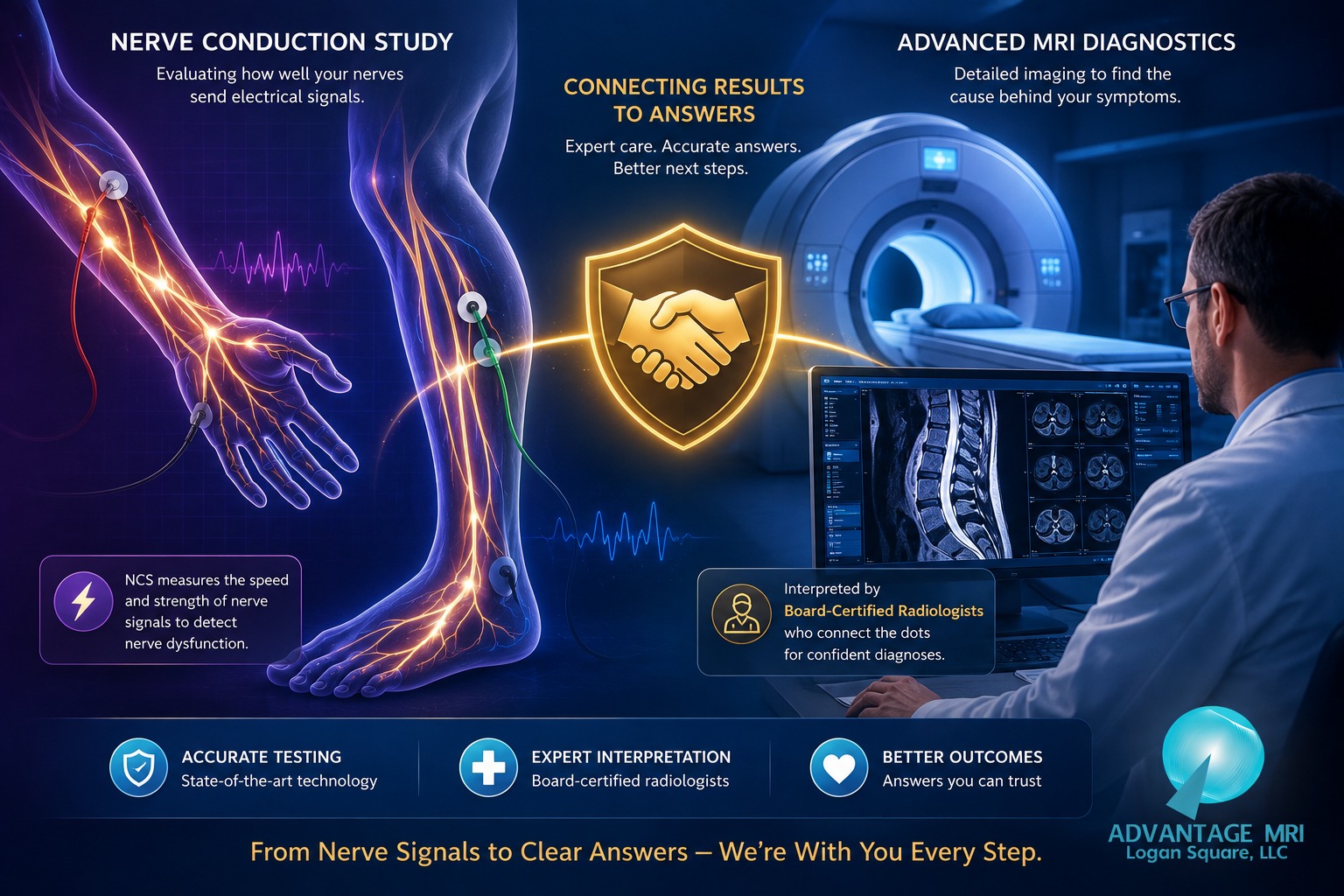
A nerve conduction study or NCS is a medical test that measures how fast and how well electrical signals travel through your nerves. Your nerves carry messages between your brain and the rest of your body using tiny electrical impulses. When a nerve gets damaged or compressed those signals slow down or weaken. This test picks up on that.
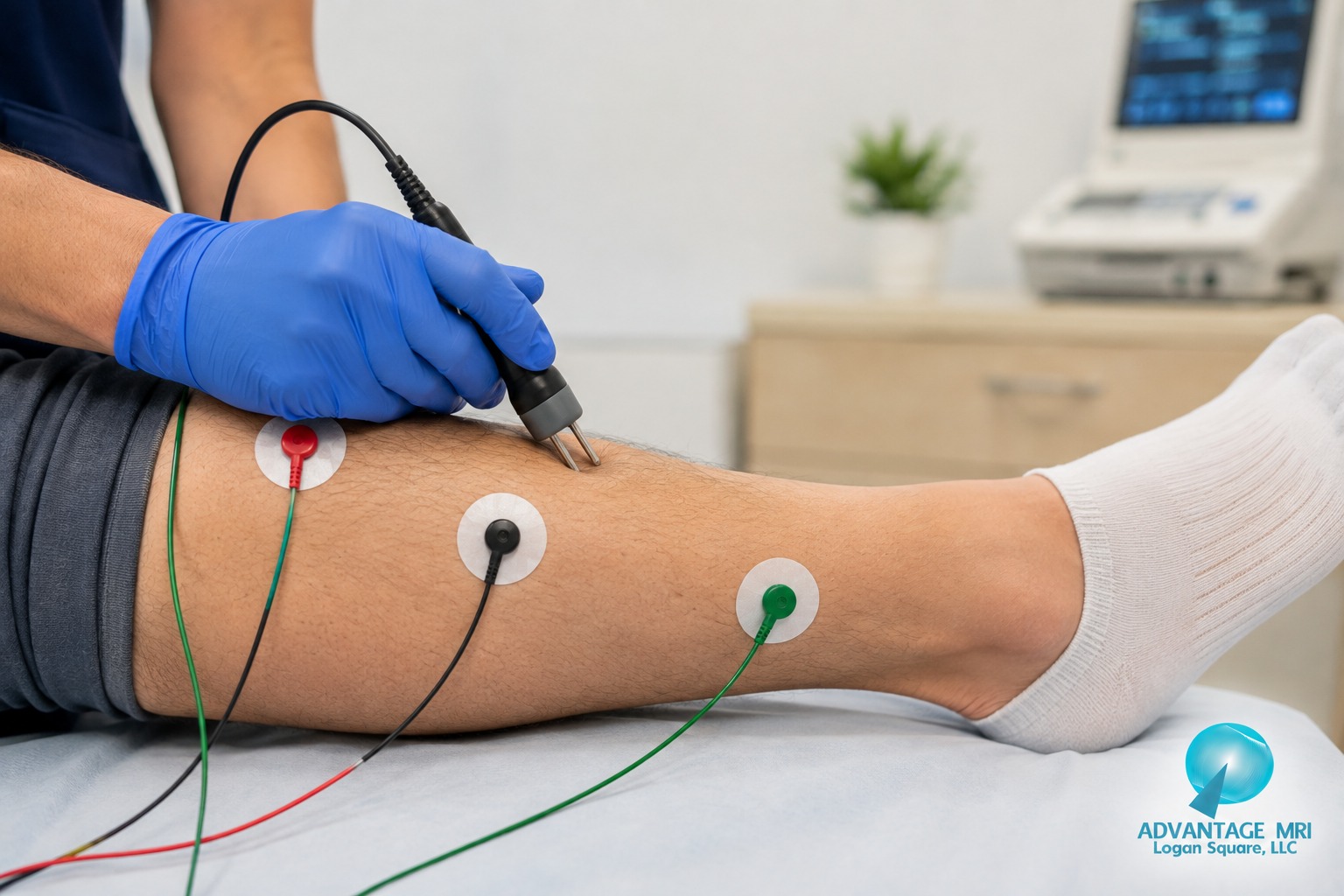
During the test small surface electrodes are placed on your skin over specific nerves. A provider then sends a mild electrical pulse through the nerve and measures how fast the signal travels and how strong it is when it reaches the muscle. It sounds intense on paper but the actual sensation is more of a quick tingle than anything painful.
Doctors use nerve conduction studies to help diagnose conditions like carpal tunnel syndrome peripheral neuropathy nerve compression and other nerve or muscle disorders. It is one of the more reliable ways to figure out whats going on when someone has numbness tingling or muscle weakness that wont go away.
How It Differs From an EMG Test
People mix these two up constantly and honestly its an easy mistake to make. A nerve conduction study tests how signals move through the nerve itself. An EMG test or electromyography measures the electrical activity inside the muscle when its at rest and when its contracting. The two are often done together because nerve and muscle problems tend to overlap. When a doctor orders emg and nerve conduction studies together they are usually trying to figure out whether a problem is coming from the nerve the muscle or both.
The EMG part involves a thin needle electrode inserted into the muscle which some people find a bit more uncomfortable than the NCS part. So if someone tells you the whole appointment was painful there is a decent chance they are describing the EMG portion and not the nerve conduction part.
Does a Nerve Conduction Study Hurt
Lets get straight to it since this is why you clicked. A nerve conduction study involves a mild electrical stimulation not a needle. Most patients describe the feeling as a quick zap or a rubber band snap against the skin. It is startling the first time. After that your body kind of gets used to the rhythm of it.
Pain tolerance is personal of course. For a lot of people it barely registers as pain at all. For others especially in more sensitive areas like the hands or feet it can feel sharper. But it does not linger. The second the pulse stops the sensation stops too.
What the Electrical Pulse Feels Like
Think of it like touching a doorknob after walking across carpet in socks. Thats close to the sensation many patients describe. Its brief its a little startling and then its gone. The provider will typically test a few different spots along the nerve so you might feel this several times during the appointment but each pulse only lasts a fraction of a second.
Some patients notice a slight muscle twitch when the pulse hits which is completely normal. Thats actually a good sign. It means the nerve signal reached the muscle the way it is supposed to.
Pain Level Compared to Other Tests
If you are trying to figure out how this stacks up against other medical tests you have had here is a simple way to think about it.
| Test | Sensation Level | What It Feels Like |
|---|---|---|
| Nerve Conduction Study | Mild | Quick tingle or zap |
| EMG Needle Portion | Moderate | Brief pinch or ache during muscle contraction |
| Standard Blood Draw | Mild | Sharp pinch then pressure |
Most people rate the NCS portion lower than a blood draw once its actually happening even though it sounds scarier beforehand.
What Happens During the Test
Knowing the steps ahead of time tends to calm nerves more than anything else. So heres roughly how a nerve conduction test is performed at a medical center.
Electrode Placement
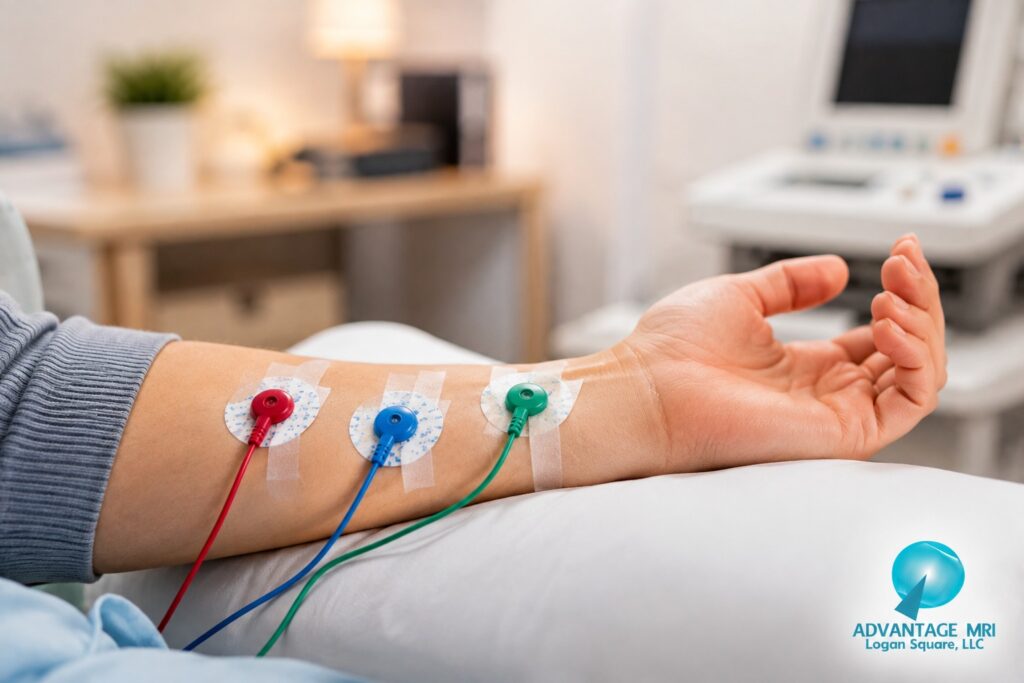
Your provider will stick electrodes on the skin over the nerve being tested and sometimes a recording electrode further down the same nerve pathway. The skin might get cleaned first to help the electrodes stick better and get a clear reading. This part does not hurt at all. Its just tape and a bit of gel.
Test Duration
A nerve conduction study usually takes anywhere from 15 minutes to an hour depending on how many nerves need to be tested. If your doctor is checking multiple areas like both hands or a leg and an arm the appointment will run longer. The provider will ask you to relax your muscles during parts of the test since tension can affect the reading.
Once its done there is no downtime needed. You can drive yourself home and go back to normal activities the same day in most cases.
Nerve Conduction Study Pain After the Test
This is where a lot of the search traffic on this topic comes from. People finish the test and want to know if soreness afterward is normal. And yes a little bit of tenderness where the electrodes were placed is common. It is usually mild and fades within a day sometimes less.
If the EMG needle portion was also done you might notice slightly more soreness or a bruise like feeling at the needle sites for a day or two after the test. This is normal too and part of how the muscle responds to the tiny needle insertion.
How Long Soreness Lasts
For most patients any discomfort clears up within 24 to 48 hours. A cold compress can help if the area feels tender. There is generally no need for pain medication but if you are more comfortable taking something like acetaminophen that is usually fine to do. Always check with your provider first if you are unsure.
When to Call Your Doctor
Mild soreness is expected. But if you notice swelling that gets worse redness that spreads or pain that does not improve after a couple days its worth calling your provider. These are not common reactions but they are worth mentioning so you know what falls outside the range of normal.
Side Effects of Nerve Conduction Study
Nerve conduction studies are considered a safe and low risk medical test. That said no test is completely without side effects so here is an honest breakdown.
| Side Effect | How Common | How Long It Lasts |
|---|---|---|
| Mild tingling during test | Very common | Seconds only |
| Slight soreness at electrode sites | Common | Under 48 hours |
| Small bruise at EMG needle sites | Occasional | A few days |
| Temporary muscle twitch | Common | Immediate and brief |
| Skin irritation from electrode adhesive | Rare | Under a day |
Common Mild Effects
Most people walk away from a nerve conduction study with nothing more than mild tenderness where the electrodes sat. Some notice a bit of redness from the adhesive which fades on its own.
Rare Effects
Serious side effects are uncommon. According to guidance from organizations like the American College of Radiology and the National Institutes of Health nerve conduction studies carry low risk when performed by trained providers. People with pacemakers or certain implanted devices should mention this ahead of time since it can affect how the test is approached.
What to Expect After Nerve Conduction Study
Life pretty much goes back to normal right away. There is no recovery period the way there might be after a procedure involving sedation or anesthesia.
Daily Activities
You can drive yourself home. You can go back to work the same day. You can shower normally once any adhesive residue is gone which usually comes off with soap and water. There is no restriction on eating drinking or exercising after a standard nerve conduction study.
Results Timeline
Results depend on the practice but many patients get a preliminary read the same day with full analysis explained by the ordering provider shortly after. A board certified radiologist typically reviews the data and helps interpret what the numbers mean for your specific nerve or muscle condition. Fast reporting matters here because the sooner you understand the results the sooner you and your doctor can build a treatment plan.
Who Needs a Nerve Conduction Study
Doctors suggest a nerve conduction study when someone has symptoms such as tingling numbness muscle weakness or pain that suggests a nerve disorder. This test helps diagnose and treat a wide range of muscle and nerve conditions including carpal tunnel syndrome peripheral neuropathy sciatica related nerve compression and other conditions affecting the brain and spinal cord signal pathways down to the muscles.
Conditions It Helps Diagnose
The list of what a nerve conduction study can help identify is honestly pretty broad. That includes carpal tunnel syndrome diabetic peripheral neuropathy nerve injury from trauma nerve compression from a herniated disc and general muscle and nerve function problems where the cause is not obvious from symptoms alone.
If your doctor also wants a closer look at soft tissue or joint structures alongside the nerve testing they may pair this with imaging like an MRI scan to get the full picture of whats going on.
How to Prepare Before Your Test
Preparation for a nerve conduction study is pretty simple. Avoid lotions or oils on the skin the day of your appointment since they can interfere with how well the electrodes stick and read signals. Wear loose comfortable clothing so the provider can access the area being tested without hassle. If you take blood thinners or have a pacemaker mention it to your provider ahead of time. And try to keep the area at a normal temperature since cold skin can slightly affect nerve conduction speed readings.
Bring your medical history and a list of current medications if this is your first time at the clinic. It helps the provider interpret your results more accurately.
Why Choose Advantage MRI in Chicago
If you are located in Chicago and searching for a nerve conduction test near Hermosa or the greater Chicago area Advantage MRI offers this diagnostic service along with a full range of imaging and testing options under one roof.
Board Certified Radiologist Care
Advantage MRI is led by Dr Gregory T Goldstein MD a board certified diagnostic radiologist with a background in orthopedic and neurological imaging. Dr Goldstein founded MetisMD and created the Connected RadiologySM approach which focuses on fast communication between imaging teams and referring physicians. Having board certified sub specialized radiologists involved in your care means your results are read by someone with real depth in nerve and muscle related imaging and diagnostics not just a general reviewer.
Fast Scheduling and Reporting
Advantage MRI is ACR accredited and built around quick scheduling and fast turnaround on reports so you are not left waiting weeks to understand whats going on with your body. The clinic also offers an on site pharmacy and IV treatment capability along with strong physician referral partnerships which makes coordinating care between your primary doctor and the imaging team smoother.
Beyond nerve conduction studies and EMG testing the clinic also provides ultrasound EKG testing echocardiogram digital x ray and holter monitor services so most diagnostic needs can be handled in one place.
Frequently Asked Questions
Does a nerve conduction study hurt a lot?
No. Most patients describe it as a quick tingling or mild zap rather than actual pain. It is brief and stops the moment the pulse ends.
Is EMG more painful than NCS?
Generally yes a little. The EMG portion uses a thin needle electrode inserted into the muscle which some patients find slightly more uncomfortable than the electrical pulses used in the nerve conduction portion.
Can a nerve conduction study damage nerves?
No. The electrical pulses used are mild and do not cause nerve damage. The test is designed specifically to measure nerve function safely.
How long does soreness last after the test?
Most soreness or tenderness at electrode or needle sites clears up within 24 to 48 hours. It is usually mild and does not require any special treatment.
Is a nerve conduction study safe during pregnancy?
This test is generally considered low risk but you should always tell your provider if you are pregnant so they can review your specific situation and confirm its appropriate for you.
How long do results take?
Timing varies by provider but many patients receive results within a few days and sometimes sooner depending on how the test is reviewed and reported.
Do I need someone to drive me home after the test?
No. There is no sedation involved so you can safely drive yourself home right after your appointment.
Can I go back to work the same day?
Yes. Most people return to normal activities including work immediately after the test since there is no downtime required.
What should I wear to my appointment?
Loose comfortable clothing works best especially something that gives easy access to the arm leg or area being tested.
How much does a nerve conduction study cost?
Cost depends on insurance coverage and how many nerves are being tested. Its best to contact the clinic directly to get pricing details specific to your situation.
Conclusion
A nerve conduction study is one of those tests that sounds scarier than it actually is. The sensation is mild the appointment is short and the information it gives your doctor can make a real difference in figuring out whats causing nerve or muscle symptoms. If you have been putting off scheduling one because of fear around pain hopefully this clears things up. It is a manageable test with real value for your diagnosis and treatment plan.
This article is for general information only and is not a substitute for professional medical advice diagnosis or treatment. Always talk to your doctor about your specific symptoms and health history.
Contact Us
- Address: 2008 N Pulaski Rd Chicago IL 60639
- Phone: (773) 227 9777
- Email: info@advantagemri.org
For reliable advanced diagnostic imaging you can trust call Advantage MRI today or schedule your appointment online.
Follow us on social media for the latest health tips diagnostic imaging updates and clinic news: Facebook | Instagram | LinkedIn.