Health & Imaging
Carpal Tunnel Test EMG: What It Is and Why You Might Need One
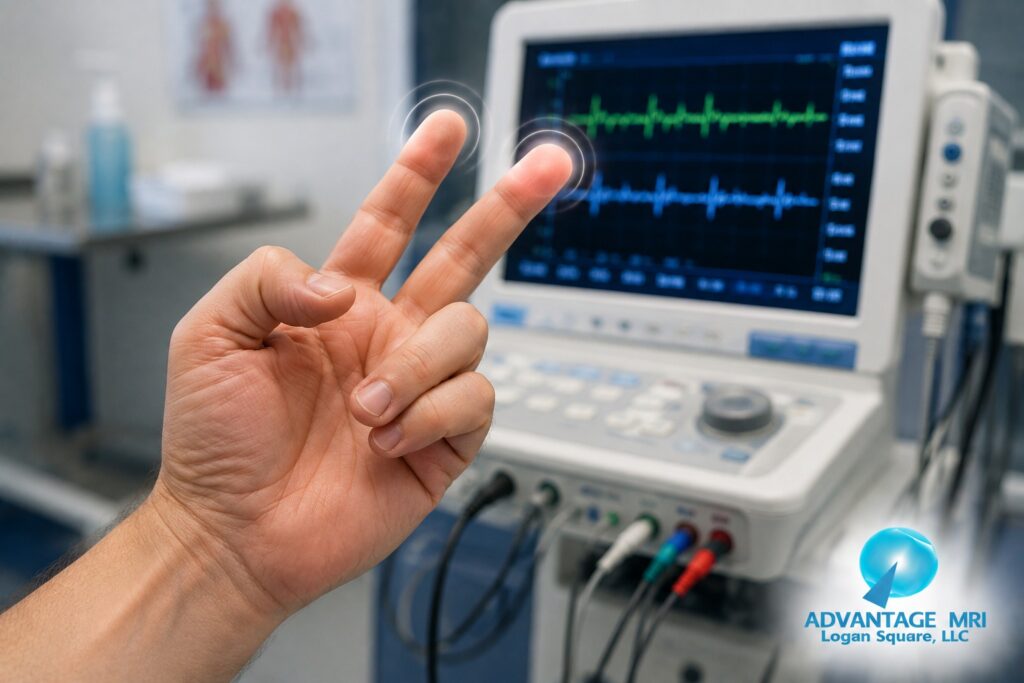
If your hand keeps going numb at night or your fingers tingle when you type it is easy to shrug it off at first. A lot of people do. But when that numbness sticks around week after week doctors often turn to a carpal tunnel test emg to find out what is really going on with the nerve.
An emg test for carpal tunnel looks at how well the nerves and muscles in your hand and wrist are working together. It is one of the most reliable ways to confirm carpal tunnel syndrome and rule out other nerve problems that can feel similar. Here is the thing though. Not everyone with wrist pain needs one right away. So knowing what the test involves and when a doctor might order it can save you some worry.
This article walks through what carpal tunnel syndrome actually is how an emg and nerve conduction study work together what to expect during testing and how to read your results once they come back.
Need to Schedule a Diagnostic Appointment?
Whether you need an MRI, ultrasound, X-ray, or another diagnostic service, Advantage MRI is here to help you take the next step in your healthcare journey.
Submit your appointment request online, and our team will contact you to confirm your visit.
Book Your Appointment →Medical disclaimer: This article is for general information only. It is not a substitute for professional medical advice diagnosis or treatment. Always talk with a qualified healthcare provider about your specific symptoms.
Carpal Tunnel Syndrome Basics
Carpal tunnel syndrome happens when there is pressure on the median nerve as it travels through a narrow passage in your wrist called the carpal tunnel. That pressure on the median nerve can cause numbness tingling and weakness in the thumb index and middle fingers. It is a common condition especially among people who do repetitive hand motions at work like typing assembly line tasks or using vibrating tools.
Symptoms of Carpal Tunnel Syndrome
The symptoms of carpal tunnel syndrome usually start slow and get worse over time. Most people notice:
- Numbness or tingling in the thumb index and middle fingers, often worse at night
- A weak grip or trouble holding small objects
- A burning or electric shock feeling that travels up the arm
- Shaking your hand to try to get feeling back, especially after driving or holding a phone
For a lot of people the symptoms come and go at first. Then one day they just do not go away.
What Causes Carpal Tunnel Syndrome
Median nerve compression can come from repetitive wrist motion, wrist anatomy, pregnancy related swelling, diabetes, thyroid conditions or arthritis. Some people are just built with a smaller carpal tunnel and that alone raises the risk. And in some cases there is no clear reason at all.
| Stage of Nerve Compression | Typical Symptoms | How It Usually Feels |
|---|---|---|
| Mild | Occasional tingling at night | Comes and goes, worse after activity |
| Moderate | Frequent numbness, some grip weakness | Interferes with daily tasks |
| Severe | Constant numbness, muscle wasting at the base of thumb | May not fully improve without treatment |
What Is an EMG Test
Direct answer: An EMG test, short for electromyography, measures the electrical activity in your muscles to check how well the nerves that control them are functioning.
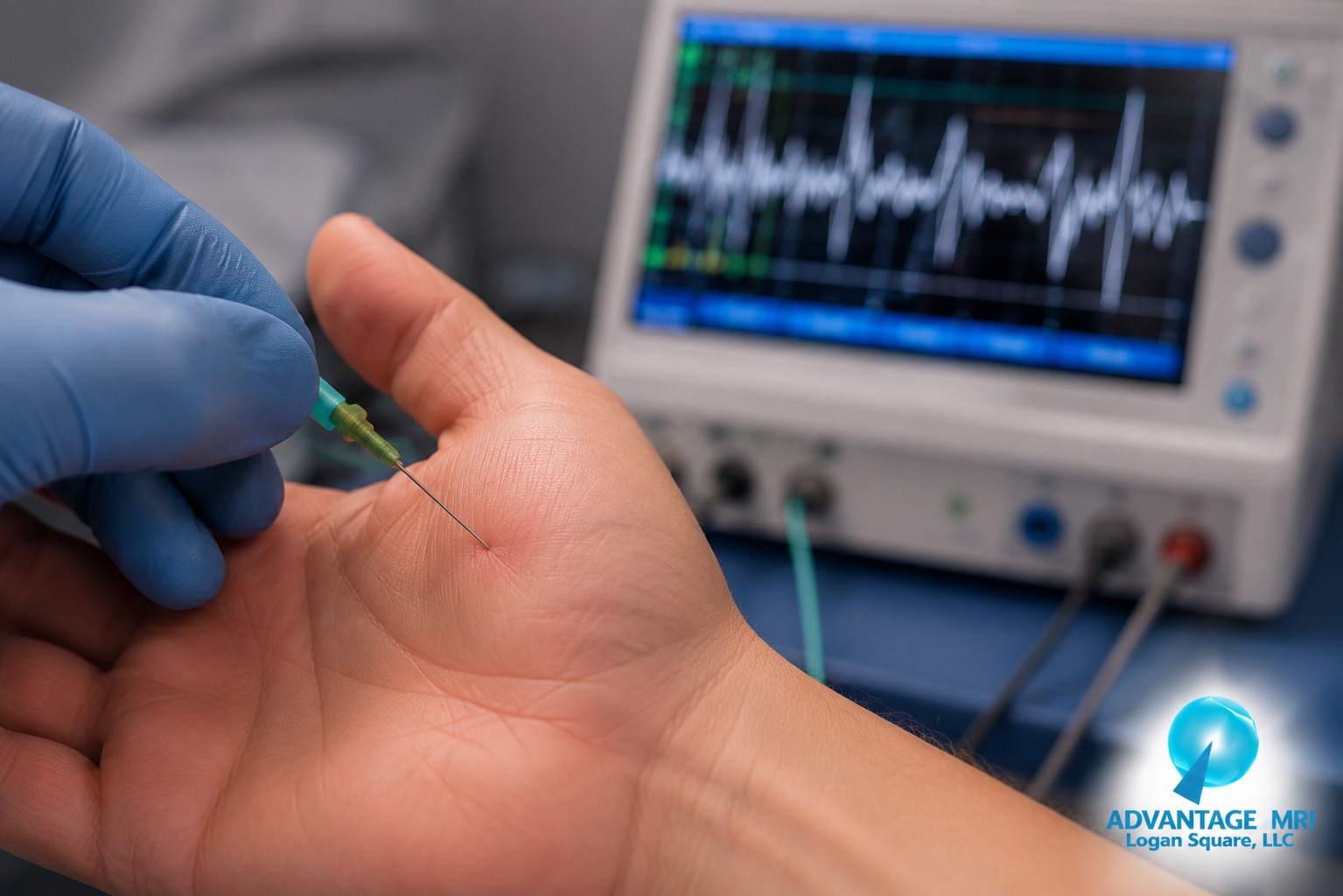
During an emg test a doctor inserts a thin needle electrode into specific muscles. The needle picks up the electrical signals your muscles produce at rest and during movement. If the nerve feeding a muscle is damaged or compressed the muscle’s electrical pattern looks different than normal. That is what the doctor is looking for.
How Electromyography Works
Muscles and the nerves that control them work as a team. When a nerve signal reaches a muscle it tells that muscle to contract. A needle emg records that response directly from inside the muscle, which gives doctors a very close look at nerve and muscle function that surface tests cannot match.
This is a form of electrodiagnostic testing, meaning it uses the body’s own electrical signals to assess nerve and muscle health rather than relying on imaging alone.
Nerve Conduction Studies for CTS Diagnosis
A carpal tunnel syndrome nerve conduction study is almost always done alongside the emg and together they are often just called emg and nerve conduction studies or NCS. While the emg looks at muscle response, the nerve conduction study measures how fast and how strong electrical signals travel along the median nerve itself.
How a Nerve Conduction Study Measures Signals
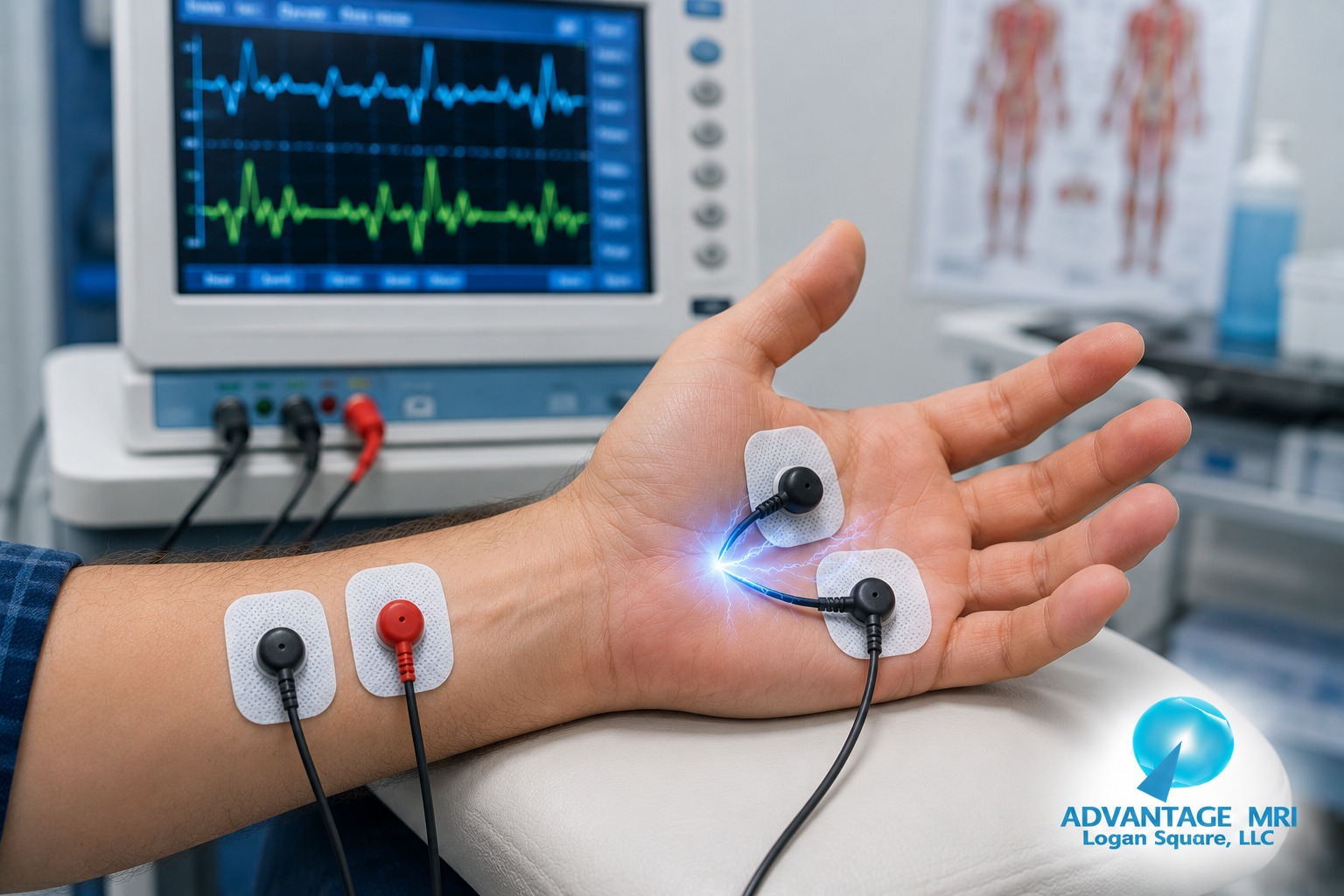
Small electrode patches are placed on the skin over the nerve. A mild electrical pulse is sent through the nerve and the machine records how quickly that signal travels and how strong it is by the time it reaches the recording site. Slower signals or weaker responses usually point to nerve compression or nerve damage somewhere along the path.
EMG vs Nerve Conduction Study
People mix these two up all the time and honestly it makes sense since they are usually done in the same visit.
| Test | What It Measures | How It Is Done |
|---|---|---|
| EMG | Electrical activity inside the muscle | Thin needle electrode inserted into muscle |
| Nerve Conduction Study | Speed and strength of nerve signals | Electrode patches on the skin, mild electrical pulse |
Doctors often order both because together they give a fuller picture. The nerve conduction study shows how the median nerve is conducting signals and the emg shows whether that has already started to affect the muscle itself.
Advantage MRI performs nerve conduction studies alongside emg testing so patients do not need multiple appointments at different locations.
Signs You Need an EMG
So when does a doctor actually decide you need an emg? Usually it comes down to a few things. If numbness or tingling has lasted more than a few weeks, if you are losing grip strength, if over the counter treatments and wrist splints have not helped or if your doctor needs to rule out a pinched nerve higher up like in the neck rather than the wrist, an emg can help sort that out.
A neurologist or referring physician typically orders the test when they need an objective answer rather than relying on symptoms alone. This matters because carpal tunnel syndrome symptoms can overlap with other nerve conditions and separating cts from other conditions is exactly what electrodiagnostic studies in carpal tunnel cases are built to do.
What Happens During EMG Testing
Knowing the steps ahead of time tends to make the whole thing feel a lot less intimidating.
Before the Test
Tell your doctor if you take blood thinners, have a pacemaker or have a bleeding disorder, since these can affect how the test is done. You can usually eat and drink normally beforehand. Avoid lotions or oils on your skin the day of the appointment since they can interfere with the electrode readings.
During the Test
The nerve conduction portion comes first. Small patches go on your skin and you will feel a brief tingling pulse, which most people describe as more surprising than painful. Then comes the needle emg portion, where a thin needle electrode is placed into a few specific muscles. You might feel a quick pinch when it goes in and the doctor may ask you to gently move or flex the muscle so the machine can record the activity.
The full test usually takes between 30 and 60 minutes depending on how many nerves and muscles need to be checked.
After the Test
Some mild soreness or a small bruise at the needle sites is normal and usually fades within a day or two. You can go back to your regular activities right away in most cases.
Reading Your EMG Results
Direct answer: Normal EMG results show smooth steady electrical activity in the muscle. Abnormal results can show unusual electrical patterns that suggest nerve compression, nerve injury or a muscle problem.
Normal vs Abnormal Findings
A normal result on both the emg and nerve conduction study usually means the median nerve is transmitting signals as expected and the muscles are responding normally. An abnormal result, on the other hand, might show slowed conduction along the median nerve or unusual electrical activity in the muscle, both of which point toward some degree of median nerve compression.
What Abnormal Results Suggest
The degree of median nerve involvement shown on the test helps guide treatment decisions. Mild findings might mean a wrist splint and activity changes are enough. More significant findings might point toward physical therapy, medication or in some cases surgery. Your emg results, paired with your symptoms and a physical exam, help your doctor assess the severity of your carpal tunnel syndrome and figure out the right next step.
It is worth mentioning that the American Academy of Neurology has a practice parameter for electrodiagnostic studies that outlines how these tests should be performed and interpreted, which is part of why emg and nerve conduction studies remain a trusted standard for diagnosing carpal tunnel syndrome.
EMG vs Other Diagnostic Tests
An emg is not the only tool doctors use and it is not always the first one either.
EMG vs MRI vs Ultrasound
MRI imaging and ultrasound show the physical structure of the wrist, including swelling, cysts or anatomical narrowing that might be pressing on the nerve. An emg, by comparison, shows how the nerve is actually functioning rather than just what it looks like. Doctors sometimes order imaging first if they suspect a structural cause, then follow up with an emg to see how much the nerve function has been affected. In other cases, especially when symptoms are already fairly clear, the emg comes first.
Neither test replaces the other. They just answer different questions.
Why Choose Advantage MRI in Chicago
Getting tested somewhere close to home in Hermosa matters when you are already dealing with hand pain and do not want to travel far. Advantage MRI is located at 2008 N Pulaski Rd in Chicago and offers emg testing along with a full range of diagnostic imaging services.
Board Certified Radiologists You Can Trust
Advantage MRI is accredited by the American College of Radiology and imaging is reviewed by board certified sub specialized radiologists including Dr. Gregory T. Goldstein MD, founder of MetisMD and creator of Connected RadiologySM, whose background is in orthopedic and neurological imaging. That kind of specialized experience matters when the results of your test several different nerves and muscles need a careful and accurate read.
Fast Scheduling and Reporting
Advantage MRI offers fast scheduling and quick turnaround on reporting, along with on site pharmacy and IV treatment capability when needed. The clinic also works directly with referring physicians so results get where they need to go without unnecessary delays. Learn more about Advantage MRI or reach out through the contact us page with any questions before your visit.
FAQs
What is an emg test used for?
An emg test measures the electrical activity inside a muscle to check whether the nerve controlling that muscle is working normally. It helps diagnose conditions like carpal tunnel syndrome, nerve compression and certain types of neuropathy.
How does a nerve conduction study diagnose carpal tunnel syndrome?
A nerve conduction study sends a small electrical pulse through the median nerve and measures how fast and how strong the signal travels. Slower or weaker signals usually point toward compression at the wrist, which supports a carpal tunnel syndrome diagnosis.
Is the emg test painful?
Most people feel a brief tingling sensation from the nerve conduction portion and a quick pinch when the needle electrode is inserted. It is generally described as uncomfortable rather than painful and it does not last long.
How long does an emg test take?
The full test, including both the nerve conduction study and the needle emg, usually takes between 30 and 60 minutes depending on how many nerves and muscles are being checked.
What should I do to prepare for an emg?
Avoid lotions or oils on your skin the day of the test and let your doctor know if you take blood thinners or have a pacemaker. Otherwise you can eat drink and go about your day normally beforehand.
How soon will I get my emg results?
Many patients get a preliminary discussion of findings the same day, with a full written report sent to the referring physician shortly after. Advantage MRI is known for fast reporting turnaround.
Can an emg test detect early carpal tunnel syndrome?
Yes. Even mild median nerve compression can sometimes be picked up on a nerve conduction study before symptoms become severe, which is part of why doctors use it to catch problems early and help guide treatment decisions.
What is the difference between emg and nerve conduction study?
A nerve conduction study measures how signals travel along the nerve using skin electrodes, while an emg measures the muscle’s electrical response using a needle electrode. They are usually done together for a complete picture.
Do I need a doctor referral for emg testing?
In most cases yes, a referral from your physician or neurologist is needed. If you are unsure, you can contact Advantage MRI directly to ask about the process.
Where can I get an emg test near Hermosa Chicago?
Advantage MRI in the Hermosa neighborhood of Chicago offers emg testing along with nerve conduction studies, EKG testing, digital x ray, echocardiogram and holter monitor services, all reviewed by board certified radiologists.
Conclusion
A carpal tunnel test emg is not something to be nervous about. It is a quick and well established way to figure out what is causing your hand numbness or tingling and it gives your doctor real information to work with instead of guesswork. Whether your results come back normal or point toward some degree of nerve compression, having that answer is the first real step toward feeling better.
If wrist or hand symptoms have been sticking around, talking to your doctor about whether an emg and nerve conduction study makes sense for you is a reasonable next move.
Contact Us
- Address: 2008 N Pulaski Rd, Chicago, IL 60639
- Phone: (773) 227 9777
- Website: Book an appointment
For reliable advanced diagnostic imaging you can trust call Advantage MRI today or schedule your appointment online.
Follow us on social media for the latest health tips, diagnostic imaging updates and clinic news: Facebook | Instagram | LinkedIn.