Health & Imaging
Echocardiogram CPT Code 93306 Explained in Plain Terms
You just got your bill after an echo test and there is a string of numbers sitting right next to the charge. 93306. No explanation. No context. Just a code that somehow decides how much you owe and what your insurance will pay.
Here’s the thing. That number is not random. It is a CPT code and it tells your insurance company exactly what kind of echocardiogram you had. Once you understand what 93306 actually means, the rest of the bill starts to make a lot more sense.
This article breaks down what an echocardiogram cpt code is, how 93306 works, how it compares to other echo codes and what actually affects what you pay. We will also cover the coding side for anyone working in a cardiology practice or handling medical billing, since getting the code selection right matters just as much on the provider side as it does for the patient reading the bill.
Need to Schedule a Diagnostic Appointment?
Whether you need an MRI, ultrasound, X-ray, or another diagnostic service, Advantage MRI is here to help you take the next step in your healthcare journey.
Submit your appointment request online, and our team will contact you to confirm your visit.
Book Your Appointment →Quick note before we start. This article is for general information only. It is not medical advice and it does not replace a conversation with your doctor or your insurance company about your specific coverage.
What Is a CPT Code and Why It Matters for Your Echo
CPT stands for Current Procedural Terminology. Every medical test, procedure and service performed in the United States gets assigned one of these codes. It is basically the universal language doctors, hospitals and insurance companies use to talk to each other about what happened during your visit.
When you get an echocardiogram, the imaging center or hospital does not just write “echo test” on your bill. They use the exact cpt code echocardiogram procedure matches, so your insurance knows precisely what was done, what equipment was used and what level of interpretation was involved. Without that code, a claim cannot be processed correctly and reimbursement gets stuck or denied outright.
Who Assigns These Codes
The American Medical Association owns and maintains the CPT code set. They update it every year to reflect changes in medical technology and clinical practice. A cardiologist does not personally pick the code off the top of their head during your appointment. A trained coder, sometimes working directly for the cardiology practice and sometimes through outside billing services, reviews the physician’s documentation and picks the code that matches what was actually performed.
That is why accurate documentation matters so much. If the doctor’s notes are vague, the coder might not have enough detail to bill correctly and that is one of the most common sources of coding errors in cardiovascular imaging.
CPT Code 93306: What It Actually Covers
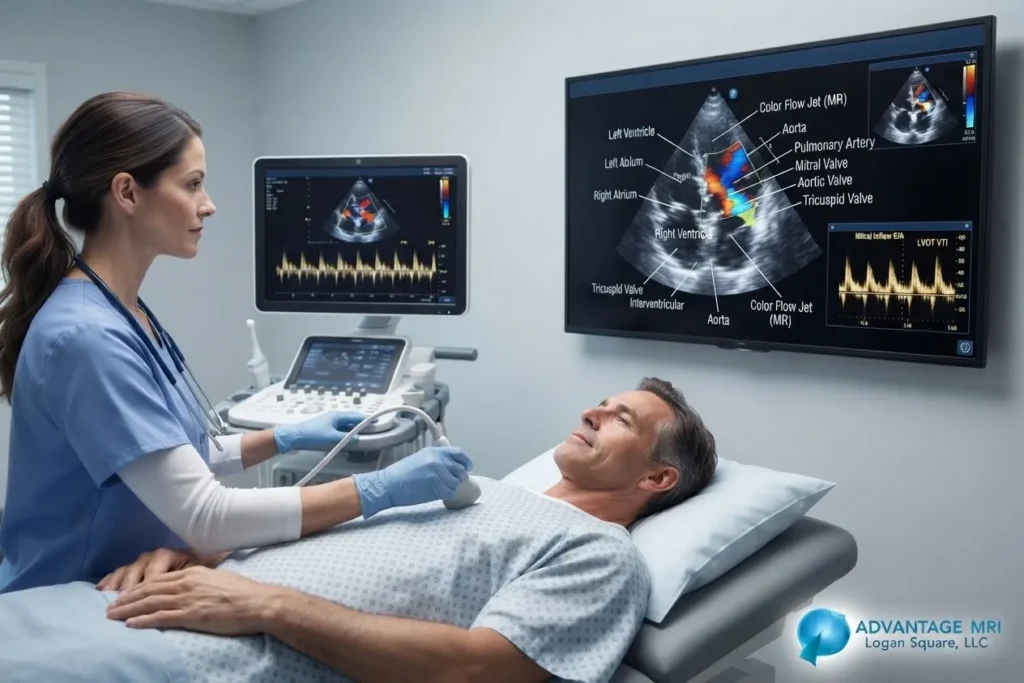
Direct answer: CPT code 93306 is used for a complete transthoracic echocardiogram with spectral and color flow doppler. It covers real time 2D imaging, M mode recording when used and both types of doppler assessment, all done from outside the chest wall using an ultrasound probe.
In plain language, 93306 is used when a sonographer captures a full set of heart images and blood flow measurements through the chest, not through a scope down the throat. This is the standard test most people picture when they hear the word echocardiogram.
A standard transthoracic echocardiogram evaluates the heart’s chambers, valves, walls and overall pumping function. The spectral doppler component measures blood flow speed and direction, which helps identify valve problems or abnormal pressure inside the heart. Color flow doppler adds a visual layer, showing blood flow patterns as color overlays on the black and white ultrasound image so any leaking or narrow valve becomes easier to spot.
93306 is used any time all three components, 2D imaging and M mode, spectral doppler and color flow doppler, are performed together as a complete study. If only part of that workup is done, a different code applies, which we will get into shortly.
| Included in CPT 93306 | Not Included in CPT 93306 |
|---|---|
| Real time 2D imaging of the heart | Stress testing (rest and cardiovascular stress combined) |
| M mode recording when used | Transesophageal probe imaging |
| Spectral doppler assessment | Contrast agents |
| Color flow doppler assessment | Extended rhythm monitoring |
| Images of the heart chambers and valves | Follow up limited rechecks (billed under 93308) |
Transthoracic Echocardiogram CPT Code vs Other Echo CPT Codes
Not every echocardiogram gets billed the same way and this is where a lot of confusion happens for patients and even for newer coders. The code depends on how much of the heart was imaged, what equipment was used and whether the test involved rest, stress or a scope.
93306 vs 93307
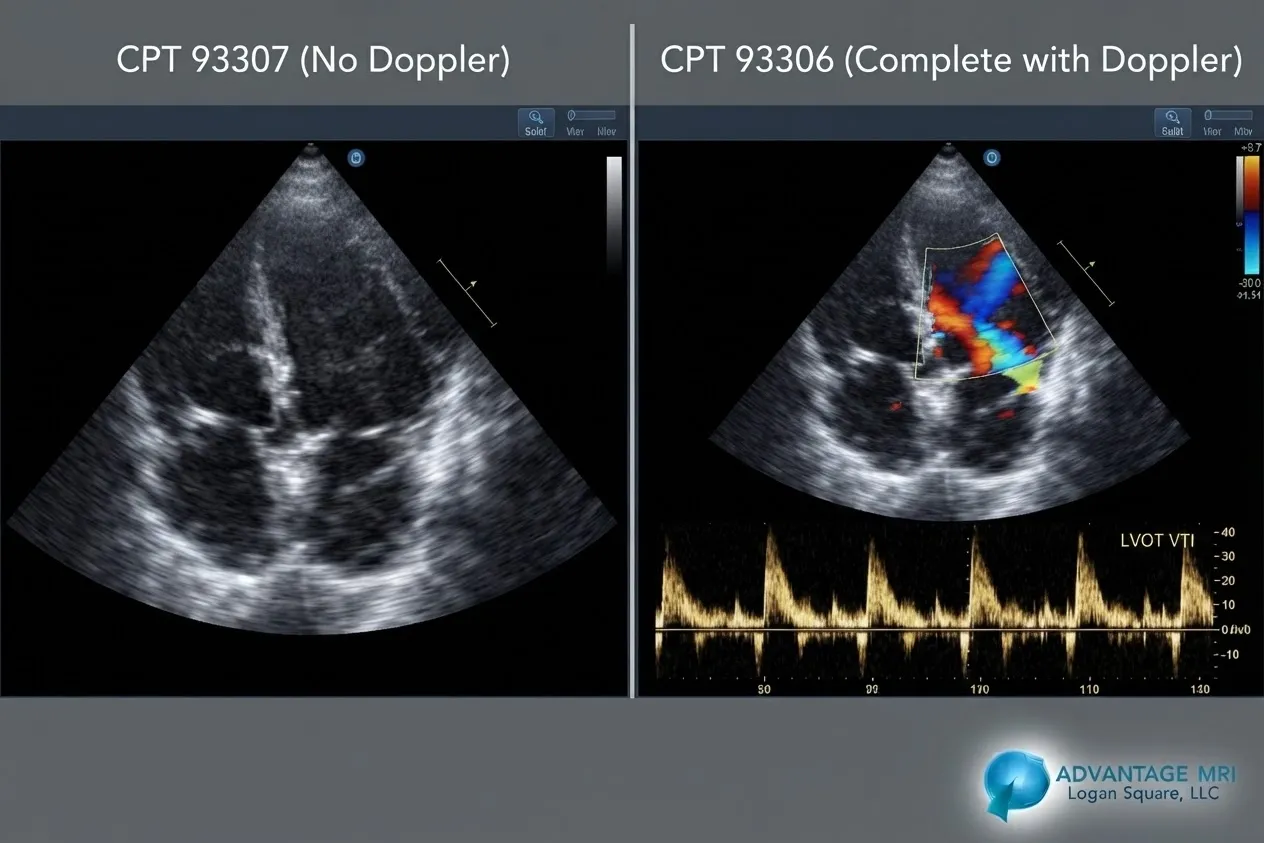
Code 93307 is for a standard transthoracic echocardiogram without spectral or color flow doppler. So the sonographer captures the 2D images and M mode recordings but skips the doppler blood flow assessment. This is a shorter, more limited study and it gets reimbursed at a lower rate than 93306 because less work and less interpretation went into it.
There is also code 93308, which applies to a limited or follow up transthoracic echocardiogram. This is used when a patient is coming back for a targeted recheck of something specific, like monitoring a valve that was already flagged as a concern, rather than a full head to toe evaluation of the heart.
Transesophageal Echocardiogram CPT Code
A transesophageal echocardiogram or TEE, is a completely different procedure from a standard transthoracic scan. Instead of the probe moving across the chest, a thin tube with an ultrasound sensor is guided down the esophagus, giving a much closer view of the heart from behind, especially useful for looking at heart valves or checking for blood clots before certain procedures. Because it is invasive and requires sedation, the transesophageal echocardiogram cpt code is different from anything used for a standard chest wall exam. Code 93312 typically applies to a complete TEE that includes both the imaging and the interpretation.
Stress Echocardiogram Codes
When a cardiovascular stress test is combined with echo imaging, meaning the heart is imaged both at rest and again after exercise or medication induced stress, a stress echo code like 93350 or 93351 applies instead. These codes reflect the added complexity of capturing and comparing two separate sets of heart images.
| CPT Code | Exam Type | Short Description |
|---|---|---|
| 93306 | Complete TTE with doppler | Standard transthoracic echo with 2D, M mode, spectral and color flow doppler |
| 93307 | Complete TTE without doppler | Same 2D and M mode imaging, doppler skipped |
| 93308 | Limited or follow up TTE | Targeted recheck of a previously identified issue |
| 93312 | Complete TEE | Probe guided through the esophagus, includes imaging and interpretation |
| 93350/93351 | Stress echocardiogram | Heart imaged at rest and again after exercise or medication induced stress |
If you are trying to understand your bill, matching the code on your paperwork against a table like this is usually the fastest way to figure out exactly which type of echo you had.
How Insurance and Medicare Handle 93306
Most private insurance plans and Medicare cover a complete transthoracic echocardiogram when it is medically necessary, meaning a doctor ordered it to evaluate a real symptom or condition, not just as a routine check without cause. Coverage details do vary by plan though, so calling your specific insurance provider before your appointment is always the safer move.
For Medicare specifically, reimbursement for cpt 93306 is tied to whether the diagnosis code submitted alongside it supports medical necessity. This is where ICD 10 codes come into play. The echocardiogram cpt code tells the payer what test was done and the ICD 10 code tells them why it was ordered, things like heart failure, chest pain or an abnormal heart murmur picked up during a physical exam. Both codes have to line up correctly for the claim to go through smoothly.
Common Reasons for Claim Denials
A few things trip up echocardiogram claims more than anything else.
- The ICD 10 diagnosis code does not clearly support why the echo was medically necessary
- The wrong code was billed, for example 93306 was used when the doppler component was not actually performed
- Missing or incomplete documentation from the physician
- The payer requires prior authorization and it was not obtained before the test
Any one of these can trigger a denial or a request for more information, which slows down payment and can leave patients confused about why their bill has not been resolved.
Modifiers and Add On Codes Coders Use With 93306
CPT codes rarely tell the whole story on their own. Modifiers get added to clarify details the base code cannot capture by itself.
Modifier 26 Explained Simply
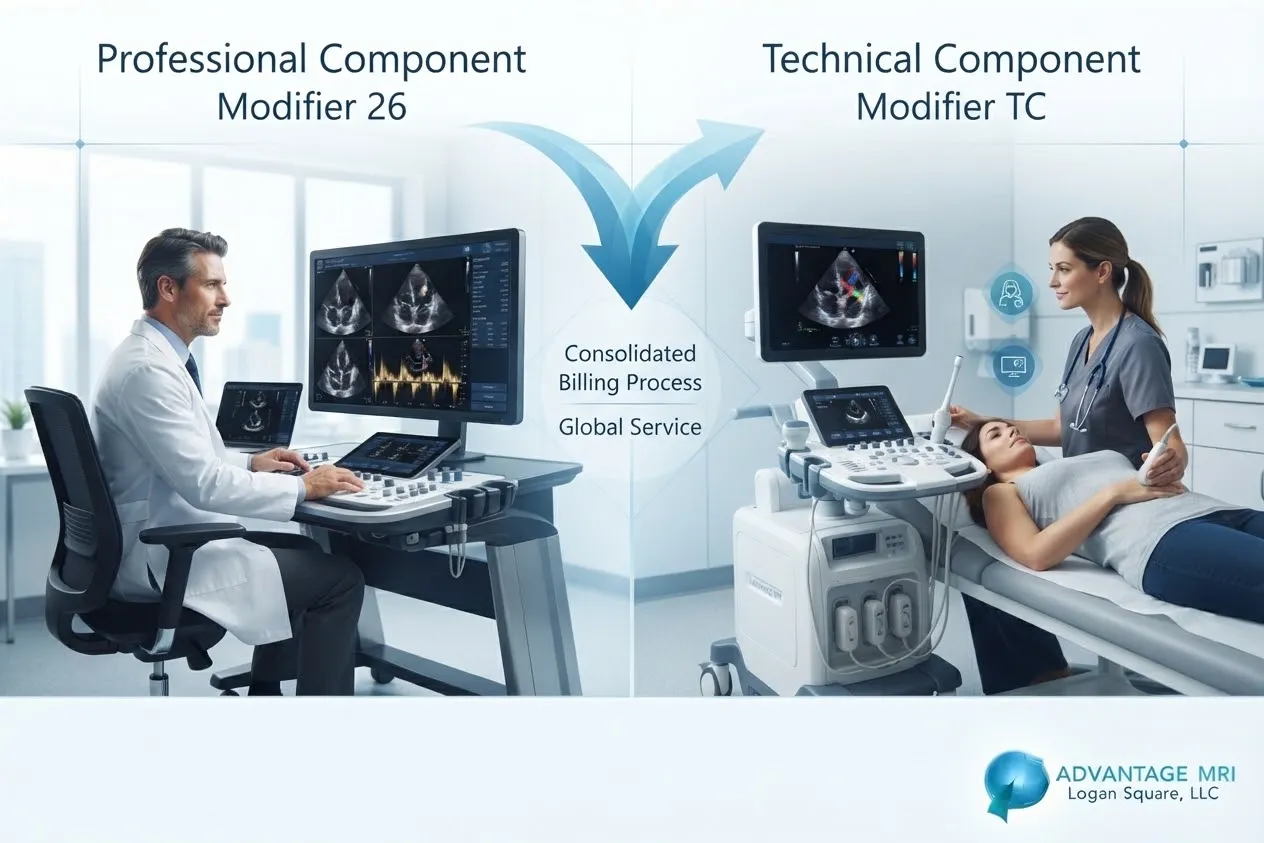
Modifier 26 identifies the professional component of a service, meaning the physician’s interpretation and written report, separate from the technical component, which covers the equipment, the sonographer’s time and the facility itself. When a cardiologist reviews and reports on an echo that was actually performed at a different facility, they might bill 93306 with modifier 26 attached to indicate they are only billing for their interpretation, not the technical side of the exam.
This split matters a lot in revenue cycle management, especially in settings where the imaging and the physician interpretation happen at different locations or under different billing entities.
When Add On Codes Apply
An add on code cannot be billed by itself. It always has to be attached to a primary procedure code and it represents extra work done during the same visit. In echocardiography, add on codes might apply when additional imaging views or specific measurements beyond the standard protocol are performed and documented separately.
| Modifier / Add On Code | What It Represents | Example Use |
|---|---|---|
| Modifier 26 | Professional component only (physician interpretation and report) | Cardiologist interprets an echo performed at a separate facility |
| Modifier TC | Technical component only (equipment, sonographer, facility) | Imaging center bills for the equipment and staff time only |
| Add on code | Extra work beyond the base procedure, billed alongside a primary code | Additional imaging views or measurements documented beyond the standard protocol |
What Affects Echocardiogram Cost Beyond the CPT Code
The cpt code is only one piece of what determines your final bill. A few other factors shift the number up or down.
Facility fees differ between a hospital outpatient department and a standalone diagnostic imaging center and hospitals typically charge more for the same exact test. Your specific insurance plan also plays a role, since deductibles, copays and whether the imaging center is in network all change what you personally owe even when the billed amount stays the same. And if your doctor orders additional testing alongside the echo, like an EKG test to check your heart’s electrical activity, that gets billed separately with its own code and its own cost.
Other Diagnostic Tests That Work Alongside Your Echocardiogram
A cardiologist rarely relies on one test in isolation. Depending on your symptoms, an echocardiogram often gets paired with other diagnostic imaging to build a complete picture of what is going on.
An ultrasound exam might be ordered separately if your doctor needs to look at organs or blood vessels outside the heart itself. If you have symptoms like numbness or tingling that could point to a nerve issue rather than a cardiac one, a nerve conduction study helps rule that out. Some patients need broader imaging too and that is where MRI imaging or a digital X ray comes in, giving a detailed look at soft tissue or bone structure depending on what your physician is trying to confirm.
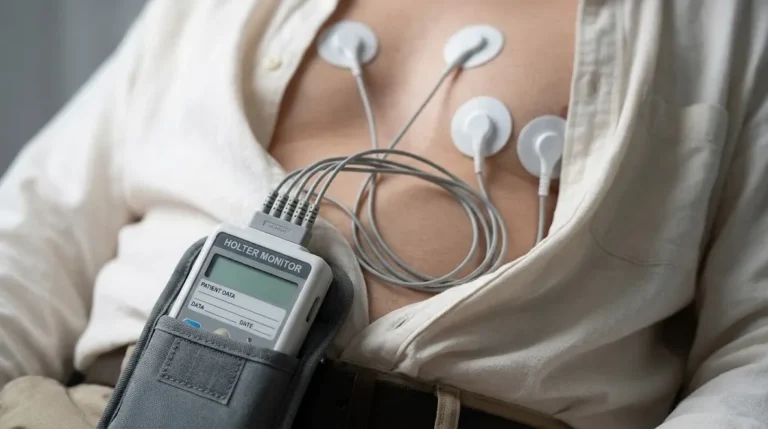
For patients dealing with muscle weakness alongside cardiac symptoms, an EMG test checks how well the muscles and nerves are communicating. And if your doctor wants to monitor your heart’s rhythm over an extended period rather than a single snapshot, a holter monitor tracks your heart activity continuously over a day or more, which catches irregular patterns that a short in office echo might miss entirely.
Each of these tests has its own purpose and its own billing code and none of them replace what an echocardiogram shows about the heart’s actual structure and pumping ability. They work together, not in place of each other.
Echocardiogram Testing at Advantage MRI in Chicago
If you are in the Hermosa neighborhood or anywhere around Chicago and your doctor has ordered an echocardiogram, Advantage MRI handles the imaging with board certified radiologists reading and reporting on every study. The practice is ACR accredited, which means the equipment, staff qualifications and quality control all meet standards set by the American College of Radiology.
Dr. Gregory T. Goldstein, the founder of MetisMD and creator of Connected RadiologySM, brings board certified diagnostic radiology experience with a focus on orthopedic and neurological imaging to the practice and that same standard of accuracy carries through every test performed at the center, including cardiac imaging. You can read more about the team’s background on the about us page.
Scheduling is fast, reporting turnaround is quick and the center works directly with referring physicians so results get where they need to go without unnecessary delay. An on site pharmacy and IV treatment capability are also available for patients who need them as part of their visit.
FAQ
What Is Cpt Code 93306 Used For?
CPT code 93306 is billed for a complete transthoracic echocardiogram that includes 2D imaging, M mode when used, spectral doppler and color flow doppler. It is the standard code for a full echo exam done through the chest wall.
Is Cpt Code 93306 the Same as a Transthoracic Echocardiogram?
Yes but specifically the complete version. A standard transthoracic echocardiogram can be billed under a few different codes depending on whether doppler was performed and whether it was a full study or a limited follow up and 93306 covers the complete study with full doppler assessment.
Does Medicare Cover Cpt 93306?
Medicare generally covers a complete transthoracic echocardiogram when it is ordered for a medically necessary reason and the diagnosis code submitted supports that necessity. Coverage details can vary, so checking directly with Medicare or your specific plan before the test is the best way to confirm your situation.
What Is the Difference Between 93306 and 93307?
93306 includes spectral and color flow doppler along with the standard imaging. 93307 covers the same 2D and M mode imaging but without the doppler component, making it a more limited study that is typically reimbursed at a lower rate.
What Cpt Code Is Used for a Transesophageal Echocardiogram?
A complete transesophageal echocardiogram, where the probe is guided through the esophagus rather than across the chest, is typically billed under CPT code 93312. This is a separate and more involved procedure compared to a standard transthoracic echo.
Why Did My Echocardiogram Claim Get Denied?
Common reasons include a diagnosis code that does not clearly support medical necessity, the wrong echo code being submitted, incomplete physician documentation or a missing prior authorization required by the payer.
What Does Modifier 26 Mean on an Echo Bill?
Modifier 26 indicates the professional component only, meaning the physician’s interpretation and report, separate from the technical component that covers the equipment and facility. It usually appears when the interpreting physician is billing separately from the facility that performed the actual imaging.
How Much Does an Echocardiogram With Cpt Code 93306 Cost?
Cost varies based on where the test is performed, your specific insurance plan, your deductible status and whether the facility is in network. A standalone imaging center is generally less expensive than a hospital outpatient department for the same exact exam.
Who Can Bill Using Cpt Code 93306?
Any provider or facility that actually performs a complete transthoracic echocardiogram with doppler, including cardiology practices and accredited diagnostic imaging centers, can bill using 93306, as long as the documentation supports that the full study was completed.
Where Can I Get an Echocardiogram Done in Chicago?
Advantage MRI, located in the Hermosa neighborhood of Chicago, offers echocardiogram testing along with a full range of diagnostic imaging services. Appointments can be scheduled online or by calling the office directly.
Conclusion
Understanding your echocardiogram cpt code does not require a coding certification. Once you know that 93306 means a complete transthoracic echo with doppler, that 93307 skips the doppler and that a transesophageal echocardiogram cpt code like 93312 is a completely different procedure altogether, your bill stops feeling like a mystery. The number next to your charge is simply telling you and your insurance exactly what test was performed and that clarity helps everyone, from the patient reading a statement to the coder submitting a claim, get on the same page faster.
For reliable, advanced diagnostic imaging you can trust, call Advantage MRI today or schedule your appointment online.
Contact Us
- Address: 2008 N Pulaski Rd, Chicago, IL 60639
- Phone: (773) 227 9777
- Email: info@advantagemri.org
Follow us on social media for the latest health tips, diagnostic imaging updates and clinic news: Facebook | Instagram | LinkedIn.