Health & Imaging
Echocardiogram Stress Test: What It Is and What to Expect
If your doctor just mentioned a stress echocardiogram and you’re not totally sure what that means, you’re not alone. A lot of people hear “stress test” and picture something scary. In reality it’s a pretty routine way for doctors to see how well your heart works when it’s under pressure, not just when you’re sitting still.
Here’s the short version. An echocardiogram stress test combines two things you might already know about separately: an echocardiogram, which uses sound waves to make images of your heart and a stress test, which checks how your heart handles physical activity. Put them together and doctors get a much clearer picture of your heart health than either test gives on its own.
This guide walks through how the test works, how to prepare for it, what happens during your appointment and what your results might mean. We’ll also touch on how this differs from a resting echocardiogram or a standard stress EKG, since those terms get mixed up a lot.
Need to Schedule a Diagnostic Appointment?
Whether you need an MRI, ultrasound, X-ray, or another diagnostic service, Advantage MRI is here to help you take the next step in your healthcare journey.
Submit your appointment request online, and our team will contact you to confirm your visit.
Book Your Appointment →Disclaimer: This article is for general information only. It’s not a substitute for medical advice, diagnosis or treatment from your doctor.
What Is a Stress Echocardiogram
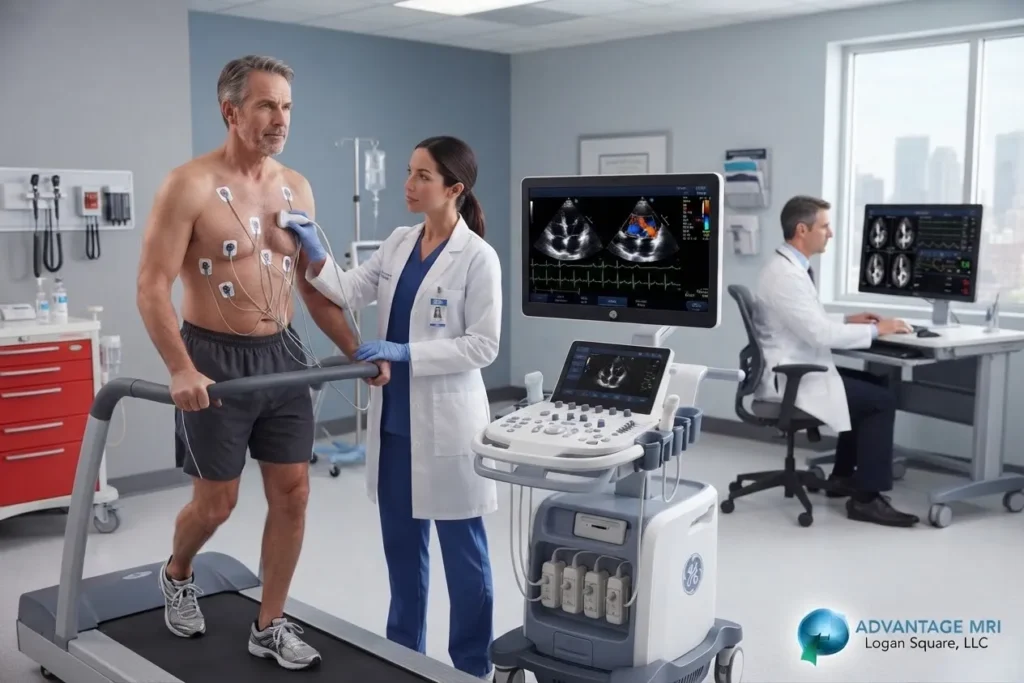
A stress echocardiogram is an imaging test that shows moving pictures of your heart while it’s working harder than usual, usually because you’re walking on a treadmill. A trained technician uses a handheld device called a transducer, along with a bit of gel, to capture sound wave images of your heart muscle, heart walls and valves. Those images get compared before and after exercise.
The point of doing this while your heart rate is up is simple. Some problems with blood flow to the heart, especially issues linked to coronary artery disease, only show up when the heart is working harder. A resting echocardiogram might look completely normal but add exercise into the mix and a weak spot in the heart wall can suddenly become obvious.
How It Differs From a Regular Echo
A regular or resting, echocardiogram captures images of your heart while you’re lying still. It’s useful for checking heart valves, chamber size and overall pumping strength under normal conditions. A stress echocardiogram takes that same imaging technology and adds a baseline echocardiogram plus a second set of images taken right after exercise, so your cardiologist can compare the two.
| Resting Echocardiogram | Stress Echocardiogram | |
|---|---|---|
| When it’s done | While you’re lying still | Before and right after exercise or medication |
| What it shows | Heart valves, chamber size, pumping strength at rest | How heart walls and blood flow respond under exertion |
| Best for | General heart structure checks | Detecting reduced blood flow or hidden coronary issues |
Why Doctors Order It
Doctors typically order this test when someone has chest pain, shortness of breath or other symptoms that might point to reduced blood flow in the arteries that supply your heart. It’s also used to check how well the heart is functioning after a heart attack, before certain surgeries or as part of managing an existing heart condition.
How the Stress Echo Test Works
There are two main ways to get the heart working harder for this test and which one you get usually depends on your ability to exercise.
Exercise Stress Echocardiogram
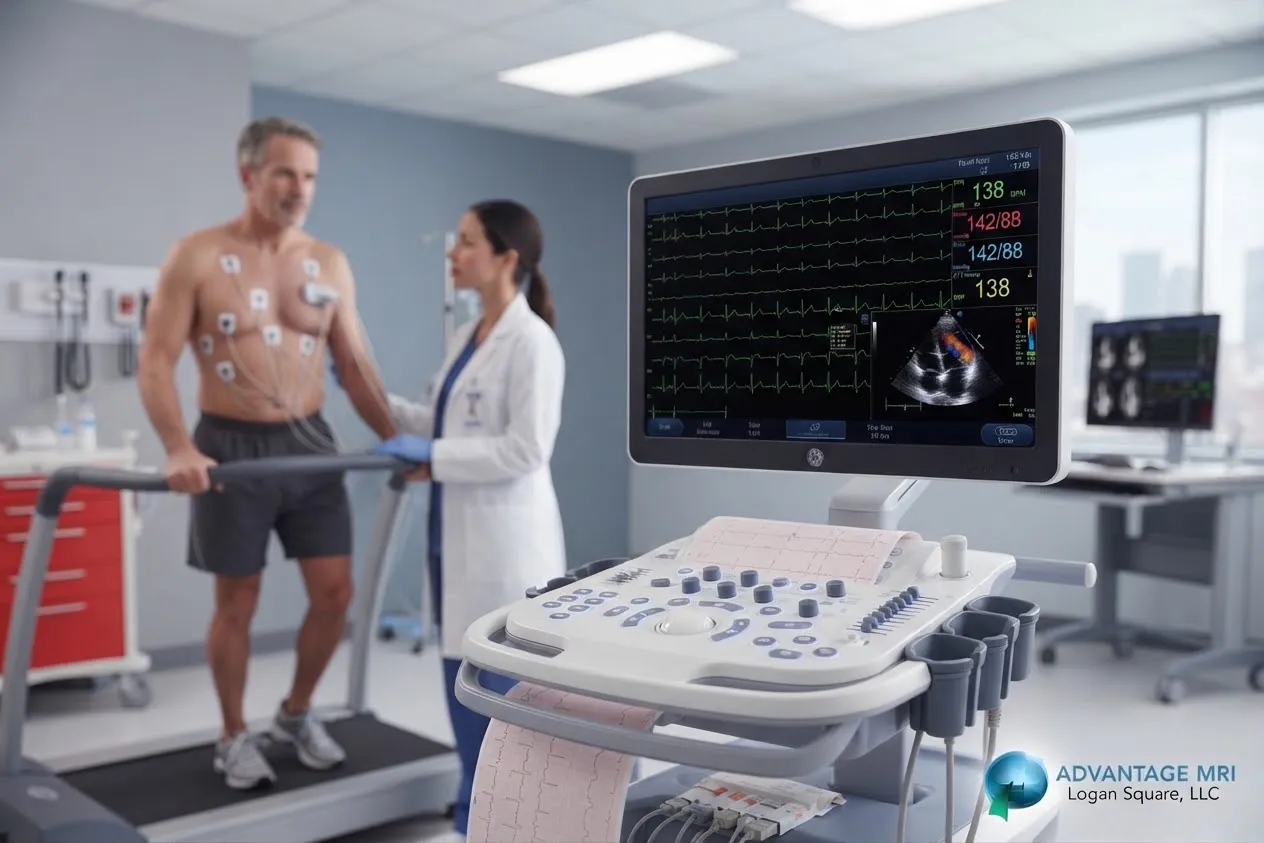
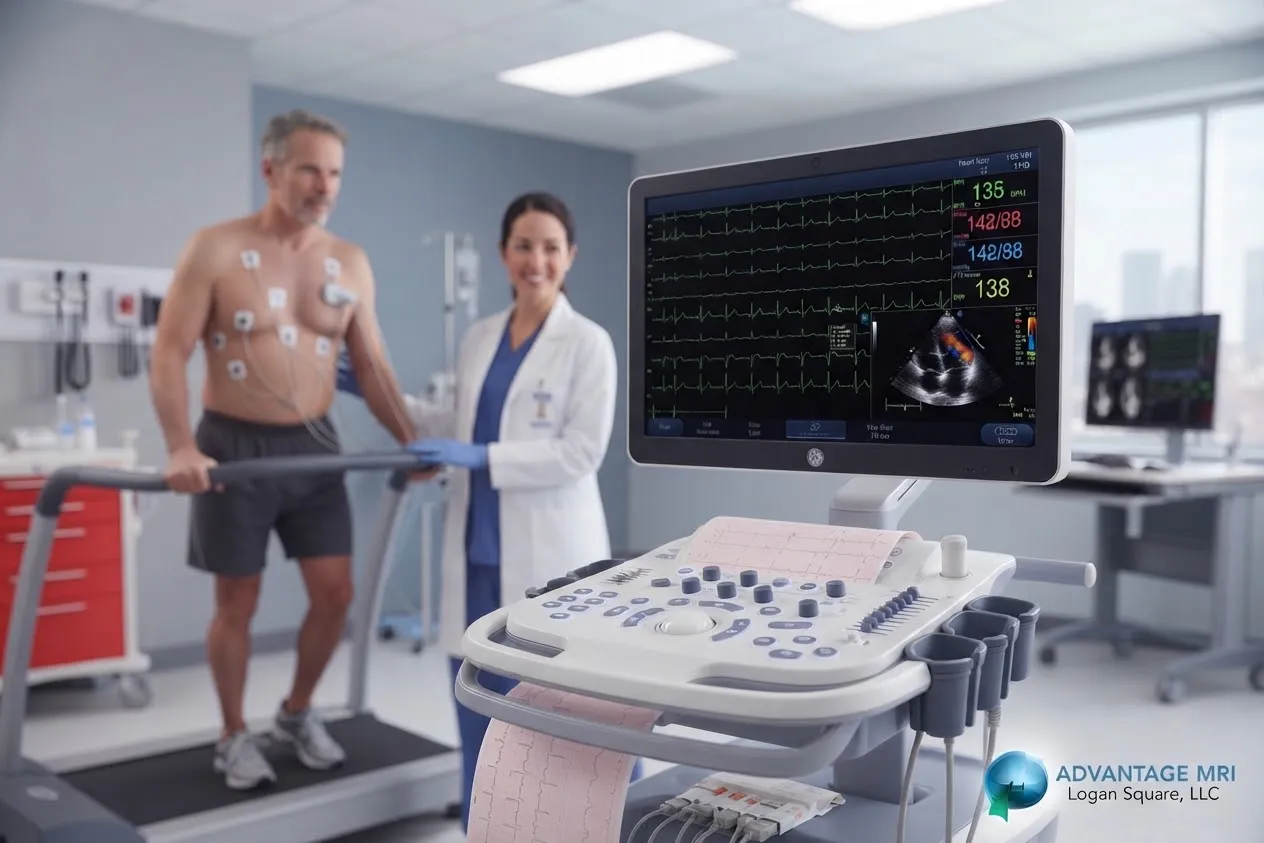
For most people, this means walking on a treadmill. The technician starts with a baseline echocardiogram while you’re resting. Then electrodes get placed on your chest to track the electrical activity of your heart, similar to a standard electrocardiogram. As you walk, the treadmill speed and incline increase step by step, which makes your heart rate and blood pressure climb gradually. Once you hit a target heart rate or start feeling too tired or short of breath to continue, the technician quickly takes another set of echocardiogram images while your heart is still working near its hardest.
Pharmacological Stress Instead of Exercise
Not everyone can walk on a treadmill, whether that’s due to joint problems, balance issues or other health conditions. In that case, a medication is used instead of exercise to make the heart beat faster and work harder, mimicking what physical activity would do. This is sometimes called a dobutamine stress echo. The imaging process afterward is basically the same, just without the walking.
Role of the EKG During the Test
Throughout the entire test, an EKG test tracks your heart’s electrical activity and rhythm, while a blood pressure cuff checks your blood pressure at regular intervals. This combination gives your care team a full picture, not just images of your heart but also how your heart rhythm and blood pressure respond as your body works harder.
How to Prepare for the Test
Preparation for a stress echocardiogram is fairly simple but a few steps matter for accurate results.
Eating and Medication Before Stress Echo
You’ll usually be asked to avoid food, caffeine and certain medications for a few hours before the test. Caffeine especially can affect your heart rate and blood pressure readings, so skipping coffee, tea and soda in the hours before the test matters more than people expect. Your doctor will tell you which medications, if any, to hold off on that day, since some heart medications can interfere with how your heart responds during the stress portion.
What to Wear
Comfortable clothes and supportive walking shoes make a real difference here. You’ll be walking on a treadmill, so anything that restricts movement or isn’t secure on your feet just makes things harder than they need to be. A shirt that opens in front also helps, since electrodes need to be placed directly on your chest.
| Prep Item | What to Do |
|---|---|
| Eating | Avoid food for a few hours before the test |
| Caffeine | Skip coffee, tea and soda beforehand |
| Medications | Follow your doctor’s instructions on which to hold |
| Clothing | Wear comfortable clothes and supportive walking shoes |
What Happens During the Appointment
Baseline Echocardiogram
Your appointment starts with you lying on your left side while the technician applies gel and moves the transducer across your chest to capture the baseline echocardiogram. This resting set of images gives the cardiologist a starting point.
Exercise Phase and Monitoring
Next comes the treadmill portion or the medication phase if you’re having a pharmacological stress test. Your heart rate, blood pressure and heart rhythm get monitored the entire time. The pace picks up gradually rather than all at once, which helps your body adjust naturally.
Post Exercise Imaging
As soon as you reach your target heart rate, the technician moves fast. You’ll lie back down and a second round of echocardiogram images gets taken within about a minute, since the goal is to catch your heart’s blood flow patterns while they’re still elevated from exercise. The whole appointment, including prep and recovery time, usually takes around 45 minutes to an hour.
What Stress Echocardiogram Results Show
Ejection Fraction and Wall Motion
Your cardiologist looks closely at your heart walls to see how well each section contracts and relaxes during both the resting and exercise images. They’re also checking your ejection fraction, which is a measurement of how much blood your heart pumps out with each beat. A doppler echocardiogram may also be used to look at blood flow through the heart and across the valves.
Signs of Blockages or Reduced Blood Flow
If part of the heart wall doesn’t move as well after exercise compared to at rest, that can point to reduced blood flow in the artery supplying that area, which is often linked to coronary artery disease. This is really the core value of the test. It’s not just checking if your heart works, it’s checking if it works well enough under the kind of demand your daily life actually places on it.
Is Stress Echocardiogram Safe
For most people, yes. It’s a widely used test with a strong safety record and organizations like the American Heart Association support its use for evaluating heart disease and heart function.
Common Side Effects
Some people feel tired, mildly short of breath or notice their heart pounding during the exercise phase. That’s expected and part of how the test works. These effects generally fade quickly once you stop exercising and start resting.
When the Test Gets Stopped Early
The technician or supervising physician will stop the test early if you develop chest pain, significant shortness of breath, an irregular heart rhythm or if your blood pressure responds in a way that needs attention. Monitoring throughout the test is there specifically so these situations get caught and managed right away.
Stress Echo vs Other Heart Tests
Stress Echo vs Nuclear Stress Test
A nuclear stress test uses a small amount of radioactive tracer and imaging technology to look at blood flow to the heart muscle, rather than ultrasound. Both tests aim to find areas of reduced blood flow but they use different imaging methods to get there.
Stress Echo vs Stress EKG Alone
A plain stress EKG test, sometimes called a stress test EKG, only tracks the electrical activity of your heart during exercise. It doesn’t produce actual images of your heart walls or valves. A stress echocardiogram adds that visual layer on top of the EKG tracking, which is why it often catches things a stress EKG alone might miss.
| Test Type | Imaging Method | What It Shows |
|---|---|---|
| Stress Echocardiogram | Ultrasound (sound waves) | Heart wall motion, valve function, ejection fraction |
| Nuclear Stress Test | Radioactive tracer imaging | Blood flow to heart muscle |
| Stress EKG Alone | Electrical tracing only | Heart rhythm and electrical activity, no images |
Getting a Stress Echocardiogram in Chicago
What Makes Advantage MRI Different
At Advantage MRI in the Hermosa neighborhood of Chicago, echocardiogram and stress testing services are handled by a team that includes board certified, sub specialized radiologists led by Dr. Gregory T. Goldstein, MD, an ACR accredited diagnostic radiologist with a background in advanced cardiac and orthopedic imaging. The center is ACR accredited, which means imaging quality and safety standards are held to a recognized national benchmark. Advantage MRI also offers on site pharmacy access and IV treatment capability when needed as part of your visit.
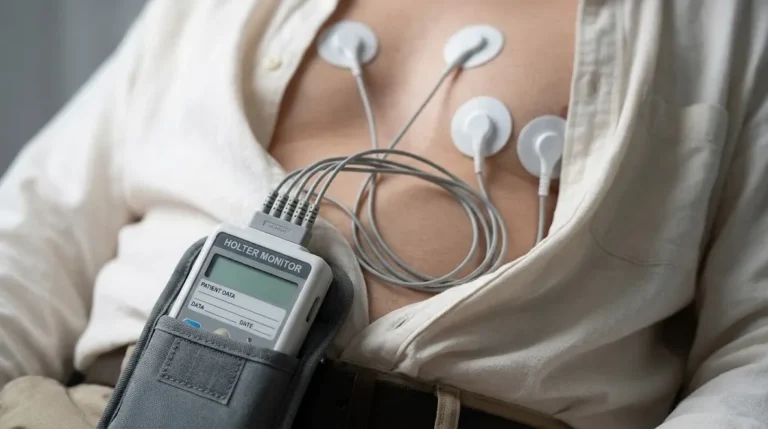
If your doctor referred you for an echocardiogram and mentioned pairing it with an EKG test, both can be coordinated at the same location. For patients who also need a broader ultrasound exam or ongoing heart rhythm tracking with a holter monitor, those services are available too.
Scheduling and Turnaround
Fast scheduling and reporting is part of how Advantage MRI works with referring physicians, so patients aren’t left waiting weeks to understand what their results mean. If you’re not sure which test your doctor wants, whether that’s a stress echocardiogram, MRI imaging or a digital x ray, the team can help confirm before your visit. You can learn more about the practice on the about us page or reach out directly through the contact us page.
FAQ
What is an echocardiogram stress test?
It’s a test that combines heart ultrasound imaging with physical exercise or medication to see how well your heart works when it’s beating faster and harder than normal.
How long does a stress echocardiogram take?
Most appointments take around 45 minutes to an hour, including prep time, the baseline echo, the exercise or medication phase and the follow up imaging.
Does a stress echocardiogram hurt?
No. There’s no pain from the ultrasound itself. You may feel tired or short of breath during the exercise portion, similar to a hard workout but that’s expected and temporary.
What should I avoid before the test?
Most patients are asked to avoid food, caffeine and certain medications for a few hours beforehand. Your doctor will give you specific instructions based on your health history.
How accurate is stress echo for detecting blockages?
It’s considered a reliable tool for spotting areas of reduced blood flow linked to coronary artery disease, especially when heart wall motion changes between the resting and post exercise images.
What if I can’t walk on a treadmill?
A pharmacological stress test using medication instead of exercise can achieve a similar effect on your heart rate, allowing the same type of imaging comparison.
When do I get my results?
Turnaround time varies but Advantage MRI prioritizes fast reporting so your referring physician can review results and follow up with you quickly.
Is a stress echocardiogram covered by insurance?
Coverage depends on your specific insurance plan and medical necessity as determined by your doctor. It’s best to check directly with your provider.
What are the risks of a stress echocardiogram?
Serious complications are uncommon. The most typical experiences are fatigue, shortness of breath or a fast heart rate during exercise, all of which are monitored closely throughout the test.
How is this different from a regular echocardiogram?
A regular echocardiogram only captures images while you’re resting. A stress echocardiogram adds a second set of images taken right after exercise or medication, so doctors can compare how your heart performs under both conditions.
Conclusion
A stress echocardiogram gives your doctor a much fuller picture of how your heart handles real world demand, not just how it looks at rest. If you’ve been dealing with chest pain, shortness of breath or your doctor has simply recommended a closer look at your heart health, this test is a well established way to get real answers.
For reliable, advanced diagnostic imaging you can trust, call Advantage MRI today or schedule your appointment online.
Contact Us
- Address: 2008 N Pulaski Rd, Chicago, IL 60639
- Phone: (773) 227 9777
- Email: [apna verified business email yahan add karain]
Follow us on social media for the latest health tips, diagnostic imaging updates and clinic news: Facebook | Instagram | LinkedIn.