Medical Imaging
What Is the Difference Between MRI With and Without Contrast?
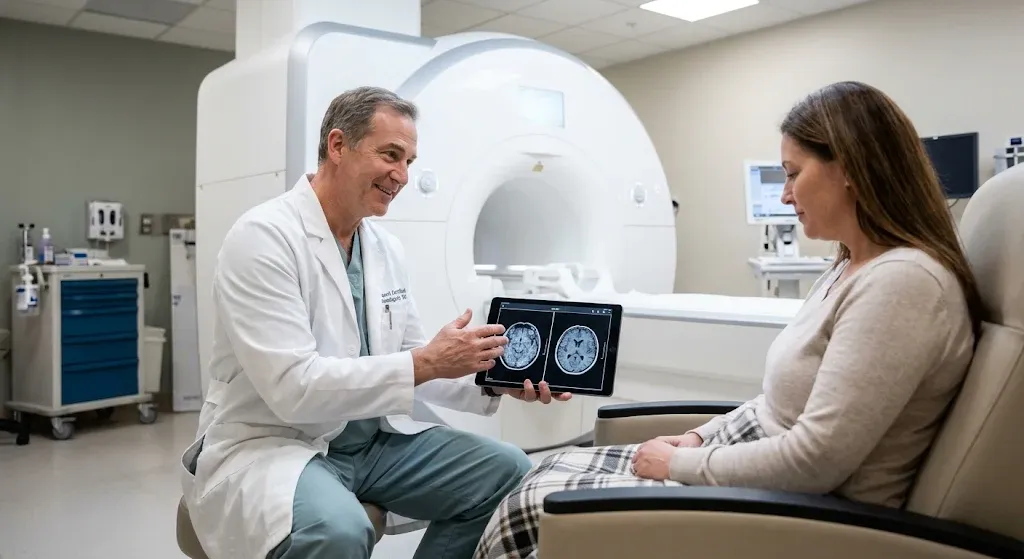
MRI with contrast vs without contrast is determined by how MRI with contrast uses an intravenous gadolinium-based agent to enhance tissue visibility, while MRI without contrast relies on natural tissue signals. Your doctor chooses between them based on what condition is suspected and which body structures need detailed evaluation.
How MRI Imaging Works
Magnetic resonance imaging creates detailed pictures of your body using strong magnetic fields and radio waves. Unlike X-rays or CT scans, MRI does not use ionizing radiation. The scanner detects signals from hydrogen atoms in your body’s tissues and converts them into cross-sectional images.
Different tissues produce different signal intensities, which is why MRI can distinguish between muscle, fat, bone marrow, fluid, cartilage and organs. This natural contrast between tissues makes MRI an exceptionally versatile diagnostic imaging tool.
Need to Schedule a Diagnostic Appointment?
Whether you need an MRI, ultrasound, X-ray, or another diagnostic service, Advantage MRI is here to help you take the next step in your healthcare journey.
Submit your appointment request online, and our team will contact you to confirm your visit.
Book Your Appointment →However, some conditions require additional enhancement to become visible or to be characterized accurately. That is where contrast dye enters the picture.
What Is MRI Contrast Dye?
MRI contrast dye is a gadolinium-based compound administered through an intravenous injection. Gadolinium is a rare earth metal that has magnetic properties allowing it to alter the signal intensity of nearby tissues on MRI images.
When gadolinium enters your bloodstream, it travels to areas with increased blood flow or disrupted tissue barriers. This makes certain abnormalities appear brighter and more defined on the images. Tumors, areas of active inflammation, infections and damaged blood vessels often accumulate contrast more readily than healthy tissue, making them easier for radiologists to identify and measure.
Gadolinium-based contrast agents used in MRI are different from iodine-based contrast used in CT scans. If you have had a reaction to CT contrast in the past, it does not necessarily mean you will react to gadolinium. However, always inform your imaging team about any previous contrast reactions.
MRI Without Contrast: When It Is Sufficient
Many MRI scans provide excellent diagnostic information without contrast. Non-contrast MRI is commonly used for:
Musculoskeletal Imaging
Knee injuries, shoulder tears, herniated discs, ligament damage and bone fractures are often clearly visible without contrast. The natural differences between bone, cartilage, tendons, ligaments and fluid provide enough signal variation for accurate diagnosis.
Standard Brain Imaging
Initial brain MRI scans for headaches, developmental concerns or screening purposes frequently start without contrast. Many structural brain abnormalities, strokes and congenital conditions are visible on non-contrast sequences.
Spinal Imaging
Disc herniations, spinal stenosis, degenerative disc disease and nerve compression can usually be evaluated effectively without contrast.
Joint Evaluations
MRI without contrast accurately identifies meniscus tears, ACL and MCL injuries, rotator cuff tears and cartilage damage. Orthopedic surgeons often order non-contrast MRI for these evaluations.
Cardiac Structure
Basic cardiac MRI examining heart chamber size, wall thickness and structural abnormalities may not always require contrast, though many cardiac protocols do include it.
MRI With Contrast: When Gadolinium Is Needed
Contrast-enhanced MRI provides critical additional information in specific clinical situations:
Tumor Detection and Monitoring
Contrast MRI is essential for identifying, characterizing and monitoring tumors. Gadolinium helps radiologists:
- Distinguish between benign and potentially malignant masses.
- Define tumor boundaries and measure size accurately.
- Detect small tumors that might be invisible on non-contrast images.
- Monitor treatment response by comparing contrast patterns over time.
Brain tumors, spinal cord tumors, liver lesions and many other neoplastic conditions require contrast for complete evaluation.
Infection and Inflammation
Active infections such as abscesses, osteomyelitis (bone infection) and discitis (disc infection) show enhanced uptake of gadolinium. Inflammatory conditions like multiple sclerosis produce characteristic contrast-enhancing lesions that help neurologists diagnose and monitor the disease.
Blood Vessel Evaluation (MR Angiography)
Gadolinium-enhanced MR angiography provides detailed images of blood vessels without the radiation exposure of traditional angiography. This is used to evaluate:
- Aneurysms.
- Arterial stenosis (narrowing).
- Vascular malformations.
- Blood supply to tumors.
Post-Surgical Assessment
After surgery, contrast MRI helps distinguish between expected post-surgical changes and recurrent disease. This is particularly important in cancer follow-up imaging where scar tissue can mimic tumor recurrence on non-contrast scans.
Pituitary and Inner Ear Imaging
Small structures like the pituitary gland and inner ear components often require contrast for adequate visualization. Pituitary adenomas and acoustic neuromas are conditions that typically need contrast-enhanced MRI for diagnosis.
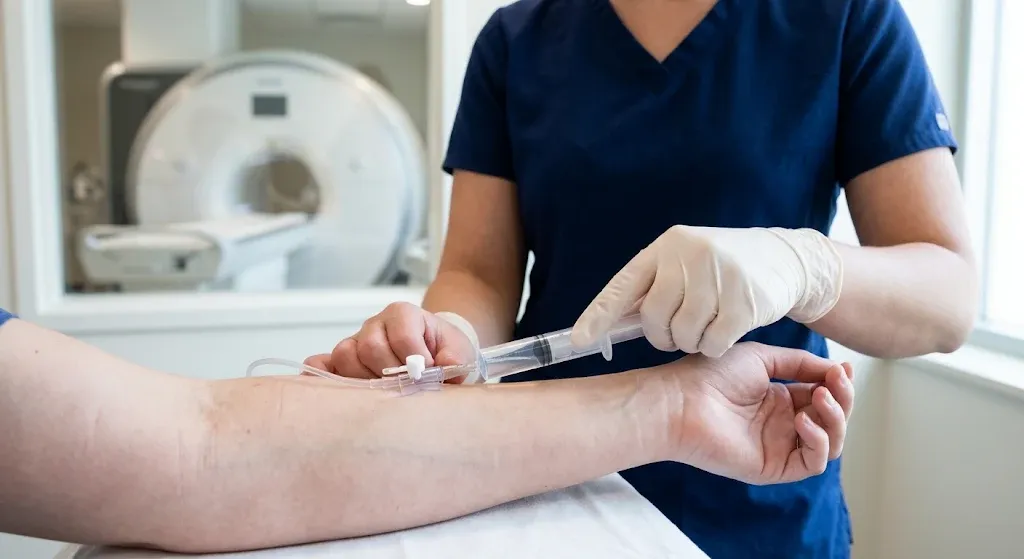
How Gadolinium Contrast Is Administered
The process of receiving contrast during an MRI is straightforward:
- A technologist places a small IV catheter in your arm or hand before the scan begins.
- The first portion of the MRI is performed without contrast (pre-contrast sequences).
- Partway through the exam, gadolinium is injected through the IV line.
- You may feel a brief cool or warm sensation as the contrast enters your vein. Some patients notice a temporary metallic taste.
- Additional MRI sequences are performed after the contrast injection (post-contrast sequences).
- The IV is removed after the scan is complete.
The entire contrast injection takes only a few seconds. The additional post-contrast imaging typically adds 10 to 20 minutes to the total scan time.
Gadolinium Contrast Side Effects and Safety
Gadolinium-based contrast agents have a strong safety record. Most patients experience no side effects. When side effects do occur, they are usually mild and temporary.
Common Side Effects (Uncommon but Possible)
- Mild headache.
- Nausea.
- Brief dizziness.
- Temporary metallic taste.
- Coolness or warmth at the injection site.
Rare Side Effects
- Allergic-like reactions (hives, itching, mild swelling) occur in fewer than 1% of patients.
- Severe anaphylactic reactions are extremely rare.
Nephrogenic Systemic Fibrosis (NSF)
NSF is a rare but serious condition that can occur in patients with severely impaired kidney function who receive gadolinium contrast. This is why kidney function screening (eGFR blood test) is required or recommended before contrast MRI for at-risk patients. With modern gadolinium agents and proper screening, NSF has become exceedingly rare.
Gadolinium Retention
Research has shown that small amounts of gadolinium can remain in certain body tissues, including the brain, after contrast MRI. Current evidence has not demonstrated any harmful effects from this retention in patients with normal kidney function. The FDA continues to monitor this topic and considers gadolinium-based contrast agents safe for indicated use.
MRI With Contrast vs Without Contrast: Key Differences
| Feature | MRI Without Contrast | MRI With Contrast |
| Contrast Agent | None | Gadolinium-based IV injection |
| IV Required | No | Yes |
| Fasting | Usually not required | May require 4-6 hours fasting |
| Kidney Screening | Not required | Required for at-risk patients (eGFR test) |
| Scan Duration | 30-45 minutes | 45-90 minutes |
| Best For | Musculoskeletal injuries, disc herniations, structural brain imaging | Tumors, infections, inflammation, vascular conditions, post-surgical evaluation |
| Side Effects | None (no injection involved) | Rare: mild headache, nausea, temporary metallic taste |
| Cost | Generally lower | Generally higher due to contrast agent and additional sequences |
| Pregnancy Considerations | Generally considered safe after first trimester | Gadolinium generally not recommended during pregnancy |
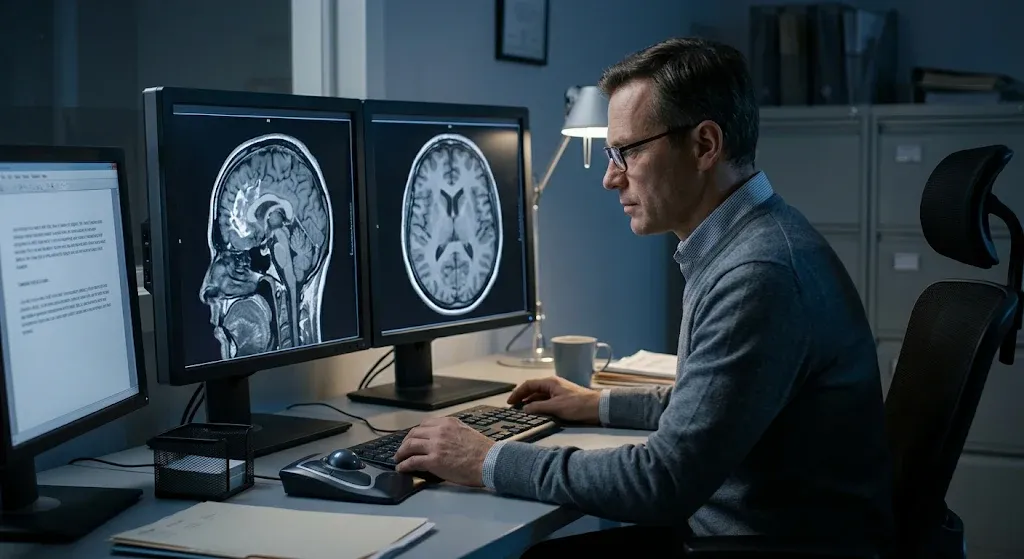
Who Decides Whether You Need Contrast?
Your referring physician determines whether contrast is necessary based on:
- Clinical symptoms: What you are experiencing and how long symptoms have persisted.
- Suspected diagnosis: Conditions like tumors or infections almost always require contrast, while a torn meniscus does not.
- Previous imaging: If an earlier non-contrast MRI was inconclusive, your doctor may order a follow-up with contrast for clearer results.
- Medical history: Kidney function, allergies and pregnancy status influence whether contrast can be safely administered.
If your doctor orders an MRI without contrast and the radiologist identifies findings during the scan that would benefit from contrast enhancement, the radiologist may recommend adding contrast during the same visit (with your consent).
How to Prepare for a Contrast MRI
If your MRI includes gadolinium contrast, follow these preparation steps:
- Get kidney function tested if requested. Your doctor or imaging center may require a recent eGFR or creatinine blood test. This is particularly important for patients over 60, those with diabetes or anyone with known kidney conditions.
- Report all allergies. Tell your imaging center about any previous reactions to contrast agents, medications or significant allergies.
- Follow fasting instructions. You may be asked to avoid eating for 4 to 6 hours before the scan. Continue drinking water unless told otherwise.
- Take medications normally. Unless your doctor provides different instructions, continue your regular medications with a small sip of water.
- Arrange transportation if needed. Most patients can drive themselves after a contrast MRI. However, if you are also taking sedation for claustrophobia, arrange a ride.
- Stay hydrated after the scan. Drinking plenty of water after your appointment helps your kidneys flush the gadolinium from your system more quickly.
Can You Request a Non-Contrast MRI Instead?
While patients can discuss their preferences with their doctor, the decision to use contrast is a medical one. If contrast is recommended, it is because the radiologist and referring physician believe it is necessary for an accurate diagnosis.
However, if you have concerns about gadolinium — whether related to kidney function, pregnancy, allergies or personal preference — discuss them openly with your doctor. In some cases, alternative imaging approaches or additional non-contrast MRI sequences may provide sufficient information.
Never skip a medically indicated contrast MRI based solely on personal preference without consulting your physician. The diagnostic information gained from contrast can be crucial for treatment planning.
Contrast MRI and Non-Contrast MRI at Advantage MRI Chicago
Advantage MRI at 2008 North Pulaski Road, Chicago, IL 60639 provides both contrast and non-contrast MRI scans. The facility features:
- ACR accreditation confirming adherence to rigorous quality and safety standards.
- Board-certified radiologists who review and interpret all studies.
- Proper screening protocols for patients requiring contrast, including kidney function assessment.
- Open MRI options for patients with claustrophobia.
- Efficient reporting so your doctor receives results promptly.
To book your MRI scan in Chicago or ask about contrast MRI preparation, call Advantage MRI at (773) 227-9777.
Conclusion
The choice between MRI with contrast and without contrast depends on what your doctor needs to see. Non-contrast MRI is effective for many musculoskeletal, spinal and structural brain evaluations. Contrast MRI provides essential additional detail for tumors, infections, inflammation and vascular conditions. Both types are safe, and gadolinium contrast has a well-established safety profile when appropriate screening is performed.
If you have questions about whether your MRI will require contrast, talk to your referring physician or contact your imaging center. Advantage MRI in Chicago is ready to guide you through the process. Call (773) 227-9777 to schedule or learn more. Follow us on Facebook and Instagram. Learn more about a Chicago echocardiogram at Advantage MRI.
Frequently Asked Questions
1. What is the main difference between MRI with contrast and without contrast?
MRI with contrast uses a gadolinium-based dye injected intravenously to enhance visibility of specific tissues and abnormalities. MRI without contrast relies on natural tissue signals and does not require an injection.
2. Is gadolinium contrast safe?
Gadolinium contrast is generally safe with rare, mild side effects. Patients with severely impaired kidney function require screening before receiving gadolinium due to the rare risk of nephrogenic systemic fibrosis.
3. Why would my doctor order a contrast MRI?
Doctors order contrast MRI to better evaluate tumors, infections, inflammation, blood vessel abnormalities and post-surgical changes. Contrast helps distinguish between normal and abnormal tissue more clearly.
4. Does MRI contrast dye make you feel anything?
Most patients feel little to nothing. Some experience a brief cool or warm sensation during the injection, temporary metallic taste or mild nausea. These effects typically resolve within minutes.
5. Can I refuse contrast if my doctor orders it?
You have the right to discuss your concerns with your doctor. However, refusing medically recommended contrast may result in an incomplete evaluation. Talk to your physician about alternatives if you have specific concerns.
6. Is MRI contrast dye the same as CT contrast?
No. MRI uses gadolinium-based contrast while CT scans use iodine-based contrast. They work differently and having a reaction to one does not necessarily mean you will react to the other. Report all contrast reactions to your healthcare team regardless.
7. How long does gadolinium stay in your body?
In patients with normal kidney function, most gadolinium is eliminated through the kidneys within 24 to 48 hours. Small trace amounts may be retained in certain tissues, though current research has not shown harmful effects from this retention.
8. Do I need to fast before a contrast MRI?
Many imaging centers recommend fasting for 4 to 6 hours before a contrast MRI to reduce the risk of nausea. Your imaging center will provide specific fasting instructions when you schedule your appointment.
9. Can pregnant women have a contrast MRI?
MRI without contrast is generally considered safe during pregnancy after the first trimester. Gadolinium contrast is typically not recommended during pregnancy unless the potential benefit clearly outweighs the risk. Consult your obstetrician and radiologist.
10. Does contrast MRI cost more than non-contrast MRI?
Contrast MRI generally costs more due to the contrast agent, IV supplies and additional scan time. Contact your imaging center and insurance provider for specific pricing information.