Medical Imaging
What Is an MRI and How Should You Prepare?
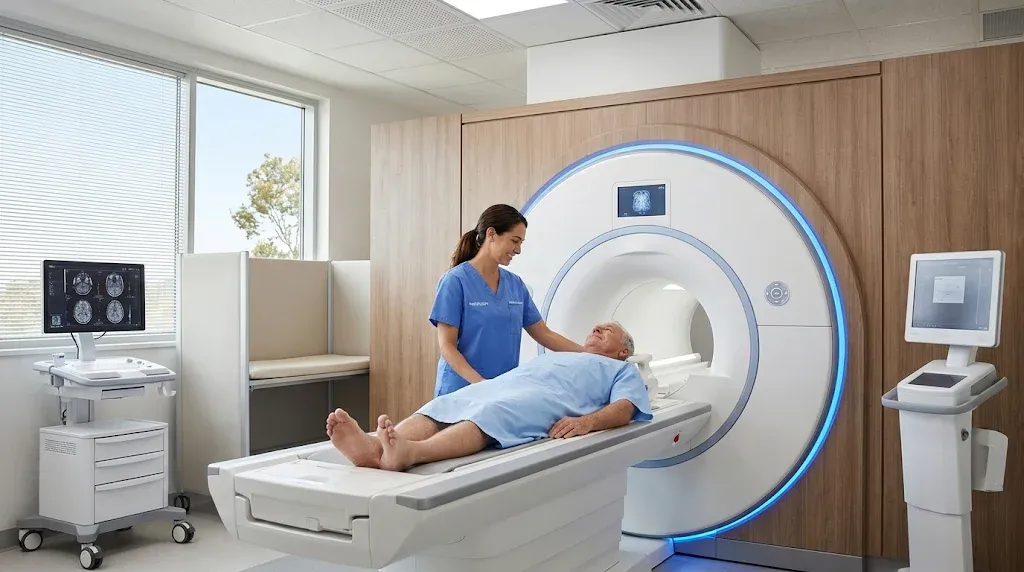
An MRI (magnetic resonance imaging) scan uses powerful magnets and radio waves to produce detailed images of your body’s internal structures. Knowing how to prepare for mri scan properly ensures accurate results and a comfortable experience. This guide covers everything first-time patients need to know before their appointment.
How Does an MRI Scan Work?
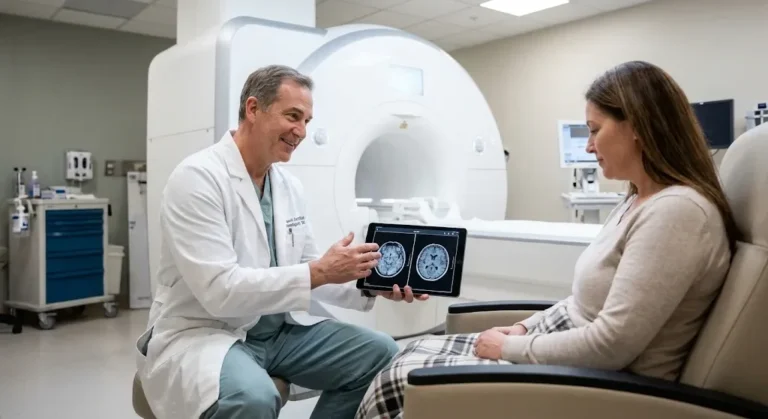
MRI technology works differently from X-rays or CT scans. Instead of using ionizing radiation, an MRI scanner generates a strong magnetic field that interacts with hydrogen atoms in your body. Radio wave pulses cause these atoms to emit signals, which a computer processes into highly detailed cross-sectional images.
This technology makes MRI particularly effective for imaging soft tissues such as the brain, spinal cord, muscles, ligaments and internal organs. Your doctor may order an MRI to diagnose conditions ranging from torn ligaments to brain tumors, herniated discs to liver disease.
Need to Schedule a Diagnostic Appointment?
Whether you need an MRI, ultrasound, X-ray, or another diagnostic service, Advantage MRI is here to help you take the next step in your healthcare journey.
Submit your appointment request online, and our team will contact you to confirm your visit.
Book Your Appointment →The scan itself is painless. You will lie on a motorized table that slides into the scanner. Depending on the area being scanned, the exam typically takes between 30 and 60 minutes. Some scans may take longer if multiple body areas need imaging or if contrast dye is required.
MRI Preparation Checklist: What to Do Before Your Scan
Proper preparation helps ensure clear images and a smooth appointment. Follow this step-by-step checklist in the days and hours leading up to your MRI scan.
Step 1: Confirm Your Appointment Details
Contact your imaging center to confirm your appointment time, location and any specific preparation instructions. Ask about:
- Whether your scan requires contrast dye (gadolinium).
- Fasting requirements for your specific type of MRI.
- Expected duration of the exam.
- Whether you need to arrive early to complete paperwork.
If you are scheduling your MRI scan in Chicago, Advantage MRI at 2008 North Pulaski Road provides a straightforward scheduling process. You can call (773) 227-9777 to confirm your appointment details and ask any preparation questions.
Step 2: Disclose Your Complete Medical History
Before your MRI, you will need to complete a safety screening questionnaire. This form asks about medical devices, implants and previous surgeries. Be thorough and honest when filling it out. Key items to disclose include:
- Pacemakers or implantable cardioverter-defibrillators (ICDs).
- Cochlear implants or hearing aids.
- Metal joint replacements or orthopedic hardware (pins, screws, plates).
- Surgical clips, stents or shunts.
- Dental implants, crowns or braces.
- Bullet fragments or shrapnel.
- Tattoos (some older tattoo inks contain metal particles).
- Pregnancy or suspected pregnancy.
- Kidney disease or kidney function concerns (especially important for contrast MRI scans).
The MRI’s powerful magnetic field can interact with metal objects inside your body. Some implants are MRI-compatible while others are not. Your imaging center’s staff and board-certified radiologists will review your screening form to determine whether it is safe to proceed.
Step 3: Follow Food and Drink Guidelines
MRI preparation rules for eating and drinking depend on the type of scan you are having.
Standard MRI (without contrast): Most standard MRI scans do not require fasting. You can eat and drink normally before your appointment unless your doctor gives specific instructions otherwise.
MRI with contrast: If your scan requires gadolinium contrast dye, your imaging center may ask you to fast for 4 to 6 hours before the exam. This reduces the risk of nausea, which is an uncommon but possible side effect of the contrast injection.
Abdominal or pelvic MRI: These scans often require fasting for 4 to 6 hours to reduce motion artifacts caused by digestion. Your doctor or imaging center will provide specific timing instructions.
Always take your regular medications with a small sip of water unless your doctor instructs otherwise. If you have diabetes and take insulin, discuss meal timing and medication adjustments with your physician before fasting.

Step 4: Plan What to Wear
Wear comfortable, loose-fitting clothing without metal components. Avoid clothing with:
- Metal zippers, snaps or buttons.
- Underwire bras.
- Belt buckles.
- Metallic threads or decorative elements.
Many imaging centers provide hospital gowns, but wearing appropriate clothing can save time and reduce the need to change. Cotton sweatpants, a plain T-shirt and slip-on shoes work well.
Step 5: Remove All Metal Objects
Before entering the MRI room, you must remove all metal items from your body and pockets. Create a mental checklist:
- Jewelry (rings, necklaces, earrings, watches, piercings).
- Hair clips, bobby pins and barrettes.
- Eyeglasses and sunglasses.
- Hearing aids.
- Dentures or removable dental work.
- Coins, keys and wallets.
- Cell phones and electronic devices.
- Credit cards and ID badges (the magnetic field can erase magnetic strips).
- Pens, paperclips and pocket knives.
- Clothing with metal fasteners.
Your imaging center will provide a secure locker or storage area for your belongings.
Step 6: Prepare for Contrast Dye (If Applicable)
If your MRI requires gadolinium-based contrast, your preparation includes a few additional steps:
- Kidney function test: Your doctor may order a blood test (eGFR or creatinine level) to confirm your kidneys can safely process the contrast agent. This is particularly important for patients over 60, those with diabetes or anyone with known kidney issues.
- Allergy disclosure: Tell your imaging team if you have had any previous allergic reactions to contrast agents, medications or foods.
- IV access: A technologist will insert a small intravenous line in your arm or hand before the scan. The contrast is injected partway through the exam. You may feel a cool sensation or mild warmth when the dye enters your bloodstream.
Gadolinium contrast is generally safe and well-tolerated. Serious adverse reactions are rare. The most common side effects include temporary headache, mild nausea or a brief metallic taste in the mouth.
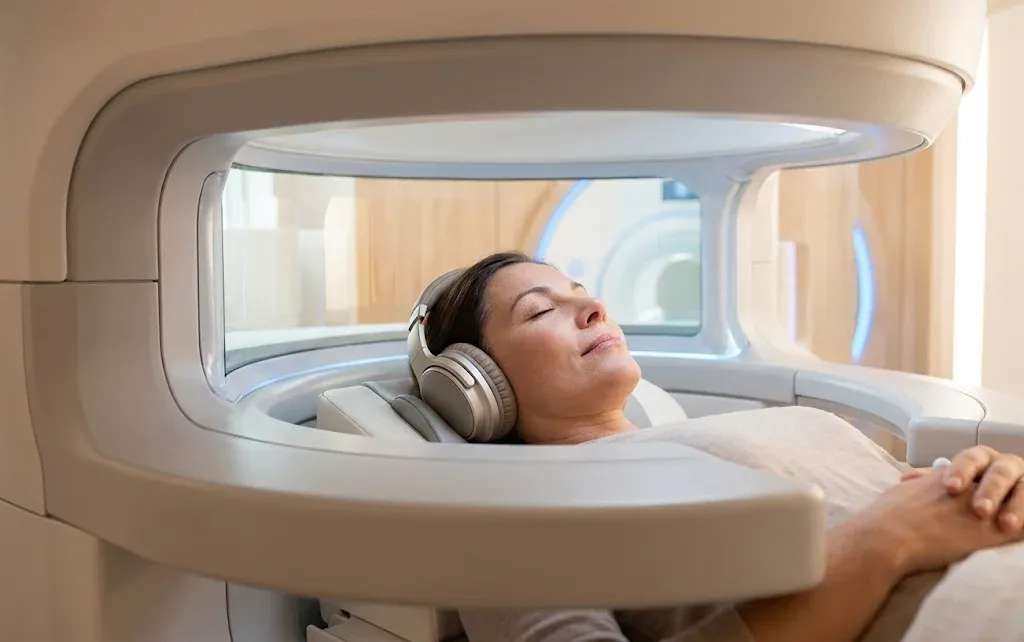
Step 7: Address Claustrophobia and Anxiety
Many patients feel anxious about entering an MRI scanner, especially if they experience claustrophobia. Preparation strategies include:
- Talk to your doctor in advance. If you have significant anxiety, your physician may prescribe a mild sedative to take before the scan. You will need someone to drive you home if you take sedation.
- Ask about open MRI. Open MRI scanners have a wider design that provides more space around the patient. This option can significantly reduce anxiety for claustrophobic patients. Advantage MRI in Chicago offers open MRI technology for patients who need a more comfortable scanning experience.
- Practice breathing exercises. Slow, deep breathing can help manage anxiety during the scan. Practice before your appointment so the technique feels familiar.
- Bring music or request it. Many MRI centers offer headphones or earplugs. You can often listen to music during your scan, which helps mask the scanner’s loud knocking sounds.
- Keep your eyes closed. Some patients find it easier to remain calm by keeping their eyes closed throughout the scan and focusing on their breathing.
What to Bring to Your MRI Appointment
Pack a small bag with essentials for your visit:
- Your photo ID and insurance card.
- Your doctor’s referral or prescription for the MRI.
- A list of current medications including dosages.
- Previous imaging results (CDs or reports) if available and relevant.
- Comfortable clothing to change into if needed.
- A driver if you are taking sedation or anti-anxiety medication.
Leave valuables at home when possible. Jewelry, smartwatches and other metal accessories should stay in your car or at home rather than in a locker at the imaging center.
What to Expect During an MRI Scan
Understanding the process helps reduce anxiety and ensures you know what to expect at each stage.
Before the Scan
You will check in at the front desk, complete any remaining paperwork and change into a gown if necessary. A technologist will review your safety screening form, confirm you have removed all metal objects and explain the procedure.
If contrast is required, an IV line will be placed in your arm.
During the Scan
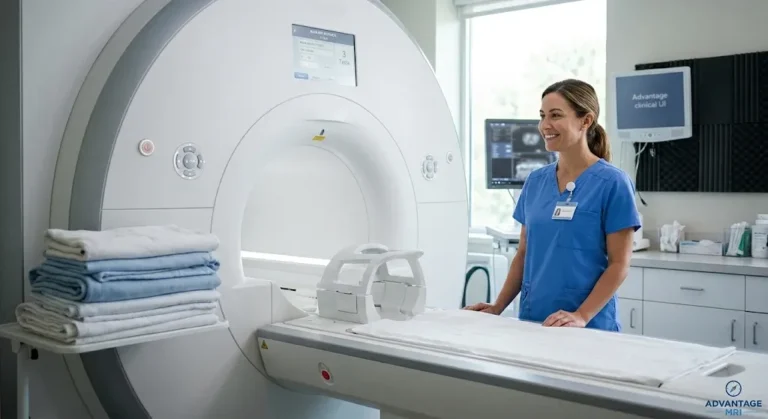
You will lie on a padded table that slides into the scanner. Depending on the body part being imaged, a coil (a device that helps capture signals) may be placed near the area of interest.
During the scan:
- Remain as still as possible. Movement can blur the images.
- The scanner produces loud thumping, knocking and buzzing sounds. This is normal. You will receive earplugs or headphones.
- The technologist monitors you from an adjacent room and communicates through an intercom system.
- You will have a call button or squeeze ball to alert the technologist if you need to stop.
- Some scans require you to hold your breath briefly when instructed.
- If contrast is used, it will be injected through your IV partway through the exam.
A standard MRI scan takes 30 to 60 minutes. Complex scans or multiple body areas may take longer.
After the Scan
Once the scan is complete, the table slides out of the scanner. If you had an IV for contrast, the technologist will remove it. You can resume normal activities immediately unless you received sedation.
Your images will be reviewed by a board-certified radiologist who prepares a detailed report for your referring physician. At Advantage MRI, efficient reporting means your doctor receives results promptly so you can discuss findings and next steps without unnecessary delays.
MRI Preparation: Standard Scan vs. Contrast Scan
| Preparation Step | Standard MRI (No Contrast) | MRI With Contrast |
| Fasting Required | Usually not required | 4-6 hours before scan (varies by facility) |
| Blood Work | Not typically required | Kidney function test (eGFR/creatinine) may be required |
| IV Line | No | Yes, for contrast injection |
| Metal Screening | Required | Required |
| Allergy Disclosure | General medical history | Must report any prior contrast reactions |
| Medications | Continue as normal | Continue as normal (discuss with doctor if diabetic) |
| Scan Duration | 30-60 minutes | 45-90 minutes (includes contrast injection phase) |
| Post-Scan Instructions | Resume normal activities | Drink extra water to flush contrast; resume normal activities |
Common MRI Preparation Questions Patients Ask
Can I Eat Before an MRI?
For most standard MRI scans without contrast, eating before your appointment is fine. If your scan involves contrast dye or if you are having an abdominal or pelvic MRI, your doctor or imaging center may ask you to fast for 4 to 6 hours. Always follow the specific instructions provided during scheduling.
Can I Wear Makeup or Deodorant?
Some cosmetics and deodorants contain metallic particles that can interfere with image quality or cause skin irritation during the scan. Avoid wearing makeup, especially eye makeup, and skip deodorant or antiperspirant on the day of your MRI if the scan involves your head, neck or chest area. If unsure, ask your imaging center during scheduling.
What Happens If I Move During the Scan?
Movement during an MRI can cause blurring or artifacts in the images. If this happens, the technologist may need to repeat certain sequences, which extends the scan time. Try to stay as still as possible. If you feel you cannot remain still due to pain or discomfort, let the technologist know before the scan begins so adjustments can be made.
Is an MRI Safe During Pregnancy?
MRI does not use ionizing radiation, making it generally considered safer than CT scans or X-rays during pregnancy. However, MRI is typically avoided during the first trimester unless medically necessary. Gadolinium contrast is generally not recommended during pregnancy. Always inform your doctor and imaging center if you are pregnant or may be pregnant.
How to Prepare Children for an MRI
If your child needs an MRI, preparation involves additional considerations:
- Explain the procedure in age-appropriate terms. Describe the scanner as a big camera that takes pictures of the inside of the body. Let them know it will be noisy but not painful.
- Practice lying still. Have your child practice lying still for increasing periods at home. Make it a game or use a timer.
- Bring comfort items. A favorite stuffed animal (without metal parts) or blanket can provide comfort. Check with the imaging center first.
- Discuss sedation options. Young children who cannot remain still may need sedation. Your pediatrician or the imaging center will discuss options and fasting requirements if sedation is planned.
- Stay calm yourself. Children pick up on parental anxiety. Staying calm and positive helps your child feel more comfortable.
Getting Your MRI at Advantage MRI in Chicago
Advantage MRI is an ACR-accredited imaging center located at 2008 North Pulaski Road, Chicago, IL 60639. ACR accreditation means the facility meets rigorous quality and safety standards established by the American College of Radiology.
What patients can expect at Advantage MRI:
- Board-certified radiologists review and interpret all imaging studies.
- Open MRI options for patients who experience claustrophobia or anxiety in enclosed scanners.
- Efficient reporting so your referring physician receives results without unnecessary delays.
- Patient-focused care with staff who guide you through every step of the preparation and scanning process.
For questions about MRI preparation, scheduling or MRI scan cost with insurance, call Advantage MRI at (773) 227-9777.
Conclusion
Preparing for an MRI scan does not need to be stressful. Following a simple checklist — confirming your appointment, disclosing your medical history, removing metal objects and following food guidelines — helps ensure accurate results and a comfortable experience. If you feel anxious about the scan, ask about open MRI options or discuss calming strategies with your imaging center.
Advantage MRI in Chicago provides a patient-centered environment with ACR-accredited technology and board-certified radiologists. Call (773) 227-9777 to schedule your MRI or ask any preparation questions. Follow us on Facebook and Instagram. Learn more about a Chicago echocardiogram at Advantage MRI.
Frequently Asked Questions About How To Prepare For Mri Scan
1. How do I prepare for my first MRI scan?
Remove all metal objects, wear comfortable clothing without metal fasteners, follow any fasting instructions from your doctor and bring your ID, insurance card and referral. Arrive early to complete safety screening paperwork.
2. Can I eat or drink before an MRI?
For most standard MRI scans, you can eat and drink normally. If your scan requires contrast dye or involves your abdomen, you may need to fast for 4 to 6 hours. Your imaging center will provide specific instructions.
3. What should I wear to an MRI appointment?
Wear loose, comfortable clothing without metal zippers, snaps, buttons or underwire. Cotton sweatpants and a plain T-shirt are ideal. Many imaging centers also provide gowns.
4. Can I have an MRI if I have metal implants?
It depends on the type of implant. Some metal implants are MRI-compatible while others are not. Disclose all implants, surgical hardware and medical devices during your safety screening. Your radiologist will determine whether it is safe to proceed.
5. How long does an MRI scan take?
A standard MRI typically takes 30 to 60 minutes depending on the body area being scanned. Scans involving contrast dye or multiple areas may take longer.
6. Will I feel anything during the MRI?
MRI scans are painless. You may hear loud knocking or buzzing sounds from the scanner. If contrast is injected, you might feel a brief cool or warm sensation. Earplugs or headphones are provided to reduce noise.
7. What if I am claustrophobic?
Tell your doctor and imaging center about your claustrophobia before the appointment. Options include open MRI scanners, sedation, breathing techniques and listening to music during the scan. Advantage MRI in Chicago offers open MRI for claustrophobic patients.
8. Is MRI safe for children?
Yes. MRI does not use radiation and is considered safe for children. Young children who cannot remain still may need sedation, which your doctor will arrange in advance.
9. Do I need a referral for an MRI?
Most insurance plans require a doctor’s referral or prescription for an MRI. Check with your insurance provider and imaging center about referral requirements.
10. How long does it take to get MRI results?
Results are typically available within 24 to 48 hours after the scan. Board-certified radiologists review the images and send a report to your referring physician, who will then discuss findings with you.