Health & Imaging
7 Day Holter Monitor: What to Expect Before, During and After Your Test
If your doctor mentioned wearing a heart monitor for a week, you probably have questions. That’s normal. A 7 day holter monitor is a small wearable device that records your heart’s electrical activity while you go about your normal life. It’s not scary and it doesn’t hurt. Here’s what you need to know before your appointment.
What Is a 7 Day Holter Monitor
A 7 day holter monitor is a portable ECG recorder you wear for seven straight days. It picks up your heart rhythm around the clock and stores that data for your cardiologist to review later. Unlike a single ECG snapshot taken in an office visit, this device captures a full week of your heart’s activity, including moments when you’re asleep, active, stressed or completely relaxed.
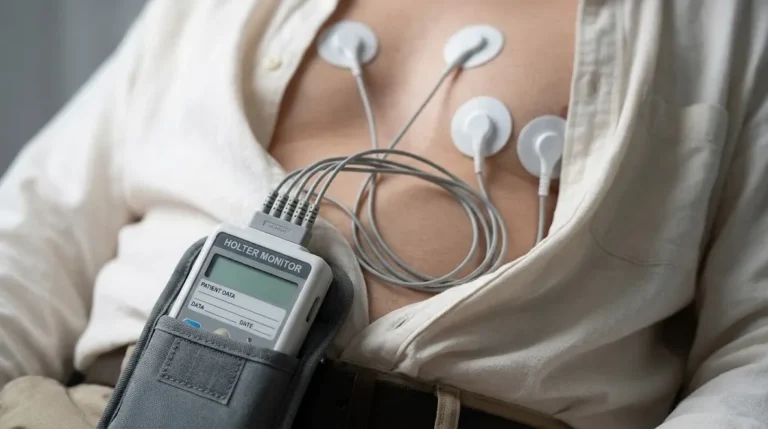
The monitor connects to your chest through a few small electrodes and thin wires. Most versions today are single lead and lightweight enough that you barely notice them after the first day.
Need to Schedule a Diagnostic Appointment?
Whether you need an MRI, ultrasound, X-ray, or another diagnostic service, Advantage MRI is here to help you take the next step in your healthcare journey.
Submit your appointment request online, and our team will contact you to confirm your visit.
Book Your Appointment →How Is It Different From a Regular Holter Monitor
People often confuse a traditional holter monitor with the 7 day version and honestly the names don’t help much. The main difference comes down to how long you wear the device and what kind of symptoms it’s built to catch.
A traditional holter monitor usually records for 24 to 48 hours. That’s fine for patients who have frequent symptoms, something happening daily or close to it. But if your palpitations or dizziness only show up once a week or less, a short recording period can miss the event entirely. That’s the whole reason 7 day and even longer monitoring options exist.
| Device Type | Wear Time | Best For | Push Button Feature |
|---|---|---|---|
| Traditional Holter | 24 to 48 hours | Frequent, near daily symptoms | No |
| 7 Day Holter Monitor | 7 days | Infrequent symptoms, af screening | Sometimes |
| Event Monitor | Weeks to months | Very infrequent or unpredictable symptoms | Yes, patient activated |
| Implantable Loop Recorder (ICM) | Up to 3 years | Cryptogenic stroke workup, rare symptomatic events | Implanted, continuous |
If you want a deeper comparison between holter and event monitoring, we’ve written more on that on our site.
Why Would a Doctor Order a 7 Day Holter Monitor
Doctors reach for this test when they suspect an abnormal heart rhythm but a regular office ECG didn’t catch it. Since arrhythmias can be infrequent, extending the recording window to a full week gives a much better shot at capturing what’s actually going on.
Common reasons include unexplained palpitations, dizziness or lightheadedness, fainting spells and a follow up after a cryptogenic ischemic stroke where doctors want to rule out silent atrial fibrillation. Some patients are symptomatic, meaning they feel something is off, while others are asymptomatic and the monitor is used to screen for subclinical AF episodes that show no obvious warning signs.

How the Test Works Step by Step
Getting fitted for a 7 day holter monitor is straightforward. Here’s how the process usually goes at Advantage MRI.
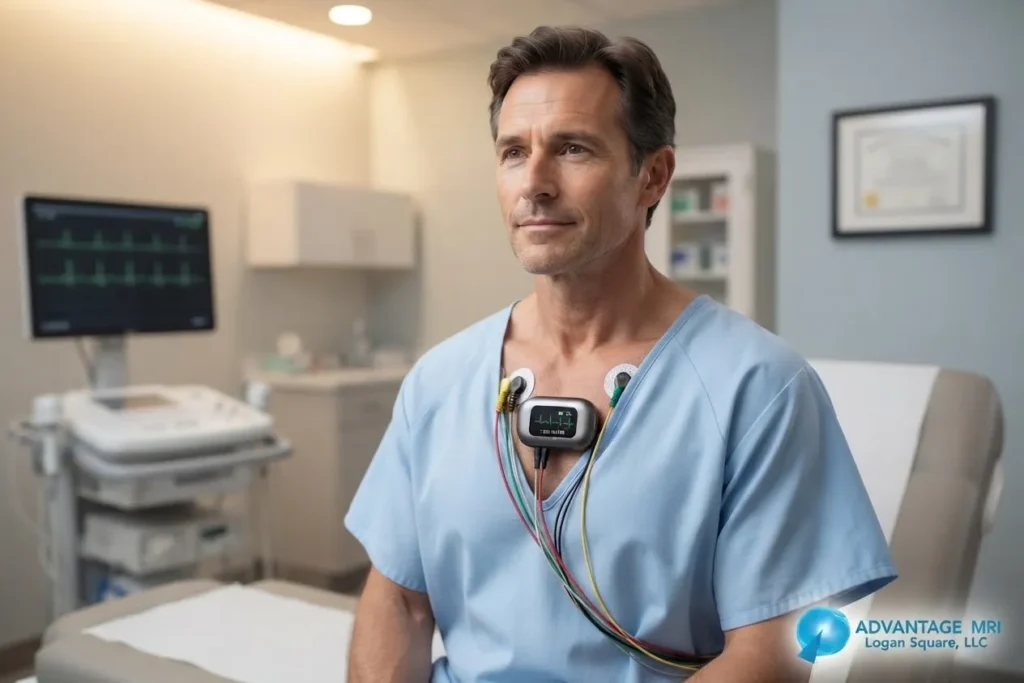
- A technician cleans small areas of your chest and places electrodes on your skin.
- Thin wires connect the electrodes to the small recording device, which you’ll wear on your belt, around your neck or attached to your clothing.
- You’ll get instructions on daily activities, what to avoid and how to keep a symptom diary if your device includes one.
- If your monitor has a push button feature, you’ll press it any time you feel a symptom so the exact moment gets flagged for review.
- You go about your normal daily routine for the full week, working, sleeping, walking, whatever your regular days look like.
- After seven days, you return the device to our office.
- Our team processes the recording and a cardiologist reviews the full data set.
- You get a final report explaining what the monitor found and what it means for your care.

What You Can and Cannot Do While Wearing It
Most daily activities are fine while you’re wearing the monitor. You can walk, work, sit at a desk, do light chores and sleep normally. The device is meant to record your real life, not a controlled lab setting.
That said, there are a few restrictions worth knowing.
- Don’t submerge the device in water. Showers usually need to be quick and careful or in some cases avoided until the electrodes are changed, depending on your specific monitor model.
- Keep the device away from strong magnets and certain electronics that could interfere with recording.
- Avoid activities that could pull the electrodes loose, like intense exercise with heavy sweating or contact sports.
- If an electrode starts peeling off, contact our office instead of trying to fix it yourself.
Our technician will place the electrodes correctly and walk you through exactly what applies to your device before you leave.
Is a 7 Day Holter Monitor Safe
Yes. This is a noninvasive test. There’s no radiation, no needles and no sedation involved. The monitor simply records electrical signals your heart already produces on its own. Some people notice mild skin irritation from the adhesive electrodes and that’s usually the extent of any side effect.
This article is for general information and isn’t a substitute for advice from your own doctor. If you have concerns about your heart or how a monitor might affect a specific health condition, talk with your physician before your test.
What Does the Monitor Detect
A 7 day holter monitor is built to catch abnormal heart rhythms of many kinds. That includes atrial fibrillation, supraventricular tachycardia and other irregular heartbeat patterns that come and go. Because the recording period is continuous, it can pick up on both symptomatic events, the ones you feel and mark and asymptomatic ones you never noticed.
This matters most for detection of atrial fibrillation, since AF can be silent for long stretches and still raise stroke risk. Extended ambulatory ECG monitoring like this has become a standard part of cardiovascular care exactly because short recordings miss so many of these episodes.
How Accurate Is a 7 Day Holter Monitor
Diagnostic yield goes up the longer you monitor and that’s the whole logic behind the 7 day format. A 24 to 48 hour recording only has so many hours to catch an irregular rhythm. Stretch that to a full week and the odds of recording an actual event go up quite a bit, especially for patients whose symptoms are infrequent rather than daily.
Data quality also depends on how well the electrodes stay in place and how closely you follow the wearing instructions. That’s part of why our technician spends time getting the placement right and explaining care instructions clearly before you start your monitoring period.
What Happens After the Test
Once you return the device, our team downloads and reviews the full seven days of recording. A cardiologist looks through the data, flags any abnormal rhythms and puts together a final report. That report goes to your referring physician, who will go over next steps with you.
Depending on what’s found, next steps might include starting or adjusting a beta blocker, further testing like an echocardiogram or additional EKG testing or simply confirming that nothing concerning showed up. Every case is different, so the plan comes from your doctor based on your actual results.
Other Tests We Offer
Heart rhythm monitoring is just one piece of the diagnostic picture. If your doctor also wants a closer look at nerve function, we offer nerve conduction study testing at our Chicago location. A nerve conduction study test measures how well electrical signals travel along a specific nerve and it’s often used alongside EMG testing to check for nerve damage or compression. If you’ve been asked what a nerve conduction study is or how one is done, our team can walk you through the process during your visit.
Frequently Asked Questions
What is a 7 day holter monitor?
It’s a small wearable ECG device that records your heart rhythm continuously for seven days, giving your cardiologist a full week of data instead of a brief snapshot.
How long do I wear a 7 day holter monitor?
You wear it for a full seven days, keeping up with your normal daily routine the entire time.
Is it safe to wear a holter monitor?
Yes. It’s noninvasive, uses no radiation and simply records the electrical activity your heart already produces.
Can I shower while wearing the monitor?
In most cases you need to avoid submerging the device in water. Your technician will explain the exact shower guidelines for your specific monitor model.
Does the test hurt?
No. Placing the electrodes doesn’t hurt and wearing the device is generally comfortable once you get used to it during the first day.
What does a 7 day holter monitor detect?
It looks for abnormal heart rhythms such as atrial fibrillation, tachycardia and other irregular heartbeat patterns, including ones that don’t cause noticeable symptoms.
How is a 7 day holter different from a traditional holter monitor?
A traditional holter monitor usually records for 24 to 48 hours, while the 7 day version extends that recording window significantly, which helps catch infrequent symptoms a shorter test might miss.
Who needs a 7 day holter monitor?
Patients with unexplained palpitations, dizziness, fainting spells or those being screened for atrial fibrillation after a cryptogenic stroke are common candidates.
How soon will I get my results?
After you return the device, our team processes the data and a cardiologist reviews it. Your referring physician will share the final report and next steps with you.
Is a 7 day holter monitor covered by insurance?
Coverage varies by plan and provider. It’s best to check directly with your insurance company or ask our office for help before your appointment.
Conclusion
A week of heart monitoring might sound like a lot but the process itself is simple and low effort on your part. You wear a small device, live your normal life and let it do the recording. For symptoms that come and go without warning, that extended window often makes the difference between an unclear result and a real answer. If your doctor has recommended a 7 day holter monitor, our team at Advantage MRI is ready to get you set up quickly and walk you through every step.
For reliable, advanced diagnostic imaging you can trust, call Advantage MRI today or schedule your appointment online.
Contact Us
- Address: 2008 N Pulaski Rd, Chicago, IL 60639
- Phone: (773) 227 9777
- Online: visit our Contact Us page to reach our team directly
Follow us on social media for the latest health tips, diagnostic imaging updates and clinic news: Facebook | Instagram | LinkedIn.