Health & Imaging
How Long Does an Echocardiogram Take? Advantage MRI
How Long Does an Echocardiogram Take?
If your doctor just told you that you need an echocardiogram, your first question is probably a simple one. How long does an echocardiogram take? For most people the answer is straightforward. A standard echocardiogram usually takes 30 to 60 minutes from start to finish. That includes getting settled on the exam table, the actual imaging, and a few minutes to clean up afterward.
But that number can shift depending on which type of echo test you are getting. A stress echocardiogram takes longer than a resting one because it adds exercise or medication into the mix. A transesophageal echocardiogram, often shortened to TEE, involves a bit more prep and monitoring time too. So while the short answer is 30 to 60 minutes, the real answer depends on what your cardiologist is trying to find out.
This guide walks through what actually happens during an echocardiogram, how long each type takes, whether it hurts, and when you can expect your results. If you are in Chicago or the surrounding area and thinking about scheduling one, Advantage MRI in the Hermosa neighborhood offers this test along with a full range of diagnostic imaging services.
What Is an Echocardiogram
An echocardiogram is a test that uses ultrasound to create images of your heart. It is sometimes just called an echo test. Instead of X-rays or radiation, the machine sends out sound waves through a small probe called a transducer. Those sound waves bounce off the structures inside your chest and come back as real-time images of your heart on a screen.
A sonographer, someone trained specifically in ultrasound imaging, performs the test. They can see your heart’s chambers, valves, and walls moving in real time. This lets your cardiologist check how well your heart pumps blood, look at blood flow through the valves, and spot any structural problems that might be causing symptoms like shortness of breath or chest discomfort.
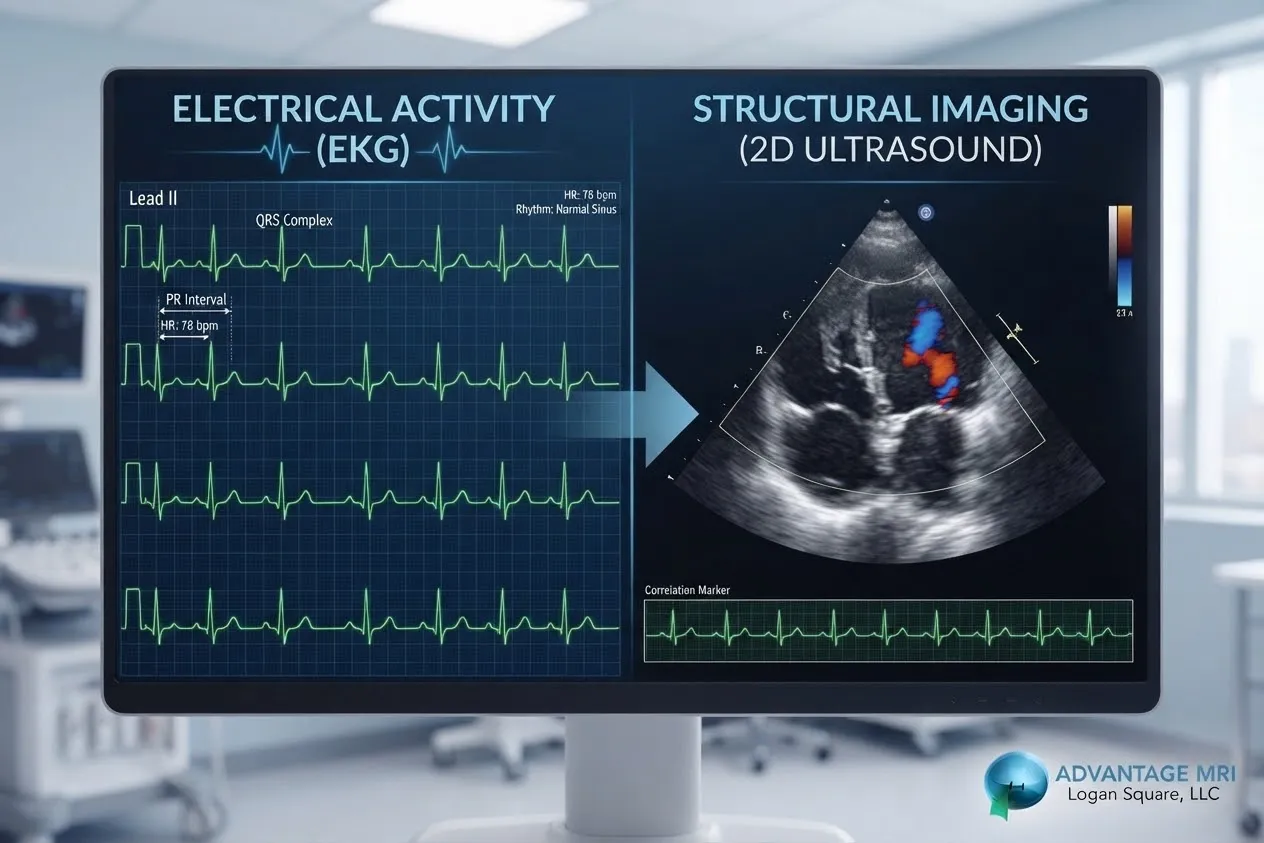
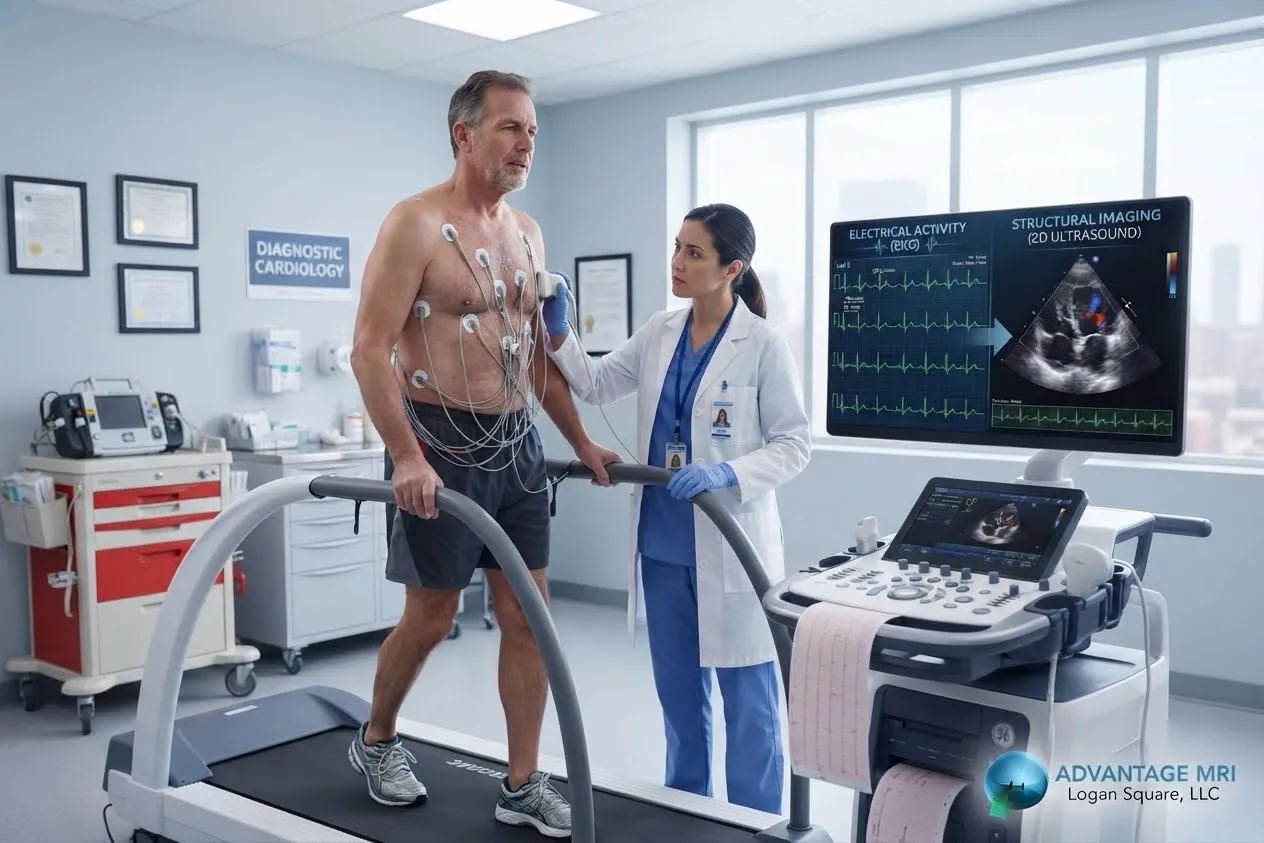
It is worth separating this from an EKG, since people mix the two up a lot. An EKG (electrocardiogram) records the electrical activity of your heart using small sensors placed on your skin. An echocardiogram, on the other hand, actually creates pictures of your heart’s structure and how it moves. Many cardiologists order both tests together because they measure different things. You can read more about how EKG testing works and how it compares if you want the full picture.
How Long Does an Echocardiogram Take
Here is the part most people actually want answered. A standard echocardiogram usually takes 30 to 60 minutes. The test itself does not hurt, and most of that time is just the sonographer moving the probe around to capture different angles of your heart.
A few things can push that time up or down.
- The type of echo test you are getting matters a lot. A resting transthoracic echo is on the shorter end. A stress echocardiogram or a transesophageal echocardiogram usually takes longer.
- Your body type can play a role too. If your ribs or lungs make it harder to get a clear image, the sonographer may need extra time to find good views.
- Any existing heart conditions can add time, since the sonographer might need to capture more angles or repeat certain views for the cardiologist to review later.
So when someone asks how long does echocardiogram take in general terms, 30 to 60 minutes is the honest answer for most standard appointments. Just plan for a little extra time at the clinic for check in and getting changed if needed.
| Type of Echocardiogram | What It Involves | Typical Time |
|---|---|---|
| Transthoracic Echocardiogram | Probe placed on chest with gel, at rest | 30 to 45 minutes |
| Stress Echocardiogram | Echo before and after exercise or medication | 45 to 60 minutes |
| Transesophageal Echocardiogram (TEE) | Probe guided down the esophagus for closer heart view | 60 to 90 minutes including recovery |
| Fetal Echocardiogram | Ultrasound of an unborn baby’s heart | 30 to 60 minutes |
Different Types of Echocardiograms
Not every echocardiogram looks the same, and the type your doctor orders depends on what they are trying to check.
Transthoracic Echocardiogram
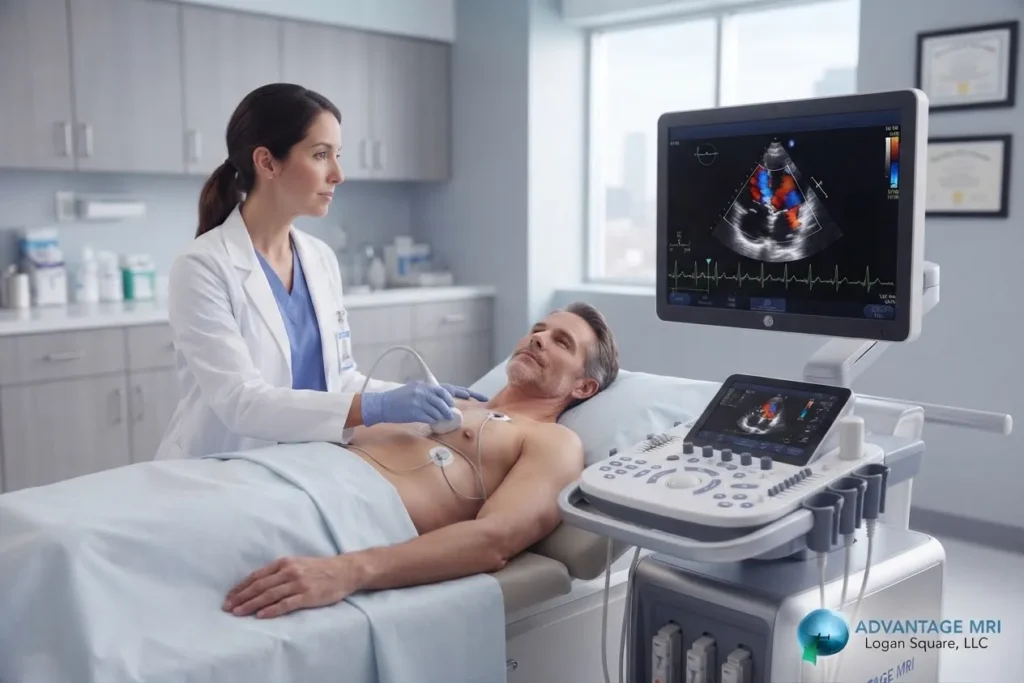
This is the standard echo test and the one most people picture when they hear the word echocardiogram. You lie on an exam table, the sonographer applies gel to your chest, and moves the transducer across different spots to get clear images of your heart. There is some light pressure from the transducer, but it is not painful.
Transesophageal Echocardiogram
A transesophageal echocardiogram gives your cardiologist a closer look at the heart, especially the back structures that are harder to see from outside the chest. For this test, a thin probe is guided down your esophagus while you are lightly sedated. Because of the sedation and monitoring afterward, this type of echo test takes noticeably longer than a standard one, often 60 to 90 minutes when you count the full visit.
Stress Echocardiogram
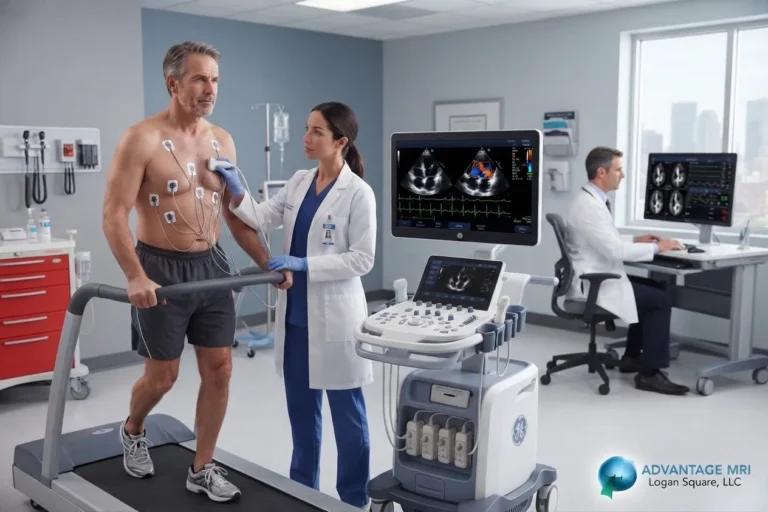
A stress echocardiogram checks how your heart performs under physical stress. You will either walk on a treadmill or pedal a stationary bike while your heart rate climbs, and the sonographer takes images before and right after exercise. If you are not able to exercise, a dobutamine stress echocardiogram uses medication instead to raise your heart rate. This version usually runs 45 to 60 minutes since it includes both the resting and post-exercise imaging.
Fetal Echocardiogram
A fetal echocardiogram looks at an unborn baby’s heart, usually ordered when there is a family history of heart conditions or something noticed on a routine prenatal ultrasound. It works the same way as a standard echo, just aimed at the baby’s heart instead, and generally falls within that same 30 to 60 minute window.
What Happens During the Echocardiogram Test
Knowing what to expect can make the whole thing feel a lot less intimidating. Here is roughly how a standard transthoracic echocardiogram test goes.
- You will be asked to undress from the waist up and put on a gown, so the sonographer has clear access to your chest.
- You will lie down on an exam table, usually on your left side, which helps bring the heart closer to the chest wall for better images.
- The sonographer applies a warm gel to your chest. This gel helps the sound waves travel between the transducer and your skin without any air gaps interfering.
- Using the transducer, they will move it around your chest to capture different views of your heart from several angles.
- You may be asked to hold your breath briefly or shift position slightly so the sonographer can get a clearer shot of certain areas.
- Once all the images are captured, the gel is wiped off and you are free to get dressed and go about your day.
There is no needle involved and no radiation, since the whole test uses sound waves to create the images. That is part of what makes echocardiography such a useful and low risk tool for checking heart health.
Quick Reference: Test Process
| Step | What Happens | Approx Time |
|---|---|---|
| Check in and change | Undress from waist up, put on gown | 5 minutes |
| Positioning | Lie on exam table, usually on left side | 2 minutes |
| Gel and imaging | Sonographer captures heart images with transducer | 20 to 40 minutes |
| Wrap up | Gel wiped off, free to get dressed | 3 to 5 minutes |
Is an Echocardiogram Painful
No, a standard echocardiogram is not painful. You might feel some light pressure from the transducer as the sonographer presses it against your skin to get better images, but that is about the extent of it.
A transesophageal echocardiogram is a little different, since a probe is passed down your throat and esophagus. You are given a mild sedative and a numbing spray for your throat beforehand, so most people describe it as uncomfortable rather than painful. Your throat may feel a bit sore or scratchy for a short time afterward.
A stress echocardiogram involves physical exertion, so you might feel your heart pounding or get a bit out of breath during the exercise portion. That is expected and part of what the test is designed to measure.
Comfort Level by Echo Type
| Type of Echocardiogram | Discomfort Level | Notes |
|---|---|---|
| Transthoracic Echocardiogram | None to minimal | Light pressure from transducer only |
| Stress Echocardiogram | Mild exertion | Heart pounding and shortness of breath during exercise |
| Transesophageal Echocardiogram | Mild to moderate | Sore throat possible after probe removal |
| Fetal Echocardiogram | None | Same as standard external ultrasound |
When Do You Need an Echocardiogram
Cardiologists recommend an echocardiogram for a range of reasons. Some common ones include:
- Shortness of breath that does not have an obvious cause
- Chest pain or discomfort that needs further evaluation
- An irregular heartbeat picked up during a physical exam
- Swelling in the legs or ankles that could point to heart failure
- A heart murmur heard through a stethoscope
- Follow up care after a heart attack or heart surgery
- Monitoring known heart conditions such as valve disease
Doctors also use echocardiograms to check for coronary artery disease related complications, evaluate heart muscle function after a cardiac event, and get a general read on how well your heart and blood vessels are working together. If your doctor mentioned needing imaging beyond the heart, Advantage MRI also offers MRI imaging and digital x-ray for a broader diagnostic picture.
It is also common for cardiologists to pair an echocardiogram with other cardiac monitoring, like a holter monitor, especially when your symptoms come and go rather than showing up during a single office visit.
When Symptoms Point to an Echocardiogram
| Symptom | Why It Matters |
|---|---|
| Shortness of breath | Could signal reduced heart pumping ability |
| Chest pain or discomfort | Needs structural and functional evaluation |
| Irregular heartbeat | Echo helps rule out structural causes |
| Leg or ankle swelling | Possible sign of heart failure |
| Heart murmur | Often linked to valve function issues |
How Long Does It Take to Get Echocardiogram Results
This is another question that comes up almost as often as how long is an echocardiogram itself. In many cases, a cardiologist can look at the images the same day and give you a general sense of what they see. A full written report, though, usually takes a bit longer since a physician needs to formally review and interpret every image captured during the test.
At most imaging centers, you can expect a complete echocardiogram results report within a few business days. If something urgent shows up during the test, your care team will typically reach out sooner rather than waiting for the full report to be finalized. Your cardiologist will then walk you through what the results mean for your specific heart health, whether that is reassurance that everything looks normal or a recommendation for next steps.
Results Timeline
| Stage | Typical Timing |
|---|---|
| Same day initial impression | Within hours of the test |
| Full written report | A few business days |
| Urgent findings | Care team contacts you sooner |
| Follow up discussion with cardiologist | Scheduled after report is ready |
Frequently Asked Questions
How long does an echocardiogram take?
Most standard echocardiograms take between 30 and 60 minutes. Stress echocardiograms and transesophageal echocardiograms usually take longer because they involve extra steps like exercise or sedation.
What is an echocardiogram used for?
An echocardiogram uses sound waves to create images of your heart. Doctors use it to check how well your heart pumps, look at valve function, and spot structural problems that could explain symptoms like chest pain or shortness of breath.
Is an echocardiogram painful?
No, a standard echocardiogram is not painful. You may feel light pressure from the transducer, but there is no cutting, needles, or radiation involved.
Who needs an echocardiogram?
People with symptoms like shortness of breath, chest pain, irregular heartbeat, or a heart murmur are often referred for an echocardiogram. It is also used to monitor known heart conditions or check heart function after a cardiac event.
How long does it take to get echocardiogram results?
A cardiologist can often give initial impressions the same day, but a full written report usually takes a few business days depending on the imaging center.
What is the difference between an echocardiogram and an EKG?
An EKG records the electrical activity of your heart using sensors on your skin. An echocardiogram creates actual images of your heart’s structure and movement using ultrasound. They measure different things and are sometimes ordered together.
Do I need to prepare before an echocardiogram?
Most standard echocardiograms do not require special preparation. A transesophageal echocardiogram usually requires fasting for several hours before the test because of the sedation involved.
Can an echocardiogram detect blockages?
An echocardiogram mainly shows how well your heart is working and how blood is flowing through it, rather than directly showing blocked arteries the way a coronary angiogram would. It can, however, reveal signs of reduced blood flow affecting heart muscle function.
How long is a stress echocardiogram?
A stress echocardiogram typically takes 45 to 60 minutes, since it includes imaging both before and after exercise on a treadmill or stationary bike.
Is an echocardiogram safe?
Yes. An echocardiogram uses sound waves rather than radiation, which makes it a low risk test that can be repeated as needed to monitor heart health over time.
Conclusion
So how long does an echocardiogram take? For most people, plan on 30 to 60 minutes for a standard test, with stress and transesophageal echocardiograms running a bit longer. The test itself is painless, does not involve radiation, and gives your cardiologist a clear picture of how your heart is working. If your doctor has recommended one, knowing what to expect ahead of time can make the whole appointment feel a lot more manageable.
For anyone in Chicago looking to schedule an echocardiogram or explore other diagnostic imaging options like ultrasound, nerve conduction studies, or EMG testing, our team at Advantage MRI is ready to help. Learn more about our board-certified radiologists and approach to care on our about us page.
For reliable, advanced diagnostic imaging you can trust, call Advantage MRI today or schedule your appointment online.
Contact Us
- Address: 2008 N Pulaski Rd, Chicago, IL 60639
- Phone: (773) 227-9777
- Contact us to ask questions or schedule your visit
Follow us on social media for the latest health tips, diagnostic imaging updates, and clinic news: Facebook | Instagram | LinkedIn.