Health & Imaging
Holter Monitor CPT Code: What It Means for Your Bill
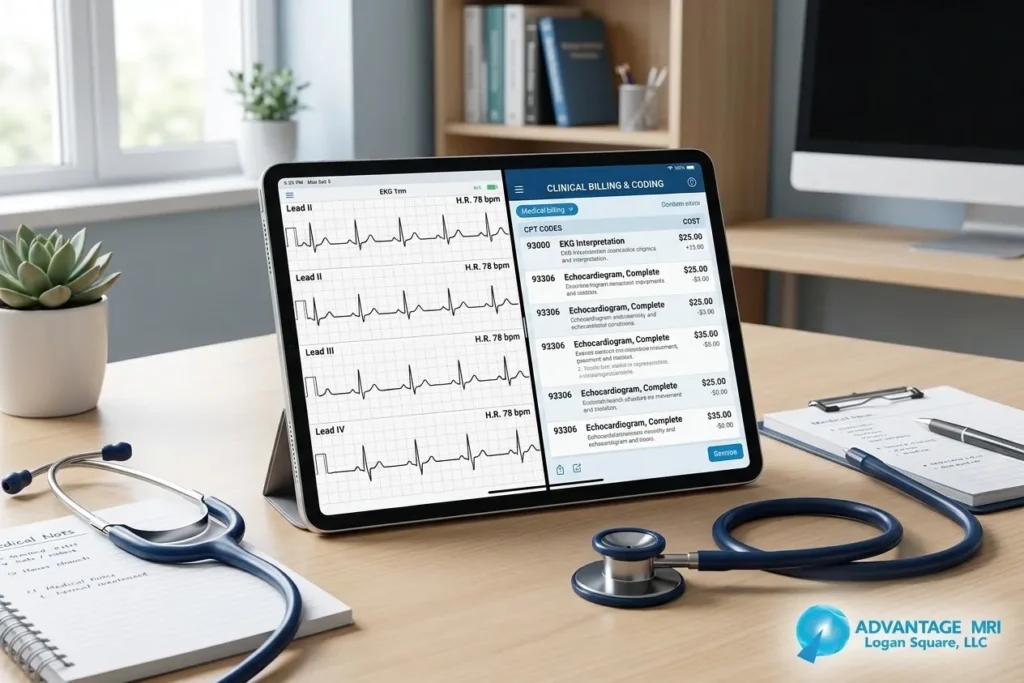
You get a bill after your heart monitor test and there’s a string of numbers on it you don’t recognize. Something like 93224. No explanation attached and your doctor’s office already moved on to the next patient. That number is a CPT code and it tells your insurance company exactly what kind of heart monitoring you had done and for how long.
Here’s the thing. A lot of patients never ask what that code means until the bill looks wrong or gets denied. So let’s walk through what a holter monitor cpt code actually covers, how it differs from other cardiac monitoring codes and why the number on your paperwork matters more than you’d think.
Need to Schedule a Diagnostic Appointment?
Whether you need an MRI, ultrasound, X-ray, or another diagnostic service, Advantage MRI is here to help you take the next step in your healthcare journey.
Submit your appointment request online, and our team will contact you to confirm your visit.
Book Your Appointment →What Is a Holter Monitor CPT Code
A holter monitor cpt code is a billing number that doctors and labs use to tell insurance companies what type of heart monitoring service was performed. CPT stands for Current Procedural Terminology and it’s maintained by the American Medical Association. Every diagnostic test, from an x ray to a nerve conduction study, has its own code so payers know exactly what to reimburse.
For holter monitoring, most codes fall in the 93224 through 93229 range. Each one reflects a different piece of the process, whether that’s hooking up the recorder, reviewing the recorded data or writing the final report.
Why Doctors Use CPT Codes for Heart Monitoring
Doctors don’t pick these codes randomly. The code has to match the actual service performed, the length of the recording and who did which part of the work. If a cardiologist places the device but a separate facility does the review and interpretation, the billing gets split across more than one code. That’s normal and it’s not double billing. It just reflects how the work was divided.
Below is a quick reference for the codes most commonly tied to standard holter monitoring.
| CPT Code | What It Covers |
|---|---|
| 93224 | Full service, 24 to 48 hours, includes recording, scanning, review and report |
| 93225 | Recording only |
| 93226 | Scanning analysis with report, technician only |
| 93227 | Review and interpretation only, physician component |
Advantage MRI uses this same coding structure for the holter monitor testing performed at our Hermosa Chicago location and every report gets reviewed as part of standard practice.
Breaking Down CPT Code 93224
Code 93224 is the one most patients see when they get a standard 24 to 48 hour holter monitor. It’s considered the global code because it wraps up the entire service into one number instead of billing each piece separately.
What This Code Covers
93224 includes hookup and continuous recording, technician scanning of the recorded data and a physician’s review and interpretation with a written report. Basically it’s the whole package from start to finish. If your doctor’s office both places the device and interprets the results, this is usually the code that shows up on your statement.
Technical vs Professional Component
Sometimes the service gets split. The technical component covers the equipment, the recorder itself and the technician’s work pulling the data together. The professional component covers the physician’s time reviewing the rhythm strips and writing up findings. When a facility only handles one side of that, they’ll bill using 93225 for technical or 93227 for professional instead of the combined 93224. A modifier gets attached in some cases to show which portion was performed, which matters for accurate reimbursement.
Extended Holter Monitor CPT Code
Not every heart monitoring test wraps up in 48 hours. Some patients need longer recording periods to catch arrhythmias that don’t show up on a shorter test and there’s a separate extended holter monitor cpt code for that.
When Doctors Order Extended Monitoring
If a patient has symptoms like fainting, palpitations or dizziness that come and go without warning, a standard 48 hour window might miss the event entirely. In that case a doctor may order extended monitoring that runs anywhere from 48 hours up to 7 days or in some setups even longer under mobile cardiac telemetry. Codes 93228 and 93229 apply here, covering external electrocardiographic recording for extended periods with remote data transmission built in.
How Extended Codes Differ From Standard 93224
The core difference comes down to duration and how the data gets sent. Standard 93224 covers 24 to 48 hours of attended monitoring where the device is retrieved and the data downloaded afterward. Extended codes cover 7 days up to 15 days in some cases and often involve remote monitoring where data transmits to a monitoring center in real time rather than waiting until the device comes off. That real time piece is part of why extended holter monitor cpt code billing looks different on a statement compared to a standard test.
Holter Monitor CPT vs Event Monitor CPT
People mix these up a lot and it’s an easy mistake since both devices track heart rhythm. But the coding and the way each device works are different enough that they get their own separate billing categories.
Differences in Coding and Duration
A holter monitor records continuously the entire time it’s worn. An event monitor, by comparison, only records when triggered, either automatically when it detects an abnormal rhythm or manually when the patient presses a button during symptoms. That difference in continuous recording versus triggered recording is exactly why the CPT codes split apart the way they do.
| Feature | Holter Monitor (93224 93227) | Event Monitor (93241 and related codes) |
|---|---|---|
| Recording style | Continuous | Triggered by symptom or event |
| Typical duration | 24 to 48 hours | Up to 30 days |
| Data transmission | Reviewed after device is returned | Often transmitted in real time |
| Best for | Frequent or daily symptoms | Infrequent or unpredictable symptoms |
If your doctor suspects your symptoms happen often enough to catch within a couple of days, a holter test usually gets ordered first. If symptoms are rare and unpredictable, an event monitor or extended monitoring makes more sense.

How Insurance and Medicare Handle Holter Monitor Billing
Coverage for holter monitor testing generally comes through Medicare Part B when medical necessity is documented and most private insurers follow a similar structure.
What Part B Typically Covers
Medicare’s national coverage determination outlines when ambulatory ECG monitoring is considered medically necessary, usually tied to symptoms suggesting arrhythmia such as unexplained fainting, palpitations or irregular heartbeat. When those criteria are met, Part B generally covers the service, though the patient portion still depends on the individual plan, deductible status and whether the provider is in network. This isn’t financial advice and coverage details can vary, so it’s worth confirming specifics directly with your insurance provider before your appointment.
Common Reasons for Claim Denial
Claims sometimes get denied and it’s rarely about the test itself being wrong. More often it comes down to documentation. Missing medical necessity notes, a mismatch between the diagnosis code and the CPT code or billing the wrong duration code for how long the device was actually worn can all trigger a denial. Payers also look closely at whether the date of service on the claim lines up with when the monitoring period actually started and ended. A clean claim usually depends on accurate coding matched to accurate documentation from the ordering physician.
What to Expect During Your Holter Monitor Test at Advantage MRI
Knowing the billing side is one thing. Knowing what actually happens during the test helps too.
Simple Process From Booking to Results
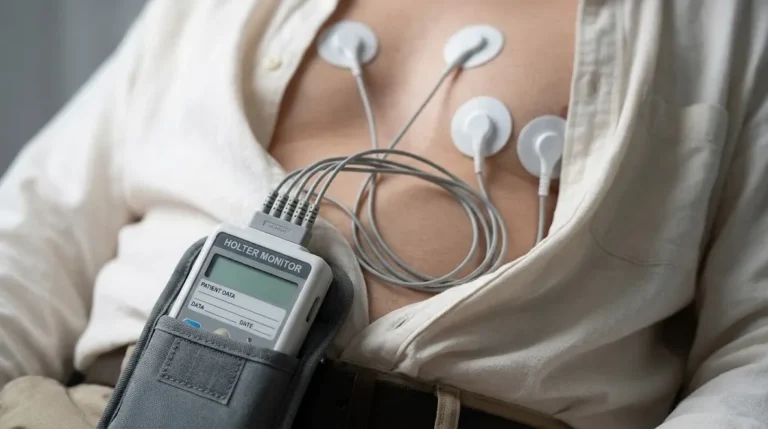
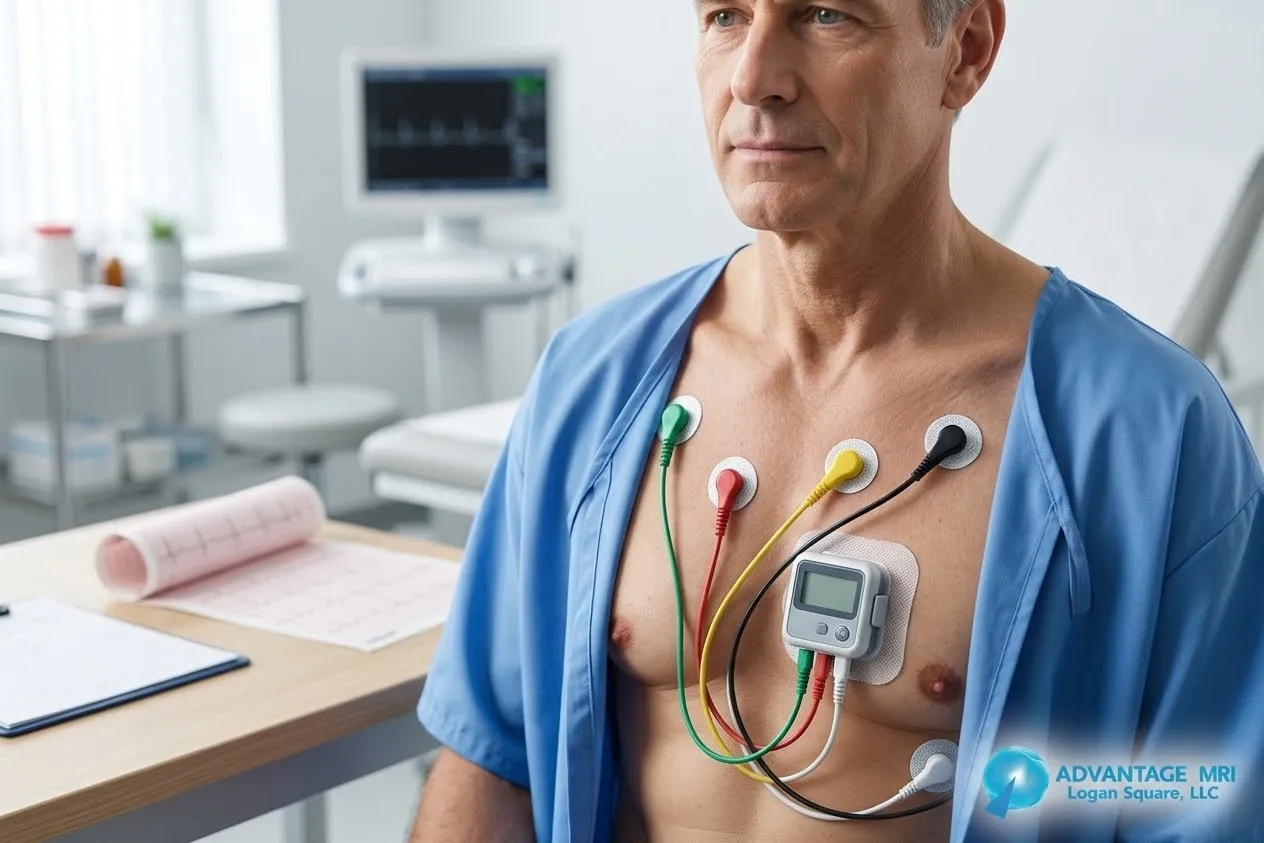
You’ll come in, get a few small electrodes placed on your chest connected to a lightweight recorder you wear for the ordered duration, usually 24 to 48 hours for a standard test. You go about your day normally, keep a symptom log if asked and return the device when the monitoring period ends. From there the recording gets scanned, reviewed and a report goes back to your ordering physician.
Advantage MRI is led by Dr. Gregory T. Goldstein, MD, a board certified diagnostic radiologist with a background in orthopedic and neurological imaging. He founded MetisMD and created the Connected RadiologySM approach, which focuses on fast, coordinated reporting between imaging centers and referring physicians. That same coordination applies across cardiac monitoring services offered at our Chicago location.
Patients interested in related heart testing can also look into our echocardiogram and EKG testing services, both of which pair well with holter monitoring when a doctor wants a fuller picture of heart function. For nerve related symptoms sometimes mistaken for cardiac issues, our nerve conduction study and EMG testing services are available as well. We also offer MRI imaging, digital x ray and ultrasound for patients who need broader diagnostic workups. You can read more about our team and approach on our about us page.
This article is for general information only and isn’t a substitute for professional medical or billing advice. Talk to your doctor or insurance provider about your specific situation.
FAQ
What is the cpt code for a holter monitor?
The most common code is 93224, which covers a standard 24 to 48 hour recording along with technician scanning and physician review.
What does cpt code 93224 mean?
It’s the global code for holter monitoring, meaning it bundles the recording, the data analysis and the physician’s interpretation into one billed service.
Is there a different code for a 48 hour holter monitor?
No, 93224 already covers the 24 to 48 hour range. Codes change once monitoring extends beyond 48 hours into the 93228 and 93229 range.
What is extended holter monitor cpt code?
Extended monitoring, typically 7 days up to 15 days, is billed under codes 93228 and 93229, which also account for remote data transmission.
Does medicare cover holter monitor testing?
Medicare Part B typically covers holter monitoring when medical necessity is documented, though your out of pocket cost depends on your specific plan.
How much does a holter monitor test cost?
Cost varies based on insurance coverage, deductible status and which CPT code applies. Contacting your insurance provider directly gives the most accurate estimate for your situation.
What is difference between holter monitor and event monitor coding?
Holter monitors record continuously and use codes 93224 through 93227. Event monitors record only when triggered and fall under a different code set, often used for longer monitoring periods up to 30 days.
Who interprets holter monitor results for billing purposes?
A physician reviews the recorded data and provides the interpretation, which is billed separately when the professional component code 93227 is used instead of the combined 93224.
Can a primary care doctor order a holter monitor test?
Yes, primary care physicians commonly order holter monitoring, especially when a patient reports symptoms like palpitations, dizziness or unexplained fainting.
How long does it take to get holter monitor results?
Turnaround depends on the facility but results are typically available within a few business days after the device is returned and the data is reviewed.
Conclusion
A holter monitor cpt code isn’t complicated once you see what each number actually stands for. Whether it’s the standard 93224 or an extended code for longer monitoring, the code just reflects how long you wore the device and who did which part of the review. Knowing that makes it a lot easier to read your bill and ask the right questions if something looks off.
Contact Us
- Address: 2008 N Pulaski Rd, Chicago, IL 60639
- Phone: (773) 227 9777
- Email and general inquiries: Contact Us
For reliable, advanced diagnostic imaging you can trust, call Advantage MRI today or schedule your appointment online.
Follow us on social media for the latest health tips, diagnostic imaging updates and clinic news: Facebook | Instagram | LinkedIn.