Health & Imaging
How Long Does a Nerve Conduction Study Take

If your doctor just told you that you need a nerve conduction study, the first question on your mind is probably a simple one: how long does a nerve conduction study take? You’ve got work, kids to pick up, maybe a dog that needs to go out. The good news is that most nerve conduction studies wrap up faster than people expect and knowing what to expect ahead of time makes the whole thing a lot less stressful.
At Advantage MRI in Chicago’s Hermosa neighborhood, patients ask us this all the time before they even book their nerve conduction study. So let’s walk through exactly what happens during the test, how long you should plan to be there and what affects that timing.
This article is for general information only and isn’t a substitute for advice from your doctor or healthcare provider.
Need to Schedule a Diagnostic Appointment?
Whether you need an MRI, ultrasound, X-ray, or another diagnostic service, Advantage MRI is here to help you take the next step in your healthcare journey.
Submit your appointment request online, and our team will contact you to confirm your visit.
Book Your Appointment →
What Is a Nerve Conduction Study
A nerve conduction study, often shortened to NCS, is a diagnostic test that checks how well your nerves are sending electrical signals. Nerves carry messages between your brain, spinal cord and the rest of your body using small electrical impulses. When something is wrong with a nerve, whether it’s damaged, compressed or affected by a neurological condition, those signals slow down or weaken.
During the test, small electrode patches are placed on your skin over specific nerves. A device sends a mild electrical shock through the electrode to stimulate the nerve and another electrode records how fast that signal travels and how strong it is. It sounds a little intense but most people describe it as a quick tingling or muscle twitch rather than anything painful.
Doctors order this test for a wide range of reasons. Numbness, tingling, muscle weakness or unexplained pain in the arms or legs are common triggers. It’s one of the main tools used to diagnose nerve compression syndromes like carpal tunnel syndrome, along with broader nerve disorders such as peripheral neuropathy.
What Does a Nerve Conduction Study Show
An NCS measures how fast and how well electrical signals travel along a nerve pathway. If the signal is slower than normal or weaker than it should be, that usually points to some kind of nerve damage or dysfunction. The test can help pinpoint where along the nerve the problem is happening, which matters a lot when a doctor is trying to figure out whether the issue is nerve compression, nerve injury or something tied to a broader neurological condition like Guillain Barré syndrome.
It’s worth knowing that an NCS looks at the nerves themselves, not the muscles. That’s actually where EMG comes in and we’ll get to that in a minute.
How Long Does a Nerve Conduction Study Take
Here’s the answer most people are looking for. A standard nerve conduction study usually takes somewhere between 15 minutes to an hour, depending on how many nerves need testing. If your doctor only wants to check one or two nerves, you could be done in 15 to 20 minutes. If several nerves in both arms or legs need testing, plan for closer to 45 minutes to an hour.
Quick answer box: Most nerve conduction studies take 15 to 60 minutes total, with the actual testing time usually falling between 20 and 40 minutes.
Factors That Affect Test Length
A few things determine where you’ll land on that time range.
The number of nerves being tested makes the biggest difference. Testing a single nerve in one arm goes quickly. Testing multiple nerves in both arms and legs, which sometimes happens with suspected peripheral neuropathy, takes longer because each nerve pathway gets its own round of stimulation and recording.
Whether you’re also getting an EMG test at the same visit adds time too. And your overall comfort level plays a role as well. Some patients need a few extra minutes to relax between electrode placements and that’s completely normal.
| Test Type | Typical Duration |
|---|---|
| Single nerve, one limb | 15 to 20 minutes |
| Multiple nerves, one limb | 20 to 35 minutes |
| Multiple nerves, both limbs | 40 to 60 minutes |
| NCS combined with EMG | 45 minutes to over an hour |
How Is a Nerve Conduction Study Done
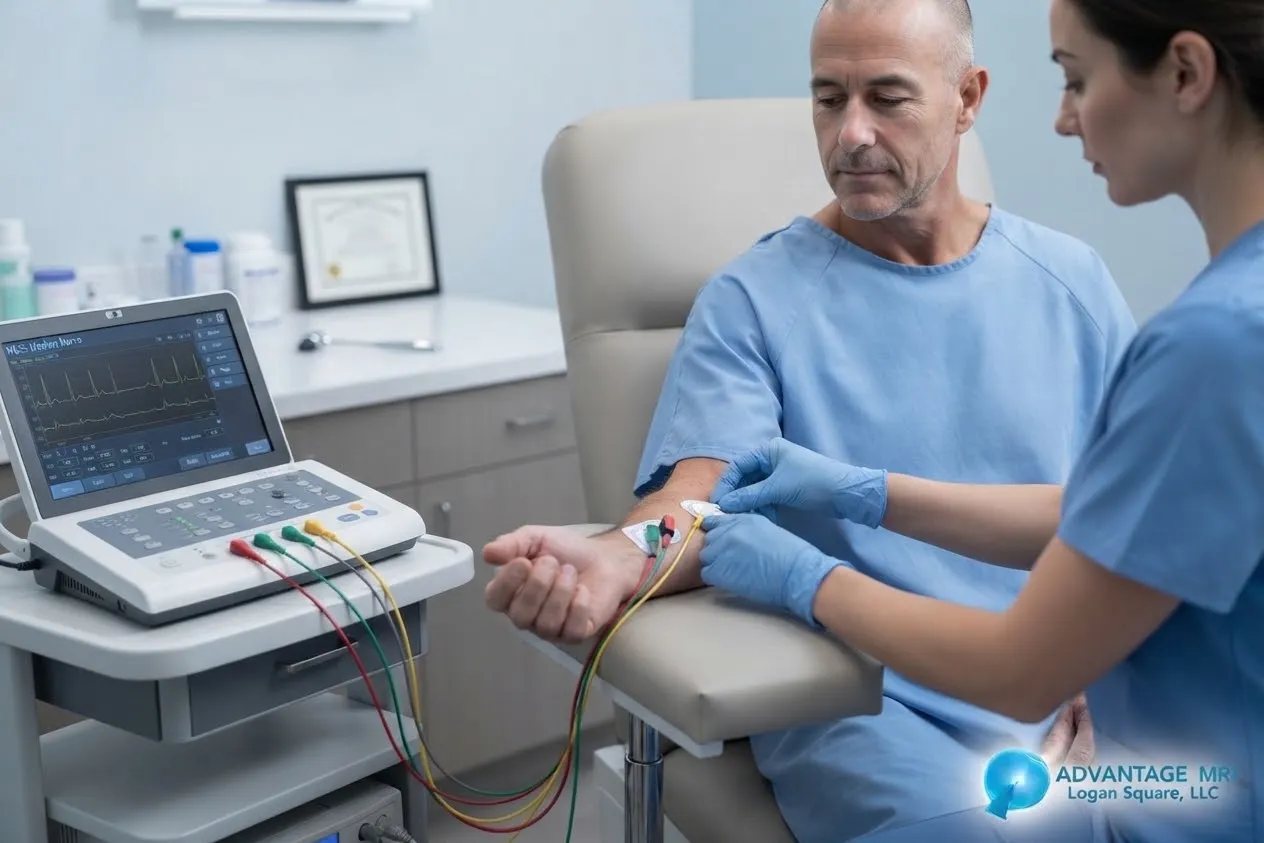
Understanding the actual process helps take some of the mystery out of it. Here’s what happens once you’re in the exam room. A technician or neurologist will place electrode patches on your skin over the nerve being tested. They’ll then use a handheld stimulator to deliver a small electrical current, just enough to activate the nerve. A recording electrode placed further along that same nerve pathway measures how fast the signal travels and how strong it is by the time it arrives.
This process gets repeated for each nerve your doctor wants checked. Between each one, there’s a short pause while the technician moves the electrodes to the next spot.
| Step | What Happens | Approximate Time |
|---|---|---|
| Check in and history review | Confirm medical history, medications, symptoms | 5 to 10 minutes |
| Electrode placement | Patches applied to skin over target nerves | 5 minutes |
| Nerve stimulation and recording | Mild electrical pulses sent, signals recorded | 10 to 40 minutes |
| Wrap up | Electrodes removed, brief discussion of next steps | 5 minutes |
Step by Step During the Test
You’ll likely be asked to sit or lie down comfortably, since staying still helps get accurate readings. The technician cleans the skin where electrodes go, sometimes with a bit of gel to help conduction. Each stimulation lasts less than a second, so even though you might feel a small electrical shock each time, it’s brief and doesn’t linger.
Between nerves, there’s a short break as electrodes are repositioned. Patients can talk, ask questions or just relax during these gaps. Nothing about the process requires holding your breath or staying perfectly rigid, just avoiding big movements while the actual reading is being taken.
NCS and EMG Together, Does It Add Time
A lot of patients get both an NCS and an EMG test in the same appointment, since they complement each other well. NCS measures how nerves conduct electrical signals, while EMG measures the electrical activity in the muscles those nerves control. Combining them gives a fuller picture of what’s happening between nerve and muscle function.
If your doctor ordered both, expect the total visit to run longer, often 45 minutes to over an hour combined. The EMG portion involves a thin needle electrode inserted into specific muscles to record their electrical activity, which is a different sensation than the electrical stimulation used in NCS. If you want a deeper breakdown of what that involves, our EMG testing page covers it in detail.
How to Prepare Before Your Appointment
Preparing for a nerve conduction study is pretty simple compared to a lot of other medical tests. A few things do help though.
Avoid applying lotion or oil to your skin the day of your test, since it can interfere with electrode contact. Wear loose clothing that allows easy access to your arms or legs. Let your healthcare provider know about your medical history, especially if you take blood thinners or have a pacemaker or any other implanted electrical medical device, since that information matters for planning the test safely.
There’s no need to fast beforehand and you can drive yourself home afterward. Most people go right back to their normal activities the same day.
What You’ll Feel During the Test
Let’s be honest, the word electrical shock sounds worse than it feels. Most patients describe the sensation as a quick tingle or a brief muscle twitch, similar to a rubber band snap. It’s uncomfortable for a split second but not something that lingers or causes lasting pain.
Some people feel more sensitive than others and that’s fine. The technician can adjust the intensity of the electrical current as needed while still getting a usable reading. If at any point something feels like more than mild discomfort, speak up. The goal is a test that’s tolerable, not one you have to grit your teeth through.
Getting Your Results
Once your nerve conduction study wraps up, the recorded data gets reviewed by a physician, often a neurologist or a specialist trained in reading these results. At Advantage MRI, our team works with board certified specialists to evaluate findings and get them back to your referring doctor promptly, since fast, accurate reporting is part of how we approach every diagnostic test we offer.
Your doctor will go over what the results mean for you specifically, including whether they point to nerve damage, nerve compression or another issue. Turnaround time varies but most patients hear back from their referring provider within a few days.
Conditions a Nerve Conduction Study Helps Diagnose
Nerve conduction studies help diagnose and evaluate a wide range of nerve and muscle disorders. Common reasons a doctor might order one include:
- Carpal tunnel syndrome and other nerve compression syndromes
- Peripheral neuropathy, often linked to diabetes or other systemic conditions
- Nerve injury from trauma or repetitive strain
- Neurological conditions affecting the peripheral nervous system, including Guillain Barré syndrome
- Unexplained muscle weakness or persistent numbness and tingling
Because the test measures actual nerve function rather than just symptoms, it gives doctors objective data to work with instead of guesswork. That’s part of why NCS and EMG together remain such a reliable combination for assessing nerve and muscle disorders.
Other Diagnostic Services at Advantage MRI
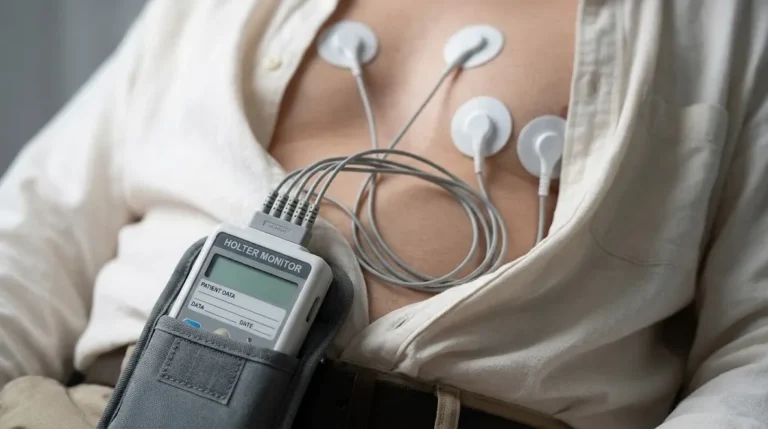
Nerve testing is just one piece of the diagnostic picture. Depending on what your doctor finds, you might also need imaging to look more closely at bone or soft tissue, which is where MRI imaging or digital x ray can help. If your symptoms are tied to heart health rather than nerve function, we also offer echocardiogram, EKG testing, holter monitor and ultrasound services. You can read more about our radiology team on our about us page.
Frequently Asked Questions
How long does a nerve conduction study take?
Most nerve conduction studies take between 15 minutes to an hour, with the average falling somewhere around 30 to 40 minutes depending on how many nerves are tested.
What is a nerve conduction study test?
It’s a diagnostic test that measures how fast and how well electrical signals travel through your nerves, used to detect nerve damage, compression or dysfunction.
How is a nerve conduction study done?
Electrode patches are placed on the skin over a nerve, a mild electrical impulse stimulates that nerve and a second electrode records the signal’s speed and strength as it travels.
What is a nerve conduction study?
A nerve conduction study is a medical test that evaluates how well your peripheral nerves send electrical signals, helping doctors identify nerve injury or disease.
What does a nerve conduction study show?
It shows whether nerve signals are traveling at a normal speed and strength, which helps identify the location and extent of nerve damage or compression.
Is a nerve conduction study painful?
Most patients feel only a brief tingling or twitching sensation with each electrical pulse. It’s uncomfortable for a moment but not typically described as painful.
Who needs a nerve conduction study?
People with symptoms like numbness, tingling, muscle weakness or unexplained nerve pain are often referred for this test, especially when carpal tunnel syndrome or peripheral neuropathy is suspected.
Do I need to prepare for a nerve conduction study?
Avoid lotions on your skin, wear loose clothing and tell your provider about your medical history, including any blood thinners or implanted electrical devices like a pacemaker.
Can I drive myself home after the test?
Yes. There’s no sedation involved, so you can drive yourself and return to normal activities right after your appointment.
How soon will I get my results?
A specialist reviews your results and sends a report to your referring doctor, who typically discusses findings with you within a few days.
Conclusion
A nerve conduction study is a short, manageable test that gives doctors real answers about nerve and muscle function. Most appointments take under an hour, the discomfort is brief and there’s no downtime needed afterward. If nerve related symptoms have been bothering you, this test is often one of the fastest ways to get clarity.
Contact Us
- Address: 2008 N Pulaski Rd, Chicago, IL 60639
- Phone: (773) 227 9777
- Website: advantagemri.org
For reliable, advanced diagnostic imaging you can trust, call Advantage MRI today or schedule your appointment online. You can also reach our team directly through our contact us page.
Follow us on social media for the latest health tips, diagnostic imaging updates and clinic news: Facebook | Instagram | LinkedIn.