Health & Imaging
How to Read Holter Monitor Results and What They Mean
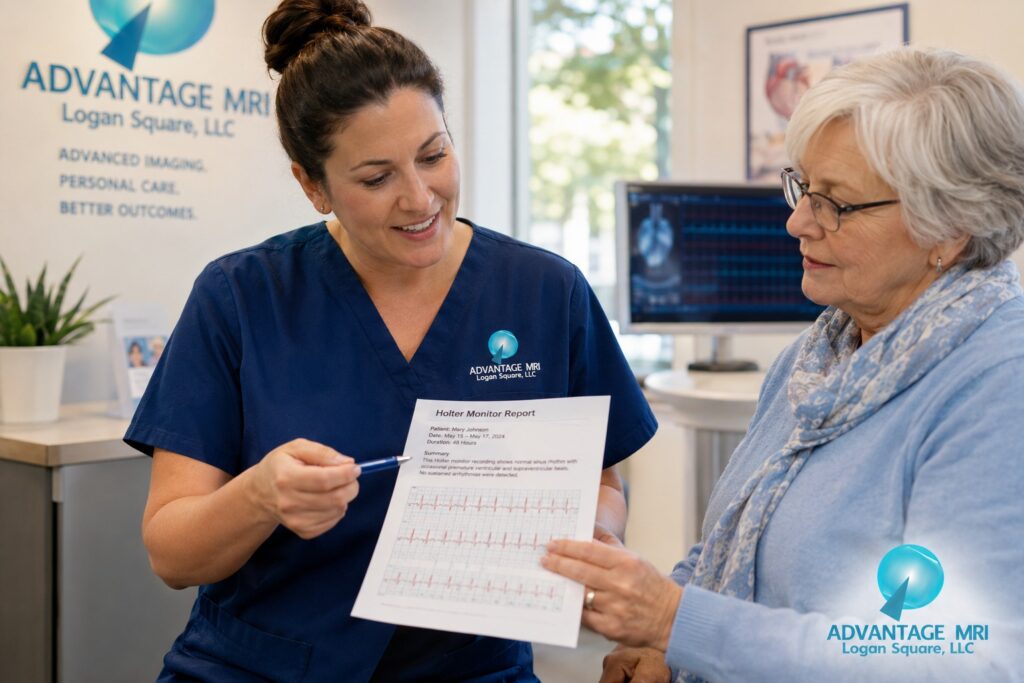
You just picked up your holter monitor results and now you’re staring at a page full of numbers and terms you’ve never seen before. Beats per minute this. Ectopic beats that. It feels a little like reading a report card in a language nobody taught you.
How to read holter monitor results doesn’t require a medical degree to get the basics. Once you know what a few key terms mean and what your cardiologist is actually looking for, the whole report starts making a lot more sense. And that what we’re going to walk through together in this piece.
At Advantage MRI in the Hermosa neighborhood of Chicago, we run holter monitor tests and EKG testing for patients every week, so this is a question we hear a lot. So let get into it.
Quick note before we start. This article is for general information only. It not a substitute for advice from your own doctor. If you have questions about your specific results, talk to the physician who ordered your test.
Need to Schedule a Diagnostic Appointment?
Whether you need an MRI, ultrasound, X-ray, or another diagnostic service, Advantage MRI is here to help you take the next step in your healthcare journey.
Submit your appointment request online, and our team will contact you to confirm your visit.
Book Your Appointment →What Is a Holter Monitor and Why You Wear One
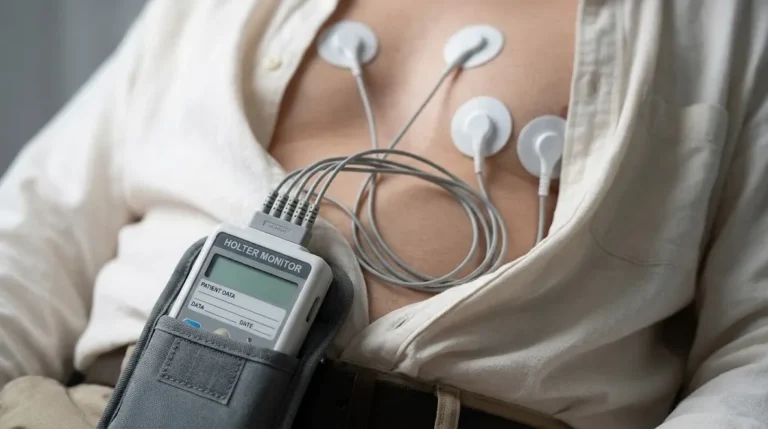
A holter monitor is a small portable device that records your heart electrical activity continuously, usually for 24 to 48 hours. It not much bigger than a deck of cards these days and it connects to your chest through a handful of electrodes with wires.
Unlike a standard electrocardiogram, which only captures a few seconds of your heartbeat while you’re lying still in an office, a holter monitor rides along with you through your normal daily activities. You sleep in it. You walk the dog in it. You sit through a boring meeting in it. That the whole point, honestly, catching your heart doing whatever it does when nobody watching.
How the Device Records Your Heart Activity
The electrodes pick up the electrical signals that make your heart beat and send them to the small recorder clipped to your waistband or hung around your neck. Every beat gets logged. Every pause, every skipped beat, every rush of speed. All of it gets stored for your doctor to review once the test is done.
Common Reasons Your Doctor Orders One
Doctors usually order a holter monitor when something feels off but doesn’t show up on a routine EKG. That includes palpitations that come and go, unexplained dizziness, fainting spells, shortness of breath or chest pain that seems tied to your heartbeat rather than anything else. If your symptoms are intermittent, a quick office EKG might miss them completely. A 24 hour holter gives your cardiac team a much longer window to catch what actually happening.
How to Read Holter Monitor Results Step by Step
Understanding the Summary Report
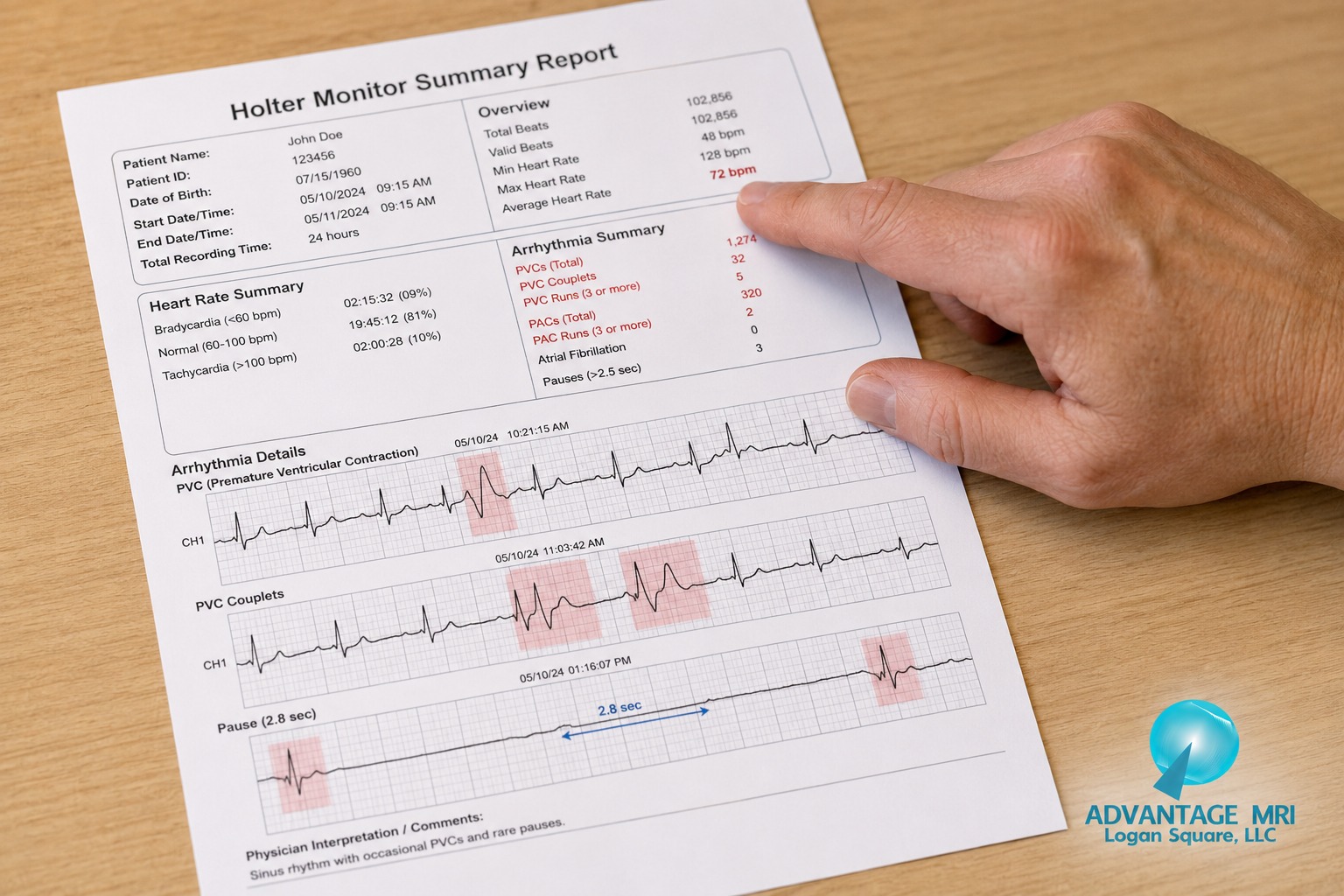
Most holter monitor results open with a summary page. This is the part most people skim past but it actually the most useful section for a non medical reader. It usually lists your average heart rate, your minimum and maximum heart rate, total number of beats recorded and a rundown of any abnormal rhythms detected during the recording.
Think of the summary as the headline. The detailed rhythm strips further in the report are more like the fine print, useful mostly to the cardiologist reading them.
What the Heart Rate Numbers Mean
Your heart rate is measured in beats per minute or bpm. A normal resting heart rate for most adults falls somewhere between 60 and 100 bpm, though this can vary depending on fitness level, age and medications you’re taking. Athletes often run lower, sometimes into the 40s or 50s, without it being a problem at all.
On your report you’ll typically see three numbers that matter most:
- Average heart rate across the whole recording period
- Minimum heart rate, usually recorded during sleep
- Maximum heart rate, usually recorded during activity or exercise
If your average sits well outside that 60 to 100 range consistently or if the minimum or maximum numbers look extreme, that something your cardiologist will want to correlate with what you were doing and feeling at the time.
Reading the Rhythm Strips
The rhythm strips are the actual squiggly line recordings, similar to what you’d see on a standard EKG but stretched across the full 24 to 48 hour window. These show the electrical activity of each heartbeat in detail, including the shape and timing of each wave.
You probably won’t be interpreting these strips yourself and that fine. That genuinely what the cardiologist is trained for. What matters for you as the patient is understanding the plain language summary that gets built from these strips, which brings us to the next section.
What Does a Holter Monitor Show
A holter monitor shows your heart rhythm and rate over an extended period, capturing patterns that a single snapshot EKG simply cannot catch. It shows how your heart responds to normal daily activity, exercise, rest and sleep.
Sinus Rhythm and Normal Findings
If your results say “normal sinus rhythm” throughout the recording, that good news. It means your heart electrical system is firing in the expected pattern, starting in the right place and moving through the heart the way it should. Most holter monitor results, even in patients being tested for symptoms, come back showing normal sinus rhythm for the bulk of the recording, with maybe a few isolated irregular beats mixed in that turn out to be harmless.
Symptom Diary Correlation
Here something a lot of patients don’t realize going in. During the test, you’re usually asked to keep a diary of what you’re doing and how you’re feeling, noting the time whenever you feel a palpitation, dizziness or any other symptom.
Your cardiologist then lines up your diary entries against the exact moment on the recording. This correlation of symptoms is honestly one of the most valuable parts of the whole test. It the difference between saying “I felt my heart race sometimes” and actually showing what your heart rhythm was doing during that exact race.
Common Findings on Holter Monitor Results
PVCs and PACs Explained
PVCs or premature ventricular contractions, are extra heartbeats that start in the lower chambers of your heart, the ventricles. They’re sometimes called ventricular ectopic beats. Most people have a few PVCs now and then without ever noticing and a low number scattered through a 24 hour recording is considered normal.
PACs or premature atrial contractions, work the same way but start in the upper chambers, the atria. Both PVCs and PACs are common and in most cases they’re not dangerous on their own. What matters more is the total count, whether they cluster together and whether you actually felt symptoms when they happened.
Atrial Fibrillation Signs
Atrial fibrillation, often shortened to afib, is an irregular and often rapid heart rhythm that starts in the atria. On a holter recording, afib shows up as a chaotic pattern instead of the smooth regular pattern of normal sinus rhythm. This one gets taken seriously because untreated afib carries a real risk of stroke, so if your results flag any episodes of afib, expect a follow up conversation with your doctor fairly quickly.
Tachycardia and Bradycardia Patterns
Tachycardia means a heart rate that too fast, generally above 100 bpm at rest. Ventricular tachycardia specifically refers to a fast rhythm starting in the ventricles and depending on how long it lasts and how you tolerate it, this can range from a minor blip to something that needs prompt attention.
Bradycardia is the opposite, a heart rate that too slow, generally below 60 bpm. For a lot of people, especially those who are physically active or on certain heart medications, a slower resting rate is completely normal. But if bradycardia shows up alongside symptoms like dizziness or fainting or if there are long pauses between beats, that worth flagging to your doctor.
| Finding | What It Means | Typical Next Step |
|---|---|---|
| PVCs | Extra heartbeats starting in the lower chambers of the heart, common and usually harmless in small numbers | Doctor reviews frequency and symptom correlation, often no action needed |
| PACs | Extra heartbeats starting in the upper chambers, similar to PVCs but from the atria | Usually monitored, rarely requires treatment on its own |
| Atrial Fibrillation | Irregular chaotic rhythm starting in the atria, carries a real risk of stroke if untreated | Prompt follow up with cardiologist, possible medication or further testing |
| Tachycardia | Heart rate faster than 100 bpm at rest, can start in the atria or ventricles | Reviewed based on how long it lasted and what symptoms accompanied it |
| Bradycardia | Heart rate slower than 60 bpm at rest, often normal in athletes or on certain medications | Flagged if paired with dizziness or fainting, otherwise often just noted |
| Pauses | Brief gaps where the heart electrical activity stops before the next beat | Length of pause reviewed closely, longer pauses may need further evaluation |

Abnormal Holter Monitor Results Explained
When Results Are Flagged as Abnormal
A result gets flagged as abnormal when the recording shows rhythms outside expected patterns, whether that a sustained fast or slow rate, a significant number of ectopic beats, episodes of afib or other arrhythmia or long pauses in the heart electrical activity. The report will typically list the specific abnormal rhythms detected, how many times they occurred and how long each episode lasted.
How Serious Is an Abnormal Result
This is where a lot of people jump straight to worst case thinking and honestly, that understandable. But an abnormal holter monitor result doesn’t automatically mean something dangerous is going on. A handful of extra beats scattered through 24 hours of recording is a very different finding than sustained ventricular tachycardia or frequent afib episodes.
Your cardiologist looks at the full picture, the type of arrhythmia, how often it happens, how long it lasts and whether it lines up with symptoms you noted in your diary. Sometimes an abnormal finding leads to a simple follow up and sometimes it leads to further testing like an echocardiogram or a referral to a specialist. Either way, getting the abnormal finding is actually a good thing, because it means the problem got caught instead of going unnoticed.
What Can a Holter Monitor Show That a Regular EKG Cannot
Continuous Monitoring vs Single Snapshot
A standard EKG captures maybe ten to twenty seconds of your heart activity while you sit still in an exam room. A holter monitor captures 24 to 48 hours of continuous data across your actual daily activities and even while you sleep.
That difference matters a lot for intermittent symptoms. If your palpitations show up twice a week for thirty seconds each, there a real chance a single office EKG never catches it at all. A holter monitor dramatically increases the odds of recording the actual event, along with everything your heart was doing right before and after it.
For patients whose symptoms are rare or unpredictable, doctors sometimes step up to an event monitor, which can be worn for weeks and only records when triggered, either automatically or by the patient pressing a button. That a separate conversation to have with your doctor if your holter results come back inconclusive.
Next Steps After Getting Your Results
Talking to Your Cardiologist
Once your holter monitor results are ready, your cardiologist will go over them with you, explain any abnormal findings in plain terms and talk through what if anything needs to happen next. Bring your symptom diary questions with you. If something felt off during the recording and you’re not sure it got flagged, ask directly.
Possible Follow Up Tests
Depending on what shows up, your doctor might recommend additional testing to get a fuller picture. That could include an echocardiogram to look at the heart structure and function, a stress test to see how your heart responds under exertion or repeat holter monitoring if the first recording didn’t capture enough data. In some cases, additional ultrasound imaging gets added to rule out other contributing factors.
FAQs
How long do I need to wear a holter monitor?
Most holter monitor recordings run for 24 to 48 hours, though some extended versions can go longer depending on what your doctor is trying to capture.
How soon will I get my holter monitor results?
Turnaround time varies by clinic but most patients get their results back within a few days to about a week after the recording is complete and reviewed.
What is a normal heart rate on a holter monitor?
A normal resting heart rate for most adults falls between 60 and 100 beats per minute, though athletes and people on certain medications can run lower without it being a problem.
What do PVCs on a holter monitor mean?
PVCs are premature ventricular contractions, extra heartbeats starting in the lower chambers of the heart. A small number scattered through a 24 hour recording is common and usually not concerning.
Can a holter monitor miss an abnormal heartbeat?
Yes, it possible. If your symptoms happen less often than once every 24 to 48 hours, the recording window might not catch an episode, which is why some patients move on to longer term event monitoring.
Is atrial fibrillation always visible on a holter monitor?
Not always. If afib episodes are infrequent, a single holter recording might miss them, especially if the episodes are brief and don’t happen during the monitoring window.
What should I do if my holter monitor shows an abnormal result?
Talk to your doctor about what the specific finding means for you. They’ll consider the type of abnormality, how often it happened and whether it matched any symptoms you noted.
Can stress affect holter monitor results?
Yes. Physical or emotional stress can temporarily raise your heart rate or trigger extra beats, so your cardiologist will factor your activity and stress levels into the overall picture.
What is the difference between holter monitor and event monitor?
A holter monitor records continuously for 24 to 48 hours. An event monitor is worn longer, sometimes for weeks and typically only records when triggered by the patient or an automatic detection feature.
Do I need to fast before a holter monitor test?
No fasting is typically required before a holter monitor test. You can generally eat, drink and go about normal daily activity while wearing the device, though your doctor may give you specific instructions ahead of time.
Conclusion
Reading your own holter monitor results for the first time can feel like a lot. Terms like PVC, afib and bradycardia get thrown around fast and it easy to feel a little lost. But once you know what the summary numbers mean and what the common findings actually represent, the report stops being so intimidating.
The most important thing to remember is this. Whatever your results say, your cardiologist is there to walk you through them and figure out what, if anything, comes next. At Advantage MRI, our team in Chicago works directly with your referring physician to make sure your holter monitor results, along with any related MRI imaging, digital x ray or EMG testing, get reviewed thoroughly and explained clearly. You can learn more about our team and credentials or explore our full holter monitor testing services.
Contact Us
- Address: 2008 N Pulaski Rd, Chicago, IL 60639
- Phone: (773) 227 9777
- Email: [Please provide the clinic email address to include here]
For reliable advanced diagnostic imaging you can trust call Advantage MRI today or schedule your appointment online. You can also reach out with any questions before your visit.
Follow us on social media for the latest health tips diagnostic imaging updates and clinic news: Facebook | Instagram | LinkedIn.