Health & Imaging
Nerve Conduction Study vs EMG: How These Two Tests Actually Differ

Something feels off in your arm or your leg and your doctor brings up two tests in the same sentence. EMG and nerve conduction study. Your head starts spinning a little because these names sound almost the same but they are not doing the same job. Here’s the thing. A lot of patients walk into testing without knowing what each one actually checks and that confusion is normal.
This article breaks down nerve conduction study vs emg in plain language so you know what to expect before you ever sit down for testing.
Need to Schedule a Diagnostic Appointment?
Whether you need an MRI, ultrasound, X-ray, or another diagnostic service, Advantage MRI is here to help you take the next step in your healthcare journey.
Submit your appointment request online, and our team will contact you to confirm your visit.
Book Your Appointment →What Is a Nerve Conduction Study
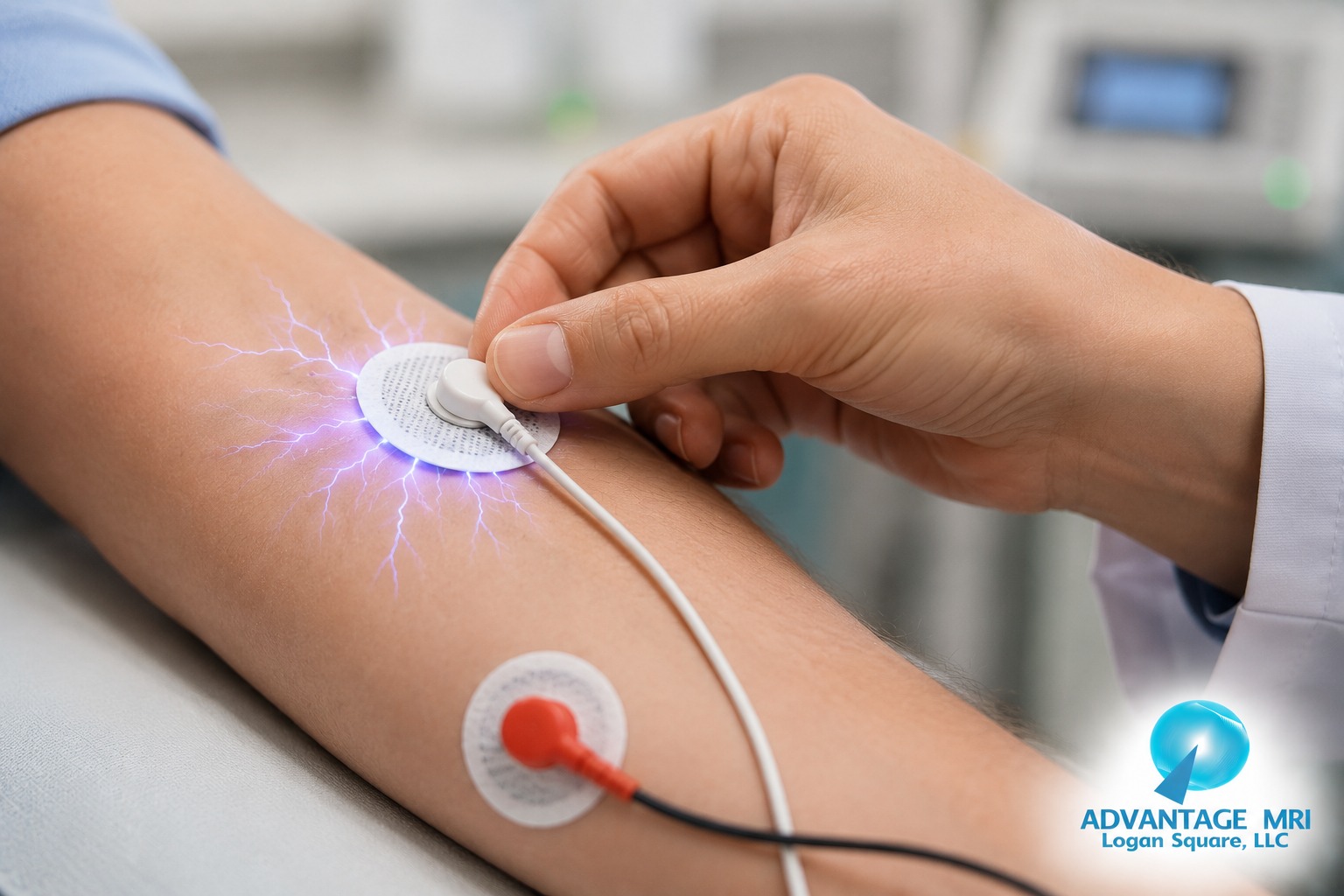
A nerve conduction study checks how fast and how well electrical signals travel through your nerves. Small electrodes get placed on your skin over the nerve being tested. A mild electrical pulse goes through the nerve and the machine records how quickly that signal moves.
Quick answer: Nerve conduction study measures nerve signal speed and strength to find nerve damage or nerve disorder.
How NCS Works
The technician places surface electrodes along the path of a nerve. A small stimulator sends a brief electrical signal down that nerve and a second electrode picks up the response further along. The machine records how fast the signal traveled and how strong it was by the time it reached the second point.
You might feel a quick tingle or a small muscle twitch during the pulse. It’s not painful in the way most people expect. Just unexpected the first time.
What NCS Measures
Nerve conduction studies are used to look at nerve conduction velocity meaning how fast the signal moves and the amplitude meaning how strong the signal is when it arrives. Slower speeds or weaker signals often point toward nerve damage or a nerve disorder such as peripheral neuropathy.
| Nerve Conduction Result | What It May Suggest |
|---|---|
| Normal velocity range (roughly 50 to 70 meters per second for most motor and sensory nerves) | Nerve is transmitting signals at a healthy speed with no sign of damage |
| Mildly slowed velocity | Early nerve irritation or mild compression such as early carpal tunnel syndrome |
| Significantly slowed velocity | Nerve damage or long standing compression affecting the nerve’s protective covering |
| Reduced signal strength (low amplitude) | Loss of nerve fibers or more advanced nerve damage rather than just slowing |
| No detectable response | Severe nerve damage or complete conduction block along that nerve pathway |
What Is an EMG Test
An emg test looks at muscle function instead of nerve speed. It measures the electrical activity happening inside your muscles both while they rest and while you contract them.
Quick answer: EMG measures muscle electrical activity to find out if muscle weakness comes from the muscle itself or from nerve damage affecting that muscle.
How Electromyography Works
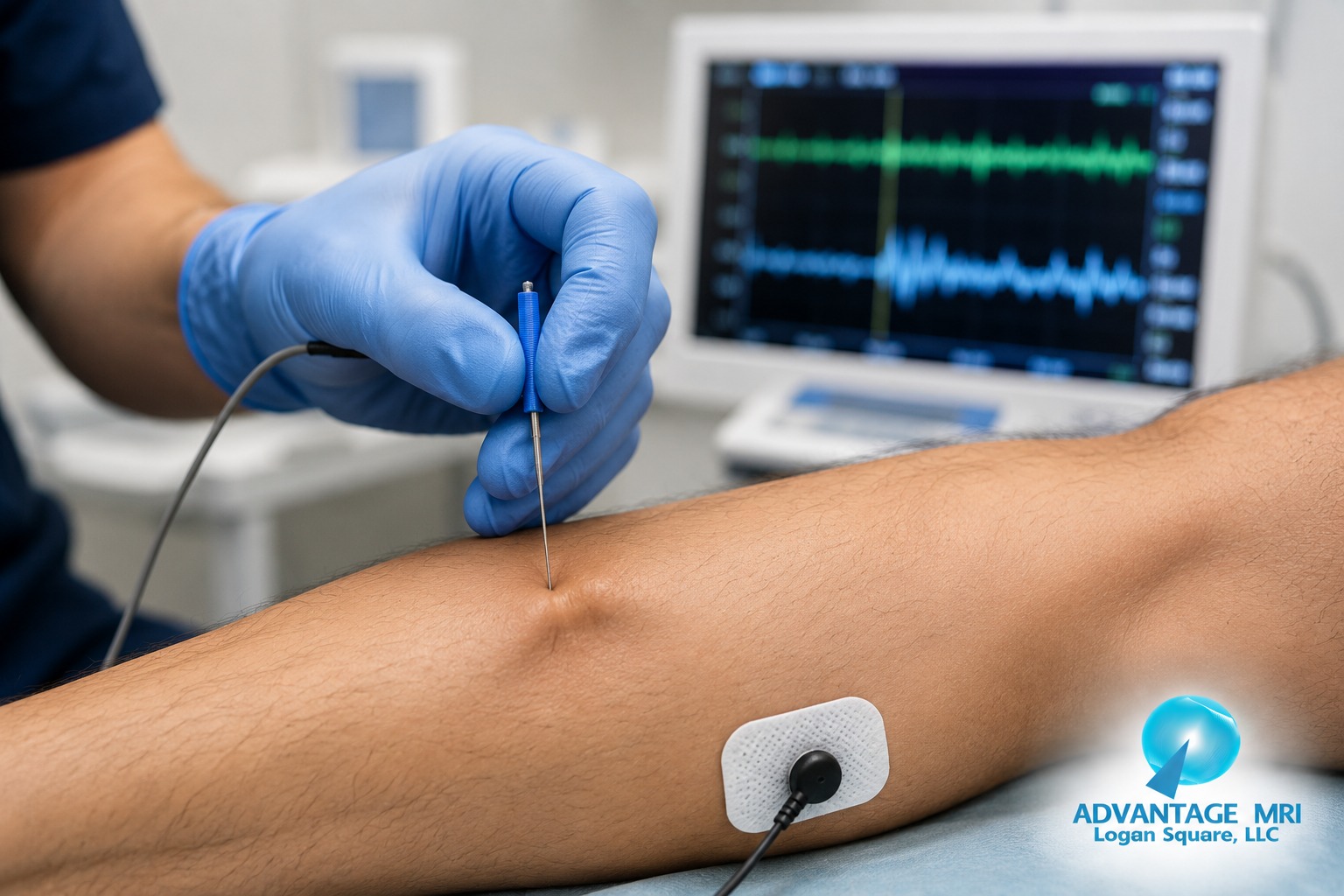
A thin needle electrode gets inserted into the muscle being tested. That might sound rough but most people describe it as a quick pinch rather than real pain. The needle picks up electrical signals while the muscle sits at rest and again while you gently contract it.
The doctor watches for abnormal electrical patterns. Muscle at rest should stay quiet electrically. If it doesn’t that tells the doctor something worth digging into.
What EMG Assesses in Muscle Function
Electromyography tests can detect if a muscle is receiving proper nerve signals or if the muscle tissue itself has an issue. This distinction matters a lot for conditions like amyotrophic lateral sclerosis muscular dystrophy or nerve root compression coming from the spinal cord.
| Muscle Activity Pattern | What It Typically Means |
|---|---|
| Normal at rest | Muscle is quiet and shows no abnormal signal which is expected in healthy muscle tissue |
| Abnormal spontaneous activity | Muscle fires on its own without you contracting it and this often points toward nerve damage or nerve irritation feeding that muscle |
| Reduced recruitment | Fewer muscle fibers activate than expected during contraction which can suggest nerve signal loss or muscle weakness |
| Increased insertional activity | Muscle shows extra electrical activity right when the needle goes in and this can hint at early nerve or muscle irritation |
| Fibrillation potentials | Small spontaneous signals show up in resting muscle and these are commonly linked to nerve damage affecting that muscle |
Nerve Conduction Study vs EMG: Key Differences
So what’s the actual difference between emg and nerve conduction study? One checks the wiring. The other checks the muscle itself.
| Feature | Nerve Conduction Study | EMG |
|---|---|---|
| What it measures | Nerve signal speed and strength | Muscle electrical activity |
| Method | Surface electrodes and mild electrical pulse | Needle electrode inserted into muscle |
| Discomfort level | Mild tingle | Brief pinch during needle insertion |
| Typical duration | 15 to 30 minutes | 30 to 60 minutes |
| Best for diagnosing | Peripheral neuropathy carpal tunnel syndrome nerve compression | ALS muscular dystrophy nerve root issues |
Testing Method Differences
NCS uses surface electrodes and a small electrical pulse. No needles involved. EMG uses a needle electrode placed directly into the muscle tissue. That’s the biggest physical difference between the two and usually the first question patients ask.
What Each Test Diagnoses
Nerve conduction studies can help diagnose carpal tunnel syndrome compression of the median nerve in the wrist and other peripheral nerve issues. EMG tends to get used more for conditions tied to the muscle or the nerve roots feeding that muscle.
Pain Level Comparison
Most people say NCS feels like a quick static shock. Mildly annoying but over fast. EMG involves a needle so there’s a brief sting when it goes in. Neither test should leave you in real pain afterward and any soreness usually fades within a day or two.
Why EMG and NCS Testing Are Often Performed Together
In a lot of cases doctors order emg and ncs testing together because each test fills in gaps the other one leaves. NCS tells you if a nerve signal is traveling normally. EMG tells you what’s happening at the muscle receiving that signal. Put them together and you get a much clearer picture.
How Combined Testing Improves Diagnosis
Say a patient has numbness and weakness in their hand. NCS might show slowed nerve conduction near the wrist which points toward carpal tunnel syndrome. EMG then confirms whether the muscles in that hand are showing signs of nerve related weakness or something else entirely. Together the tests narrow down the diagnosis faster than either one alone.
Common Conditions Diagnosed With EMG and NCS Testing
These combined tests help diagnose peripheral neuropathy carpal tunnel syndrome nerve root compression from the spinal cord and neuromuscular conditions. They’re also used to evaluate unexplained tingling numbness or muscle weakness that hasn’t responded to basic treatment.
What to Expect During Nerve Conduction Studies and Electromyography
Before Your Test
Wear loose comfortable clothing so the technician can easily access the area being tested. Avoid lotions or oils on your skin that day since they can interfere with electrode placement. Let your provider know if you’re on blood thinners since that matters more for the EMG portion given the needle electrode.
During the Procedure
For NCS electrodes go on your skin and you’ll feel a series of mild pulses. For EMG a needle electrode goes into specific muscles and you may be asked to relax the muscle then gently contract it so the doctor can watch the electrical pattern shift. Tests are performed one after another when both are ordered the same day.
After Testing and Results Timeline
You can drive yourself home and go back to normal activity right after. Some mild soreness at needle sites is common for a day or two. Emg results and nerve conduction study results typically get reviewed by a board certified physician and your referring doctor usually has them within a few business days after the test.
Who Needs EMG and Nerve Conduction Study Testing
Not everyone with tingling or weakness needs this testing right away but for a lot of people it becomes the clearest path to an answer once basic exams don’t explain the symptoms.
Common Symptoms That Lead to Testing
Doctors typically order this testing when patients report numbness tingling muscle weakness or pain that seems to follow a nerve pathway. That includes hand numbness that gets worse at night unexplained muscle twitching and honestly persistent nerve pain that hasn’t improved with rest.
Conditions Diagnosed With EMG
EMG can help diagnose muscular dystrophy amyotrophic lateral sclerosis and nerve or muscle disorders tied to the spinal cord or nerve roots. It’s also useful when a doctor needs to figure out if muscle weakness is coming from the muscle itself or from a nerve problem upstream.
Getting EMG and NCS Testing at Advantage MRI in Chicago
If you’re dealing with unexplained numbness tingling or muscle weakness testing doesn’t have to be complicated. Advantage MRI offers both nerve conduction study and emg testing right here in the Hermosa neighborhood of Chicago.
Why Choose Board Certified Radiologists for Your Diagnostic Test
Dr Gregory T Goldstein MD leads diagnostic imaging at Advantage MRI as a board certified radiologist with a background in orthopedic and neurological imaging. He founded MetisMD and created Connected RadiologySM a coordinated approach that keeps your referring physician looped in throughout the testing and reporting process. That matters when you’re trying to get answers fast instead of waiting around.
Fast Scheduling and Reporting
Advantage MRI is ACR accredited and built around quick scheduling and fast turnaround on reports. If your doctor also wants imaging alongside your EMG or NCS testing options like MRI imaging digital x ray and ultrasound are available on site as well. For patients with symptoms that might overlap with heart related causes services like ekg testing echocardiogram and holter monitor testing are also offered under one roof.
Frequently Asked Questions
What is the difference between emg and nerve conduction study?
Nerve conduction study measures how fast and how strong a signal travels through a nerve using surface electrodes. EMG measures electrical activity inside the muscle itself using a needle electrode. One checks the nerve. The other checks the muscle.
Do emg and ncs hurt?
NCS usually feels like a quick tingle or small shock and isn’t considered painful for most people. EMG involves a needle so there’s a brief pinch when it’s inserted but it’s short and most patients tolerate it well.
Can you have one test without the other?
Yes. Some patients only need NCS and some only need EMG depending on the symptoms and what the doctor is trying to rule out. Plenty of cases still call for both tests performed together for a fuller picture.
How long does testing take?
NCS typically takes about 15 to 30 minutes. EMG usually runs 30 to 60 minutes. When both are done in the same visit expect the full appointment to take around an hour or a little more.
What conditions does nerve conduction study diagnose?
NCS helps diagnose carpal tunnel syndrome peripheral neuropathy and other nerve compression or nerve damage issues affecting the arms legs hands or feet.
What does an emg test show?
EMG shows whether a muscle is functioning normally or showing abnormal electrical activity that points toward nerve damage muscle disease or a nerve root problem near the spinal cord.
How should I prepare for emg and nerve conduction studies?
Wear loose clothing skip lotions or oils on the day of testing and tell your provider about any blood thinning medication. No fasting or special prep is usually needed beyond that.
How soon will I get results?
Your referring doctor typically receives reviewed results within a few business days after testing though this can vary depending on your specific case and provider.
Is nerve conduction velocity test safe?
Yes. It’s a low risk outpatient test with mild discomfort at most and no lasting side effects for the vast majority of patients.
Where can I get emg testing near me in Chicago?
Advantage MRI offers emg and nerve conduction study testing in the Hermosa neighborhood of Chicago with fast scheduling and board certified oversight.
Conclusion
Nerve conduction study and EMG aren’t the same test wearing two different names. One checks the nerve signal. The other checks the muscle response. Together they give doctors a clearer path toward figuring out what’s actually causing numbness tingling or weakness. If your doctor has recommended either test or both understanding the difference ahead of time makes the whole process feel a lot less confusing.
This article is for general information only and is not a substitute for professional medical advice diagnosis or treatment. Always talk with your doctor about your specific symptoms and testing needs.
Contact Us
- Address: 2008 N Pulaski Rd Chicago IL 60639
- Phone: (773) 227 9777
- Email: info@advantagemri.org
For reliable advanced diagnostic imaging you can trust call Advantage MRI today or schedule your appointment online. You can also contact our team with any questions before your visit.
Follow us on social media for the latest health tips diagnostic imaging updates and clinic news: Facebook | Instagram | LinkedIn.