Health & Imaging
Full-Body MRI Scan: Is It Worth It? Evidence, Costs and Limitations

Quick answer: A full body MRI scan is an elective screening exam that images most of the body, typically from head to pelvis or thighs, in about 30 to 60 minutes without radiation. It can occasionally find serious problems early, such as some tumors or aneurysms. However, major medical organizations do not currently recommend full-body MRI screening for people without symptoms, because there isn’t solid evidence that it helps people live longer or healthier, and it often finds harmless “incidental” abnormalities that lead to anxiety, extra tests and costs. Full-body scans are usually self-pay and commonly priced in the four figures. For most people, proven screening tests (like mammograms, colonoscopies and blood pressure checks) and a targeted MRI ordered by a doctor for a specific concern offer more value.
This guide explains what a full-body MRI can and can’t do, what the evidence says, what it costs, and how to decide whether it’s right for you.
What Is a Full-Body MRI Scan?
A full-body MRI uses the same technology as a standard MRI, a strong magnet and radio waves, to take images of multiple regions in one session. Packages differ, but many include:
Need to Schedule a Diagnostic Appointment?
Whether you need an MRI, ultrasound, X-ray, or another diagnostic service, Advantage MRI is here to help you take the next step in your healthcare journey.
Submit your appointment request online, and our team will contact you to confirm your visit.
Book Your Appointment →- Brain
- Neck and spine
- Chest (limited lung detail)
- Abdomen, including liver, kidneys, pancreas and spleen
- Pelvis, including bladder, uterus and ovaries, or prostate
To fit everything into one appointment, full-body protocols use fewer, faster sequences for each area than a dedicated diagnostic MRI. That’s an important trade-off covered below.

Full-Body Screening MRI vs Diagnostic MRI
| Full-body screening MRI | Diagnostic (targeted) MRI | |
|---|---|---|
| Who it’s for | People without symptoms seeking reassurance | People with symptoms or a specific medical question |
| Ordered by | Often self-referred | A physician |
| Body coverage | Many regions at once | One region, examined in depth |
| Detail per region | Lower, with fewer sequences | Higher, with protocols tailored to the question |
| Contrast | Usually not used | Used when needed |
| Insurance coverage | Generally not covered | Often covered when medically necessary |
| Evidence base | Limited for screening healthy people | Strong for many conditions |
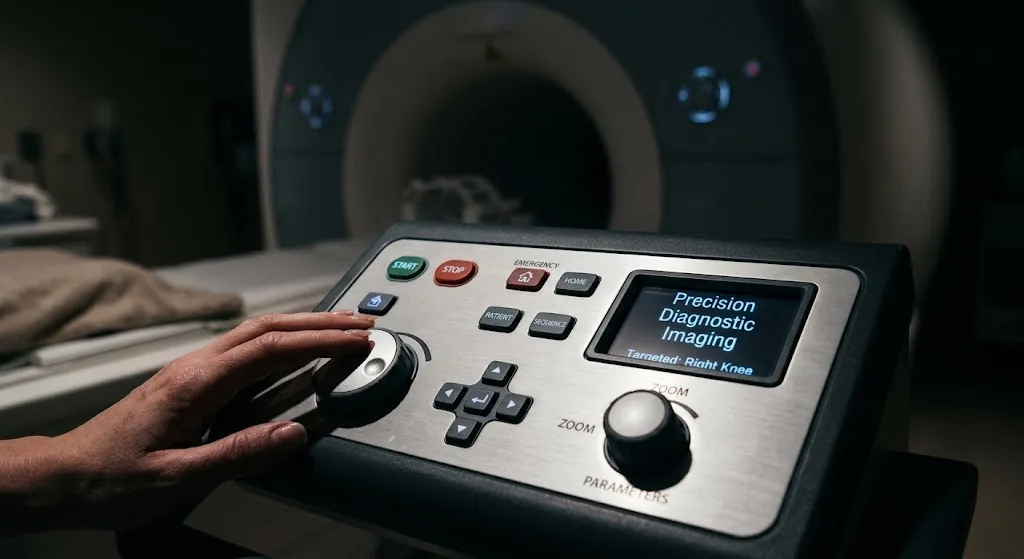
A targeted MRI of the knee, spine or brain, ordered because of symptoms, is a different kind of test from a whole-body screening scan, even though the machine is the same. Learn more about MRI’s strengths in our MRI vs CT scan guide.
Potential Benefits of a Full-Body MRI
Supporters point to several possible advantages:
- No ionizing radiation, unlike whole-body CT
- Possible early detection of some cancers (such as kidney, liver, pancreas or brain tumors), aneurysms or other conditions before symptoms appear
- Peace of mind for some people when results are normal
- A baseline for future comparison
- Potential value for specific high-risk groups, such as some people with inherited cancer syndromes, where whole-body MRI may be used as part of a specialist-directed surveillance program
The last point matters. Whole-body MRI has a defined role in certain high-risk genetic conditions, but that is very different from screening the general population.
The Limitations and Risks
1. Limited Evidence of Benefit
For people at average risk, there’s no strong evidence that full-body MRI screening reduces deaths from cancer or other diseases. The American College of Radiology has stated that it does not currently have evidence to support recommending total-body screening for patients without symptoms or a family history or other risk factors. Large, long-term studies would be needed to prove a benefit, and they haven’t been done.
2. Incidental Findings
MRI is very sensitive. It often finds small cysts, benign nodules, harmless spots in organs, disc bulges and other changes that are common and usually not dangerous. These are called incidental findings. Each one may lead to:
- Additional imaging
- Specialist visits
- Sometimes biopsies or procedures, which carry their own risks
- Anxiety while waiting for answers
- Out-of-pocket costs, which insurance may or may not cover
Many of these findings, after all the follow-up, turn out to be nothing that ever needed treatment.
3. False Reassurance
A normal full-body MRI doesn’t mean you’re disease-free. Because screening protocols use fewer sequences, small lesions can be missed. Some conditions, including early colon polyps, early breast cancers, many skin cancers and coronary artery disease, are better detected with other tests or aren’t well seen on MRI at all. A normal scan should never replace recommended screenings.
4. Overdiagnosis
Some abnormalities, including some very slow-growing cancers, would never cause harm during a person’s lifetime. Finding and treating them can expose people to risks without benefit.
5. Cost
Full-body MRIs are generally not covered by insurance when done for screening. Self-pay prices for whole-body packages are commonly advertised in the four-figure range, and follow-up tests for incidental findings can add more.
6. Standard MRI Considerations
The usual MRI safety rules apply: screening for implants and metal, possible claustrophobia during a longer exam, and loud scanner noise. See our article on MRI scanning sounds.
What a Full-Body MRI Typically Can and Can’t Find
| Often better seen | Often poorly seen or missed |
|---|---|
| Some brain tumors and aneurysms | Early colon polyps and colon cancer |
| Many kidney, liver and some pancreatic masses | Small lung nodules (CT is better for lungs) |
| Many spinal problems | Coronary artery disease |
| Some uterine, ovarian and prostate abnormalities | Skin cancers |
| Enlarged lymph nodes | Many early breast cancers (dedicated breast imaging is needed) |
| Some bone lesions | Blood-based conditions like diabetes and high cholesterol |
What Happens After an Incidental Finding? An Example
Here’s a simplified example of how one incidental finding can unfold. It’s illustrative, not a prediction of what will happen to you.
A healthy 45-year-old has a full-body MRI. The report notes a small, indeterminate lesion in one kidney and a few tiny spots in the liver. Most likely, the liver spots are simple cysts and the kidney lesion is benign. But “indeterminate” means the screening images aren’t detailed enough to be sure.
The radiologist recommends a dedicated kidney MRI with contrast. That requires a doctor’s order, possibly insurance authorization, another appointment and another bill. The follow-up scan shows a benign cyst. The person is relieved, but only after weeks of worry, extra costs and a contrast injection that would otherwise not have been needed.
Sometimes, of course, follow-up finds something that genuinely needed attention. The difficulty is that, for people at average risk, there isn’t enough evidence yet to know whether the benefits for the few outweigh the burdens for the many.
Whole-Body MRI vs Whole-Body CT vs PET
People sometimes ask whether another whole-body test would be better:
- Whole-body CT for screening isn’t recommended for people without symptoms. It involves significant radiation exposure and has the same incidental-finding problem.
- PET/CT is used to stage and monitor known cancers, not to screen healthy people. It also involves radiation. See our PET vs CT vs MRI guide.
- Whole-body MRI avoids radiation, which is its main advantage among whole-body options. Its evidence gap for average-risk screening remains.
For eligible adults with a significant smoking history, low-dose chest CT for lung cancer screening is a targeted, evidence-based exception.
Questions to Ask Your Own Doctor First
Before booking, a short conversation with your primary care doctor can help you decide:
- Based on my family history and risk factors, am I at higher risk for any condition a full-body MRI might detect?
- Am I up to date on the screenings recommended for my age?
- If the scan finds something, will you help me interpret it and order follow-up?
- Would a targeted test answer my specific concern better?
- Are there genetic counseling or specialist options I should consider first?
What a Full-Body MRI Appointment Is Like
If you do go ahead, the experience is similar to any MRI, just longer:
- Screening questionnaire. You’ll answer detailed questions about implants, surgeries, metal exposure and medical history.
- Changing. You’ll remove all metal and usually wear MRI-safe clothing or a gown.
- Positioning. You lie on your back, often with a head coil and flexible coils placed over the chest, abdomen and pelvis. The table moves in stages so each region is centered in the magnet.
- Breath-holds. For chest and abdominal images, you’ll be asked to hold your breath for several seconds at a time to reduce blurring.
- Noise and stillness. Expect loud knocking sounds. Staying still is essential, and long exams can be tiring, so ask for a blanket or padding if needed.
- Results. A radiologist reviews the images and prepares a report. Ask in advance how and when results will be shared and whether a clinician will go over them with you.
What Do Medical Guidelines Recommend Instead?
For most adults, proven preventive care offers clearer benefits. Depending on your age, sex and risk factors, your doctor may recommend:
- Blood pressure, cholesterol and diabetes screening
- Colorectal cancer screening, such as colonoscopy or stool-based tests
- Breast cancer screening with mammography
- Cervical cancer screening
- Lung cancer screening with low-dose CT for eligible people with a significant smoking history
- Abdominal aortic aneurysm screening with ultrasound for some older adults who have smoked
- Skin checks for people at higher risk
These recommendations come from groups such as the U.S. Preventive Services Task Force, based on evidence that screening improves outcomes.
Who Might Consider a Full-Body MRI?
Situations where a full-body MRI is more likely to be discussed include:
- Known high-risk genetic syndromes, such as Li-Fraumeni syndrome, as part of a specialist-supervised plan
- Certain conditions requiring whole-body assessment, like some bone marrow or multi-site diseases, as directed by a specialist
For other people, the choice is personal and should be made with full information. If you’re considering it, talk with your primary care doctor first about your risk factors, what the scan might add, and how incidental findings would be handled.
Questions to Ask Before Booking a Full-Body MRI
- Which body areas are included, and which aren’t?
- How many sequences are used per region? Is the brain or abdomen imaged in diagnostic detail or in a shortened protocol?
- Is contrast used? If not, which conditions might be missed?
- Who interprets the scan? Is it a board-certified radiologist, and is the facility accredited?
- How are incidental findings handled? Will you get a consultation? Will they send results to your doctor?
- What’s the total cost? Does it include the report and a results discussion?
- Will my insurance cover any follow-up tests that are recommended?
- Can I get the images and report for future comparison?
Full-Body MRI Near Me: Choosing a Facility in Chicago
People searching “full body MRI scan near me” or “full body scan Chicago” will find a mix of dedicated screening companies, such as branded services like Prenuvo, and general imaging centers. Whatever you choose, look for:
- Accreditation, such as American College of Radiology (ACR) MRI accreditation
- Board-certified radiologists interpreting the images
- Clear pricing and written information about what’s included
- A plan for follow-up and communication with your own doctor
- Transparent limitations, explaining what the scan can’t detect
Be cautious of marketing that suggests a full-body scan can “catch everything” or replaces regular checkups.
Symptoms? Choose a Diagnostic MRI Instead
If you have symptoms, such as persistent headaches with new neurological changes, back pain with leg weakness, joint pain after injury, or abdominal concerns, a full-body screening scan is not the right tool. You need a targeted evaluation and, if appropriate, a diagnostic MRI ordered by your doctor, with protocols designed to answer your specific question. Diagnostic MRI is often covered by insurance when medically necessary.
For help understanding which imaging test fits a concern, read which is better for the brain, MRI or CT and our PET vs CT vs MRI guide.
How to Prepare for Any MRI
- Complete the metal and implant safety questionnaire carefully.
- Remove jewelry, watches and metal accessories.
- Tell the team about claustrophobia, pregnancy, kidney problems or prior contrast reactions.
- Follow food and drink instructions. See can you eat before an MRI?
Diagnostic MRI at Advantage MRI in Chicago
Advantage MRI provides diagnostic MRI imaging at 2008 N Pulaski Rd, Chicago, IL 60639, along with X-ray, ultrasound, echocardiograms, EKGs, Holter monitoring, EMG and nerve conduction studies. Our website states that the center is ACR accredited and that studies are interpreted by sub-specialized, board-certified radiologists. Learn more on our About page.
We focus on MRI exams ordered by physicians to answer specific medical questions. If you’re weighing a full-body scan, we encourage you to talk with your doctor first. If you have questions about MRI options, pricing for a specific exam, or self-pay rates, contact our team. We welcome insured, out-of-network and self-pay patients.
Frequently Asked Questions
Is a full-body MRI worth it?
For most people without symptoms or special risk factors, current evidence doesn’t show that full-body MRI improves health outcomes, and it often leads to follow-up for harmless findings. It may be considered for certain high-risk groups under specialist guidance.
How much does a full-body MRI cost?
Full-body screening MRIs are usually self-pay, with prices commonly advertised in the four-figure range. Follow-up tests for incidental findings can add cost.
Does insurance cover a full-body MRI?
Generally no, when done for screening without symptoms. Diagnostic MRIs ordered for a medical reason are often covered.
Can a full-body MRI detect cancer?
It can detect some cancers, especially in the brain, kidneys, liver and pelvis, but it can miss others, such as early colon, lung, skin and many breast cancers. It doesn’t replace recommended cancer screenings.
How long does a full-body MRI take?
Often about 30 to 60 minutes, depending on the package.
Is a full-body MRI safe?
MRI doesn’t use ionizing radiation, so the scan itself is generally safe for people without contraindications. The main risks come from incidental findings leading to unnecessary tests or procedures.
Can I get a full-body MRI without a doctor’s referral?
Many screening companies accept self-referral. Diagnostic MRI generally requires a physician’s order. Either way, sharing results with your own doctor is important so incidental findings are followed up appropriately.
What’s the difference between a full-body MRI and a regular MRI?
A full-body MRI covers many areas quickly with fewer sequences per area. A regular diagnostic MRI focuses on one area in detail to answer a specific medical question.
Conclusion
Full-body MRI scans are appealing because they promise a broad, radiation-free look inside the body. They can occasionally find serious conditions early, but for people at average risk, the evidence doesn’t show a clear benefit, and incidental findings often lead to worry, extra tests and costs. Proven preventive screenings and a targeted, physician-ordered MRI when you have symptoms usually provide better value. If you’re still interested, ask detailed questions, involve your doctor, and choose an accredited facility.
Need a diagnostic MRI in Chicago? Book an appointment with Advantage MRI or call (773) 227-9777. Hours: Monday-Friday 9:00 AM-5:00 PM, Saturday 9:00 AM-1:00 PM. Follow us on Facebook and Instagram.