Health & Imaging
How Long Does an EKG Test Take? The 10-Minute Test Explained
Quick answer: A standard resting EKG (electrocardiogram) is one of the fastest medical tests there is. The actual recording takes about 10 seconds, and the whole test, including getting ready and placing the electrodes, usually takes 5 to 10 minutes. Plan for about 15 to 30 minutes at the facility once you include check-in and paperwork. Other types of EKG testing, such as a stress EKG or a Holter monitor, take longer.
When wondering how long does an ekg test take, this complete guide walks you through the procedure minute by minute, explains what changes the timing, and shares practical tips, including what women should know about electrode placement and clothing.
EKG Timeline at a Glance
| Step | Typical time |
|---|---|
| Check-in and paperwork | 5-15 minutes |
| Changing (top only) | 1-3 minutes |
| Skin prep and placing 10 electrodes | 2-5 minutes |
| Recording the EKG | About 10 seconds (sometimes repeated) |
| Removing electrodes and getting dressed | 1-3 minutes |
| Total time in the testing room | About 5-10 minutes |
| Total visit time | About 15-30 minutes |
Times vary by facility and how busy the schedule is. If you’re having other tests the same day, plan for more time.
Need to Schedule a Diagnostic Appointment?
Whether you need an MRI, ultrasound, X-ray, or another diagnostic service, Advantage MRI is here to help you take the next step in your healthcare journey.
Submit your appointment request online, and our team will contact you to confirm your visit.
Book Your Appointment →Why Is an EKG So Quick?
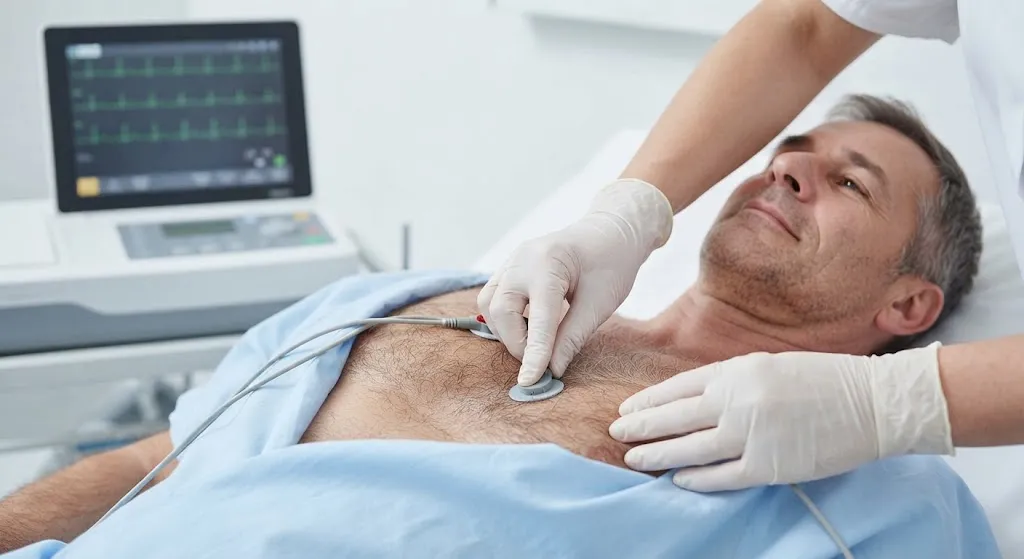
An EKG doesn’t create pictures like an MRI or ultrasound. It simply records the electrical signals your heart produces each time it beats. Those signals travel through your body, and electrodes on your skin pick them up. A standard 12-lead EKG uses 10 electrodes to view the heart’s electrical activity from 12 angles at once. Ten seconds of data is enough to measure heart rate, rhythm, intervals and wave shapes for most purposes.
If you want to understand what those measurements mean, read our complete guide: What Is an EKG Test?
What Happens During an EKG, Step by Step
Step 1: Check-In
You’ll confirm your identity and insurance, and the staff will review your doctor’s order. Bring a photo ID, insurance card, the order (if paper), and a list of current medications.
Step 2: Getting Ready
You’ll be taken to a private room. Usually you’ll be asked to remove clothing from the waist up and put on a gown that opens in the front. You can typically leave pants, skirts and shoes on. You may be asked to roll up pant legs or remove socks or tights, since electrodes are placed on the lower legs or ankles.
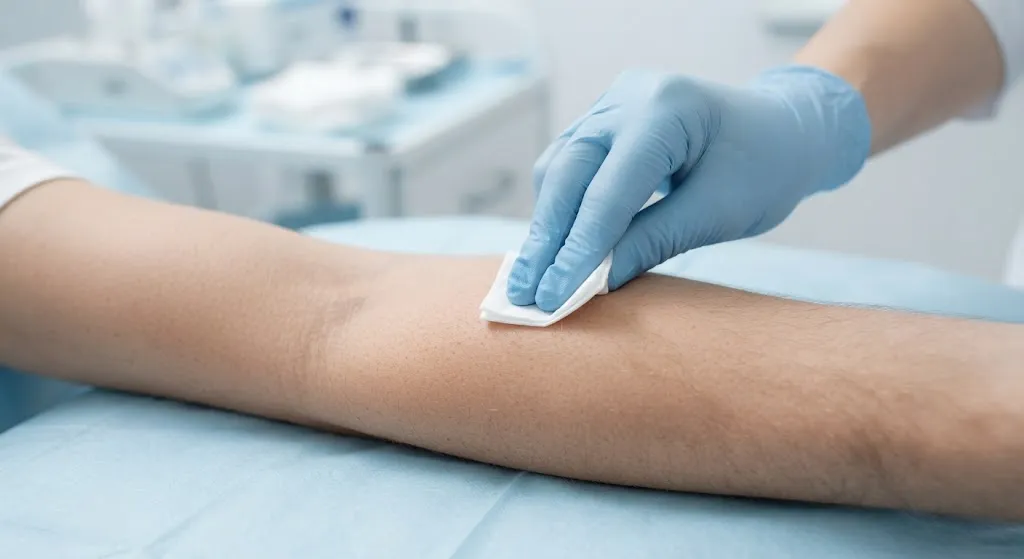
Step 3: Skin Prep
The technician makes sure your skin is clean and dry. They may:
- Wipe areas with alcohol
- Lightly rub the skin to improve contact
- Shave small patches of chest hair if needed so the electrodes stick properly
Step 4: Placing the Electrodes
Ten sticky electrode pads are placed:
- Four on the limbs: one on each arm (or shoulder) and one on each leg (or ankle)
- Six across the chest: in specific positions from the right side of the breastbone around to the left side of the chest, under the armpit
Each electrode connects to a wire leading to the EKG machine. You won’t feel any electricity. The electrodes only record signals; they don’t send any current into your body.
Step 5: Recording
You’ll lie on your back on an exam table and be asked to:
- Relax your arms by your sides
- Stay still
- Breathe normally
- Avoid talking
The machine records for about 10 seconds. If there’s movement or interference, the technician may repeat the recording, which adds a few seconds.
Step 6: Removing the Electrodes
The technician peels off the pads. Some people find this feels like removing a bandage, especially over hair. A small amount of sticky residue may remain and can be washed off later.
Step 7: Leaving
You can get dressed and return to normal activities immediately. There are no restrictions after a resting EKG.
What Can Make an EKG Take Longer?
A few things can stretch the timeline:
- Skin prep. Oily skin, lotion or lots of chest hair can make electrodes harder to attach.
- Movement or shivering. A cold room, nerves or a tremor can create “noise” on the tracing, so the recording may need to be repeated. Ask for a blanket if you’re cold.
- Mobility limitations. If moving onto the table or changing clothes takes longer, that’s fine. Staff will help.
- Additional rhythm strips. If the technician notices an irregular rhythm, they may record a longer “rhythm strip” for the doctor.
- Paperwork and scheduling. Walk-in times, insurance verification and other patients ahead of you affect total visit time more than the test itself.
EKG Test for Women: What to Know
The EKG process is the same for women and men, but a few practical details help women feel more comfortable and get a cleaner recording.
Clothing
Wear a two-piece outfit, such as a top with pants or a skirt, so you only need to remove your top. Dresses may require a full change into a gown.
Bras
You’ll usually be asked to remove your bra, especially if it has an underwire or metal clasps, since the chest electrodes need to be placed in specific locations. Some facilities allow a sports bra without metal if the electrodes can still be positioned correctly. Ask the technician.
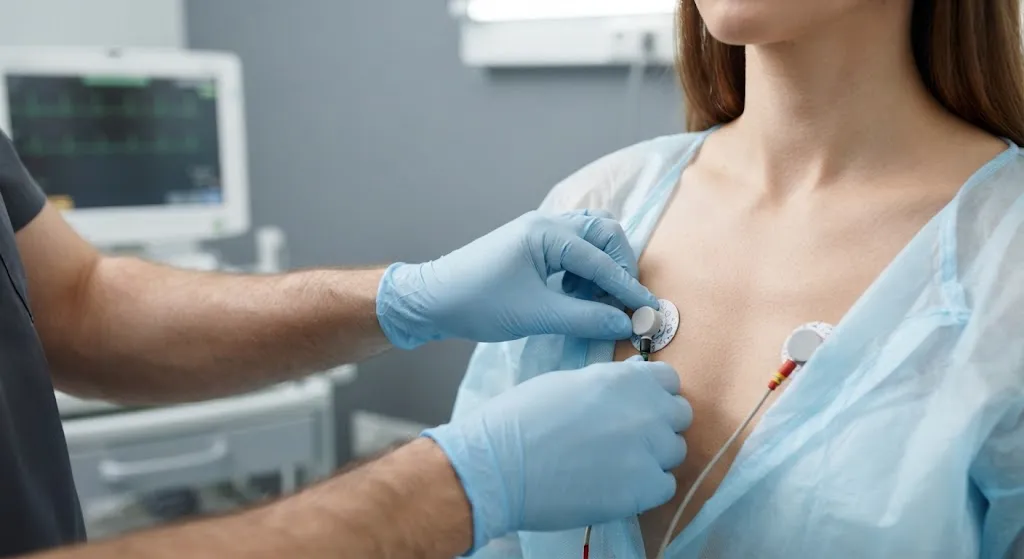
Electrode Placement Around the Breast
Correct placement matters. Some chest electrodes are positioned under or beside the left breast rather than on top of breast tissue. Placing electrodes on top of breast tissue can change the signals and may lead to an inaccurate result. The technician may need to gently lift or move breast tissue, or ask you to do so. This is a normal part of getting an accurate EKG.
Privacy and Chaperones
You are entitled to privacy and can ask:
- For a gown or drape to cover you except where electrodes are placed
- For a chaperone to be present
- Whether a female technician is available (availability varies)
Ask when you book so the facility can try to accommodate you.
Women’s EKG Patterns
Women’s EKGs can show some normal differences. For example, women tend to have a slightly longer QT interval and a slightly faster resting heart rate than men. Heart attack symptoms in women can also be less typical, such as fatigue, nausea, jaw or back pain, or shortness of breath. If an EKG is labeled abnormal, see our guide on abnormal EKG test results.
Pregnancy
A resting EKG is safe during pregnancy because it only records signals and uses no radiation. Tell the technician if you’re pregnant, since pregnancy can cause minor, normal changes in heart rate and EKG patterns.
How to Prepare for an EKG
A resting EKG needs very little preparation, but these steps help it go quickly and accurately:
- Skip lotions and oils on your chest, arms and legs on the day of the test.
- Wear comfortable, two-piece clothing.
- Avoid heavy exercise right before the test so your heart rate settles.
- Limit caffeine and nicotine shortly before the test if possible, since they can raise your heart rate. Follow your doctor’s specific advice.
- Take your normal medications unless told otherwise, and bring a list.
- Arrive a few minutes early for paperwork.
- Let the technician know about any pacemaker, defibrillator or recent heart procedure.
You don’t usually need to fast for a resting EKG.
How Long Do Other EKG Tests Take?
The word “EKG” is sometimes used for related heart rhythm tests that take longer:
| Test | What it is | Typical time |
|---|---|---|
| Resting 12-lead EKG | Snapshot of heart’s electrical activity at rest | About 10 seconds recording; 5-10 minutes total |
| Rhythm strip | Longer recording from fewer leads | A minute or more |
| Exercise stress EKG | EKG recorded while walking on a treadmill | Often about an hour for the full visit, with roughly 10-15 minutes of exercise |
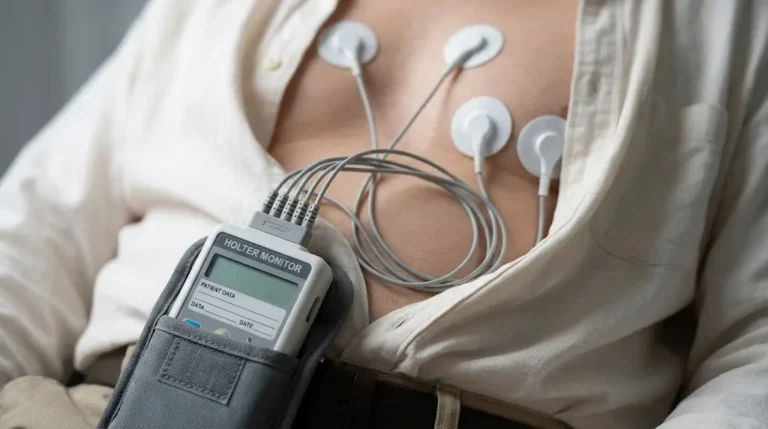
| Holter monitor | Portable EKG worn at home | 24-48 hours, sometimes up to 14 days |
| Event monitor or patch | Records when symptoms occur or continuously | Days to weeks |
For a deeper look at stress testing, see our comparison of stress echocardiograms and stress EKGs. For longer rhythm monitoring, read What Is a Holter Monitor?
How Long Does It Take to Get EKG Results?
The machine produces a tracing immediately. Many machines also print an automated interpretation. A physician then reviews the tracing and confirms the findings. Timing for the official result depends on the facility and your doctor:
- In an emergency setting, results are reviewed right away.
- In outpatient settings, results are commonly sent to your referring doctor within a few days.
Your doctor will contact you to discuss the results, especially if follow-up is needed. If you haven’t heard back, call your doctor’s office.
EKG Timing in Special Situations
Some situations change how the test is run or why it’s ordered, though the recording itself stays short.
Pre-Surgery EKG
Many people need an EKG before surgery, especially older adults or those with heart disease, diabetes or other risk factors. The test is the same 10-second recording. Bring your surgery paperwork so the result can be sent to both your surgeon and your primary doctor, and ask how far ahead of the procedure the EKG should be done.
Sports or Employment Physicals
Some sports programs or jobs request a baseline EKG. These are routine resting EKGs. Athletes often show normal “athletic heart” changes, such as a slower heart rate, which is useful to have on record for comparison later.
People With Pacemakers or Defibrillators
A resting EKG is safe and commonly done for people with pacemakers. The tracing shows pacing spikes, which tells the reader how the device is working. Tell the technician about your device so the tracing is labeled correctly. Device checks with the manufacturer’s programmer are a separate appointment.
Children and Teens
Kids may need a little more time to settle, and smaller electrodes may be used. A parent can usually stay in the room. Distraction, such as a video or a favorite toy, helps them hold still for those 10 seconds.
Older Adults
Tremor, arthritis or difficulty lying flat can add a few minutes. Technicians can adjust pillows and help with positioning. Bring a list of all medications, since many affect the EKG.
Tips for a Fast, Clean Recording
The single biggest reason for repeat recordings is movement. A few habits make a real difference:
- Warm up first. Shivering shows up as fuzzy lines. Ask for a blanket.
- Let your arms go heavy. Tense shoulders and clenched fists create muscle noise.
- Uncross your legs and keep your feet still.
- Breathe normally. Deep sighs or holding your breath can shift the baseline.
- Don’t talk during the recording, even to ask a question. Ask afterward.
- Silence your phone and keep it away from the leads.
- If you feel anxious, tell the technician. Knowing that the recording lasts only seconds helps many people relax.
Smartwatch EKG vs a Clinical 12-Lead EKG
Many smartwatches and handheld devices can record a single-lead EKG in about 30 seconds. These can be useful for capturing a rhythm at the moment symptoms happen and may flag possible atrial fibrillation. They are not a substitute for a 12-lead EKG. A single lead views the heart from one angle, so it can’t assess things like heart attack patterns, conduction blocks or chamber enlargement. If your device alerts you to an irregular rhythm, save or export the recording and share it with your doctor, who may order a standard EKG or longer monitoring.
Is an EKG Painful?
No. An EKG is painless and noninvasive. You may feel:
- The coolness of the electrodes
- Mild tugging when the pads come off
- Slight skin irritation from the adhesive in people with sensitive skin
There’s no needle, no injection and no electricity entering your body.
Is an EKG Safe?
Yes. An EKG only records electrical signals. It doesn’t use radiation or magnetic fields. It’s safe for people of all ages, during pregnancy, and for people with pacemakers. The only common side effect is minor skin irritation from the pads.
EKG vs Echocardiogram: How Do the Times Compare?
People are sometimes scheduled for both tests. An EKG takes minutes and records electrical activity. An echocardiogram is an ultrasound of the heart that shows structure and pumping function, and it usually takes 30 to 60 minutes. Learn more in our guides to echocardiogram vs EKG and how long an echocardiogram takes.
How Much Does an EKG Cost?
A resting EKG is one of the least expensive heart tests. Cost depends on whether you use insurance, where you have the test, and whether the interpretation is billed separately. Our article on EKG test cost explains typical pricing factors with and without insurance.
EKG Testing at Advantage MRI in Chicago
Advantage MRI offers EKG testing at 2008 N Pulaski Rd, Chicago, IL 60639. Because we also perform echocardiograms, Holter monitoring, ultrasound, MRI, X-ray, EMG and nerve conduction studies, patients who need more than one test may be able to complete them at the same location. Results are sent to your referring physician.
If you have privacy preferences, such as a chaperone, let our team know when you schedule. We welcome insured, out-of-network and self-pay patients.
Frequently Asked Questions About How Long Does An EKG Test Take
How long is an EKG test?
The recording lasts about 10 seconds. The full test, including electrode placement, typically takes 5 to 10 minutes. Total visit time is usually 15 to 30 minutes.
Do I have to take my bra off for an EKG?
Usually yes, especially if it has underwire or metal clasps, so the chest electrodes can be placed correctly. You’ll be given a gown or drape for privacy.
Can I eat before an EKG?
Yes. A resting EKG doesn’t require fasting. Avoid heavy exercise and, if possible, caffeine shortly before the test.
Why did my EKG take longer than 10 minutes?
Extra time is often due to paperwork, skin prep, movement that required a repeat recording, or the technician recording an additional rhythm strip.
Can an EKG be done lying on your side?
A standard resting EKG is done lying on your back. Changing position can alter the tracing, so technicians use a consistent position for accurate comparison.
How soon will my doctor get my EKG results?
The tracing is available immediately. In outpatient settings, the physician-reviewed report is commonly sent to your doctor within a few days.
Is an EKG for women different?
The test is the same, but electrode placement around the breast matters for accuracy. Women can request a chaperone and should wear a two-piece outfit.
Conclusion
An EKG is quick: about 10 seconds of recording and roughly 5 to 10 minutes in the room. Most of your visit time goes to check-in and getting ready, not the test itself. Wearing comfortable two-piece clothing, skipping lotion, staying warm and staying still all help it go smoothly. If your doctor needs more information, longer tests such as a stress EKG or Holter monitor may follow.
Need an EKG in Chicago? Book an appointment with Advantage MRI or call (773) 227-9777. Hours: Monday-Friday 9:00 AM-5:00 PM, Saturday 9:00 AM-1:00 PM. Follow us on Facebook and Instagram.