
Health & Imaging
What Is a Holter Monitor? Complete Patient Guide to 24-Hour Heart Monitoring
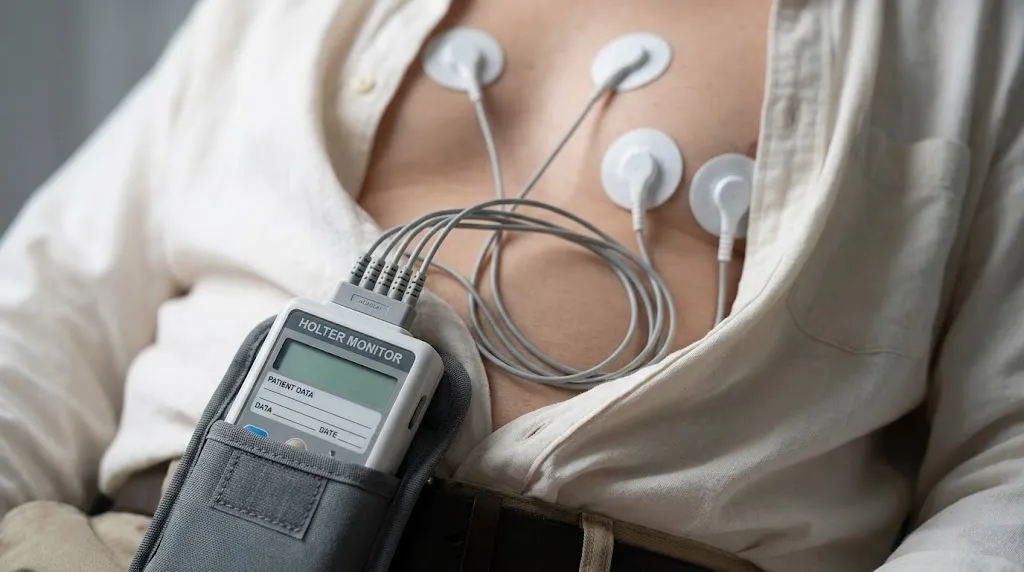
Quick answer: A Holter monitor is a small, battery-powered portable EKG that continuously records your heart’s electrical activity, usually for 24 to 48 hours, and sometimes for up to 14 days, while you go about your normal life. It consists of a few sticky electrodes on your chest connected by thin wires to a recorder about the size of a deck of cards or smaller, or, in newer versions, a single adhesive patch. Doctors use it to find irregular heart rhythms that come and go and might be missed on a standard 10-second EKG, to explain symptoms like palpitations, dizziness or fainting, and to check how well treatments are working. It’s painless, uses no radiation, and the main side effect is mild skin irritation from the electrodes.
This pillar guide covers everything about Holter monitors: what they look like, what they’re used for, the different types, how to wear one, what to avoid, what results show, costs, and what happens next.
What Is a Holter Monitor Used For?
A standard resting EKG captures only about 10 seconds of heart activity. Many heart rhythm problems happen only occasionally, during sleep, exercise, stress or random moments. A Holter monitor records every heartbeat over a longer period, which makes it far more likely to catch intermittent problems.
Need to Schedule a Diagnostic Appointment?
Whether you need an MRI, ultrasound, X-ray, or another diagnostic service, Advantage MRI is here to help you take the next step in your healthcare journey.
Submit your appointment request online, and our team will contact you to confirm your visit.
Book Your Appointment →Doctors commonly order a Holter monitor to:
- Investigate palpitations, the sensation of a skipped, fluttering, pounding or racing heart. See our detailed guide to Holter monitoring for palpitations, PVCs and arrhythmia.
- Explain dizziness, lightheadedness or fainting, which can be caused by heart rhythms that are too slow or too fast
- Detect atrial fibrillation, especially intermittent episodes, which matters because AFib increases stroke risk
- Count premature beats (PVCs and PACs) and calculate their burden
- Look for pauses or heart block
- Assess heart rate control in people already diagnosed with AFib
- Check the effect of medications on heart rhythm
- Evaluate pacemaker or defibrillator function in some cases
- Assess unexplained stroke or TIA, to look for hidden AFib, sometimes with longer monitoring
- Monitor people with certain heart conditions who are at risk of arrhythmias
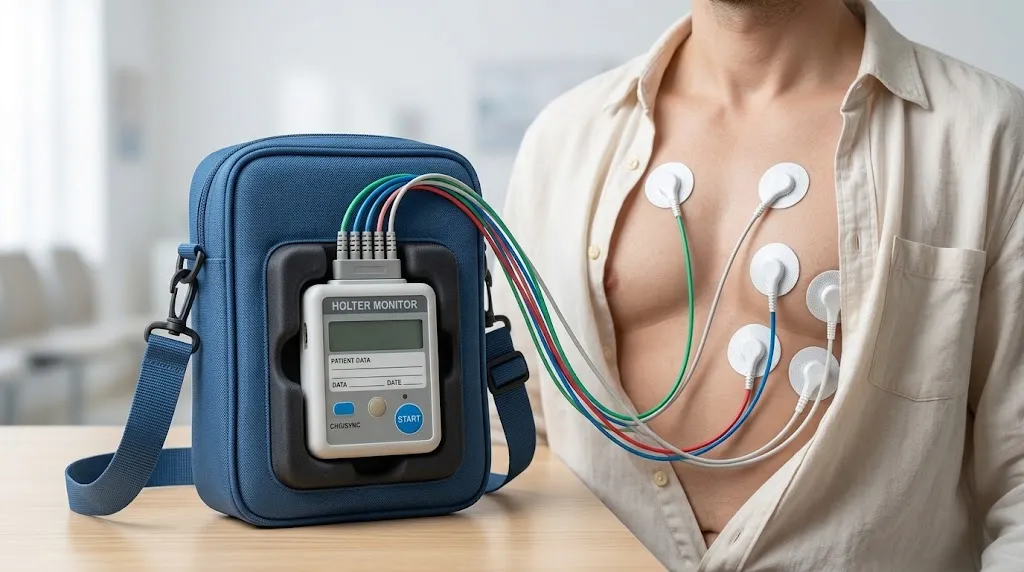
What Does a Holter Monitor Look Like?
There are two main styles:
Traditional Wired Holter Monitor
- A small recorder, typically about the size of a smartphone or a deck of cards or smaller, worn on a belt clip, in a pouch, or on a strap around the neck or shoulder
- Three to seven lead wires connecting the recorder to electrodes
- Sticky electrodes (round adhesive pads, about the size of a coin) placed on the chest
- Sometimes a button to press when you feel symptoms
It fits under loose clothing, and most people around you won’t notice it.
Patch-Style Monitor
- A single adhesive patch, often a few inches long, stuck to the upper left chest
- No wires or separate recorder
- Often water-resistant, which may allow showering, depending on the device
- Commonly worn for longer periods, such as one to two weeks
Some people call patch monitors “Holter patches,” though technically they’re a related category of ambulatory ECG monitors.
Types of Holter Monitors and Related Devices
| Type | How it records | Typical duration | Best for |
|---|---|---|---|
| 24-hour Holter | Continuous, wired | 24 hours | Daily symptoms |
| 48-hour Holter | Continuous, wired | 48 hours | Symptoms every day or two |
| Extended Holter | Continuous | 3-14 days | Symptoms every few days |
| Patch monitor | Continuous, wireless patch | Often 7-14 days | Less frequent symptoms; AFib detection |
| Event monitor | Records when triggered or auto-detected | Up to about 30 days | Infrequent symptoms |
| Mobile cardiac telemetry | Continuous with real-time transmission | Up to about 30 days | Higher-risk rhythms needing quick review |
| Implantable loop recorder | Small device placed under the skin | Up to several years | Rare but significant symptoms, such as unexplained fainting |
For help understanding durations, see 24-hour vs 7-day vs 14-day Holter monitoring, and for comparisons with other devices, read Holter monitor vs event monitor vs Zio patch.
How Does a Holter Monitor Work?
Your heart produces a small electrical signal with every beat. The electrodes on your chest detect these signals and send them through the wires (or the patch’s built-in circuitry) to the recorder, which stores them digitally. After you return the device, the data is downloaded and analyzed with specialized software, then reviewed by trained technicians and a physician.
The software can sort tens of thousands of heartbeats per day, flagging irregular beats and rhythm episodes. The physician confirms the findings and writes a report. For background on the electrical signals themselves, see What Is an EKG Test?
Why Is It Called a Holter Monitor?
The device is named after Norman J. “Jeff” Holter, an American biophysicist who developed portable heart-rhythm recording in the mid-20th century. Early versions were heavy backpack-sized units. Today’s recorders weigh a few ounces, and patch versions are lighter still, but the idea is the same: record the heart’s electrical activity continuously while a person lives normally.
Holter Monitoring in Specific Groups
Children and Teens
Holter monitors are used in children to evaluate palpitations, fainting, chest pain with exercise or known heart conditions. Smaller electrodes may be used, and a parent helps with the symptom diary. Normal heart rates are higher in children, so results are compared with age-appropriate ranges.
Older Adults
Atrial fibrillation and slow heart rhythms become more common with age. Holter monitoring helps evaluate dizziness, falls or fainting that might have a heart rhythm cause, and it can check heart rate control in people being treated for AFib.
After a Stroke or TIA
When a stroke has no obvious cause, doctors may monitor the heart for hidden AFib, since finding it changes treatment. A 24-hour Holter may be the first step, with longer monitoring often used afterward.
Athletes
Athletes with palpitations or dizziness during training may wear a Holter during workouts. Their recordings often show slow resting heart rates, which can be normal for trained hearts.
Tips for Comfort and Good Electrode Contact
- Secure loose wires with tape or tuck them under clothing to avoid tugging.
- Wear a snug undershirt to help hold electrodes in place.
- Avoid heavy sweating where possible with a wired Holter, as moisture can loosen electrodes.
- Don’t scratch or lift electrode edges; if one comes loose, follow the instructions you were given, or call the facility.
- Sleep on your back or side with the recorder positioned where it won’t dig in, such as beside you on the bed.
Holter Monitor vs Standard EKG
| Standard resting EKG | Holter monitor | |
|---|---|---|
| Recording length | About 10 seconds | 24 hours to 14 days |
| Number of leads | 12 | Usually 2-3 channels (some 12-lead Holters exist) |
| Setting | Lying still in a clinic | Normal daily life |
| Best for | Snapshot of rhythm, heart attack signs, conduction | Intermittent rhythms, symptom correlation, beat counting |
How to Prepare for a Holter Monitor
- Shower or bathe before your appointment. With a traditional wired Holter, you usually can’t shower until it’s removed.
- Skip lotion, oil and powder on your chest.
- Wear a loose, two-piece outfit, ideally a button-front shirt, so the wires and recorder fit comfortably.
- Bring a medication list.
- Plan a typical day. The goal is to capture your heart during normal activities.
- Let the team know about skin sensitivities or adhesive allergies.
What Happens at the Fitting Appointment?
- Skin prep: A technician cleans small areas of your chest and may lightly abrade or shave them so the electrodes stick well.
- Electrode placement: Electrodes are placed in specific spots on your chest.
- Connection: Lead wires connect the electrodes to the recorder, or the patch is applied.
- Instructions: You’ll learn how to wear the device, keep a symptom diary or use the event button, and what to avoid.
- Start: Recording begins, and you go about your day.
The fitting usually takes about 15 to 30 minutes.
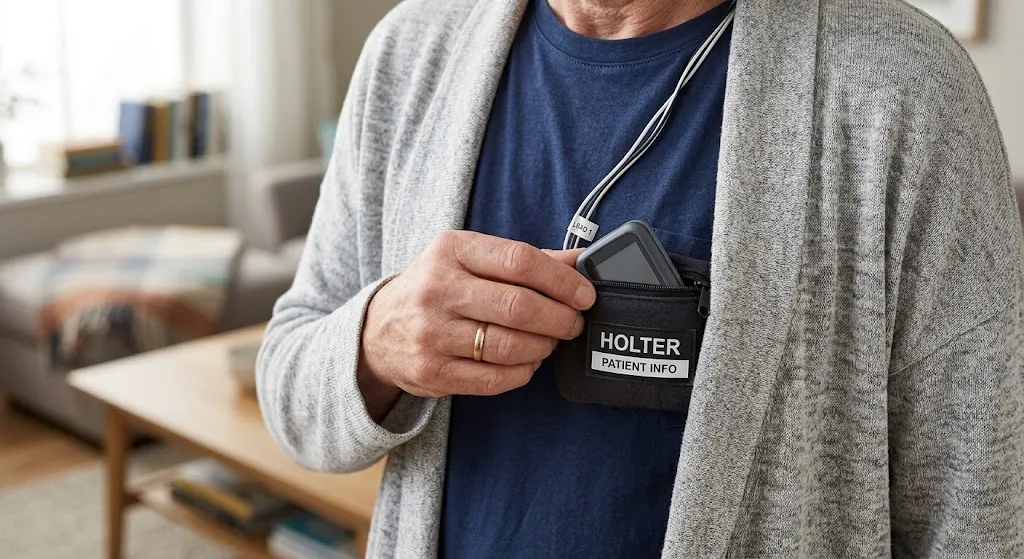
Wearing a Holter Monitor: Daily Life Tips
What You Can Do
- Go to work or school
- Walk, climb stairs and do normal activities
- Exercise, unless your doctor has told you otherwise. Activity during monitoring can be useful.
- Sleep normally (position the recorder where it’s comfortable)
- Use a cell phone, though keeping it a few inches from the recorder is often advised
What to Avoid
- Getting a wired Holter wet, including showers, baths and swimming (patch devices vary)
- MRI scans and X-rays during monitoring, unless your doctor coordinates them
- Electric blankets, high-voltage areas and strong magnets, which can interfere with recordings
- Removing or repositioning electrodes unless instructed
For practical questions such as showering, sleeping, drinking alcohol or wearing a bra, see what you can and can’t do while wearing a Holter monitor.
Keep a Symptom Diary
Write down:
- The time of each symptom
- What you felt: palpitations, dizziness, chest discomfort, shortness of breath
- What you were doing: resting, walking, sleeping, eating, stressed
- When you take medications, exercise and sleep
The diary helps doctors match your symptoms to your heart rhythm at that moment, which is often the most important part of the test.
Is a Holter Monitor Safe? Side Effects
Holter monitoring is very safe. It only records signals and doesn’t send electricity into your body. Possible side effects include:
- Skin irritation, itching or redness where electrodes or the patch adhere
- Mild discomfort from wires or the recorder, especially during sleep
- Rare allergic reactions to adhesive
Let the team know if you have sensitive skin. Read more in Holter monitor side effects.
Returning the Monitor
At the end of the monitoring period, you’ll either return to the facility to have the device removed or, for some devices, remove it yourself and mail it back. Follow the instructions you’re given. Bring your completed symptom diary.
Understanding Holter Monitor Results
After analysis, your doctor receives a report that typically includes:
- Total monitoring time and number of heartbeats
- Heart rate: minimum, maximum and average, and how it changed over the day and night
- Rhythm: the main rhythm, usually normal sinus rhythm
- Premature beats: counts and percentages of PVCs and PACs
- Arrhythmia episodes: such as AFib, SVT or ventricular runs, with times and durations
- Pauses: any long gaps between beats
- Symptom correlation: what your heart was doing when you recorded symptoms
- Physician interpretation
Results usually take several days to a couple of weeks, depending on the device and facility. For help understanding normal and abnormal findings, see how to read Holter monitor results.
What Happens After a Holter Test?
Depending on the results, your doctor might:
- Reassure you that your rhythm is normal or that premature beats are benign
- Recommend lifestyle changes, such as cutting back on caffeine or alcohol
- Order an echocardiogram to check heart structure and pumping. See What Is an Echocardiogram?
- Start or adjust medications
- Recommend longer monitoring if symptoms didn’t occur
- Refer you to a cardiologist or electrophysiologist
- Discuss procedures such as ablation or a pacemaker in specific cases
How Much Does a Holter Monitor Cost?
Cost depends on the type and duration of monitoring, your insurance, the facility, and how analysis and interpretation are billed. Holter testing is commonly covered by insurance when medically necessary. For pricing factors and examples, read Holter monitor cost. Billing uses specific CPT codes based on recording duration; see Holter monitor CPT codes explained.
Holter Monitor Limitations
- Symptoms might not happen during the monitoring period. Longer monitoring may be needed.
- It doesn’t show heart structure. An echocardiogram is needed for that.
- It isn’t a reliable test for blocked arteries. Stress testing or other imaging is used.
- Electrode problems can cause gaps or artifacts in the recording if electrodes loosen.
Holter Monitoring at Advantage MRI in Chicago
Advantage MRI offers Holter monitoring at 2008 N Pulaski Rd, Chicago, IL 60639. We also perform EKGs and echocardiograms, so patients who need a full rhythm and heart evaluation may be able to complete their testing at one location. Our team explains how to wear the monitor, keep your diary and return the device, and results go to your referring physician.
Learn more about our center on our About page. We welcome insured, out-of-network and self-pay patients.
Frequently Asked Questions
What is a Holter monitor in simple terms?
It’s a portable EKG that records every heartbeat for a day or more while you go about your normal routine, helping doctors find irregular rhythms that come and go.
What is a Holter monitor used for?
To investigate palpitations, dizziness and fainting, detect atrial fibrillation and other arrhythmias, count premature beats, look for pauses, and check how treatments are working.
What does a Holter monitor look like?
A traditional Holter is a small recorder connected by thin wires to sticky electrodes on your chest. Patch monitors are a single adhesive strip on the chest with no wires.
How long do you wear a Holter monitor?
Usually 24 to 48 hours. Extended Holter or patch monitors may be worn for up to 14 days.
Can I shower with a Holter monitor?
Usually not with a traditional wired Holter. Some patch monitors are water-resistant. Follow the instructions for your specific device.
Does a Holter monitor hurt?
No. It’s painless. Some people get mild skin irritation from the adhesive.
What are the different types of Holter monitors?
Common types include 24-hour and 48-hour Holters, extended Holters lasting up to 14 days, and patch monitors. Related devices include event monitors, mobile cardiac telemetry and implantable loop recorders.
How long does it take to get Holter monitor results?
Often several days to a couple of weeks after you return the device, depending on the facility and device type.
Can I sleep with a Holter monitor?
Yes. Sleep normally, placing the recorder where it won’t press into you, such as beside you on the bed or clipped to loose sleepwear. Recording during sleep is valuable, since some rhythm problems, like pauses or slow heart rates, happen at night.
Can I drive while wearing a Holter monitor?
Usually yes, unless your doctor has restricted driving because of fainting or other symptoms. The monitor itself doesn’t affect driving.
Can a Holter monitor detect a heart attack?
It isn’t designed to diagnose heart attacks. If you have chest pain or other heart attack symptoms, call 911 instead of waiting for Holter results.
Conclusion
A Holter monitor is a simple, safe and powerful way to see what your heart does during everyday life. By recording every heartbeat for a day or longer and linking it to your symptoms, it can uncover rhythm problems a quick EKG might miss, explain palpitations or dizziness, and guide treatment. Knowing what the device looks like, how to wear it and what to expect from your results makes the experience easier.
Need a Holter monitor in Chicago? Book an appointment with Advantage MRI or call (773) 227-9777. Hours: Monday-Friday 9:00 AM-5:00 PM, Saturday 9:00 AM-1:00 PM. Follow us on Facebook and Instagram.